
. Understanding Cardiac Arrest: Time Is Life
"A Guide to Immediate Response and CPR Techniques"

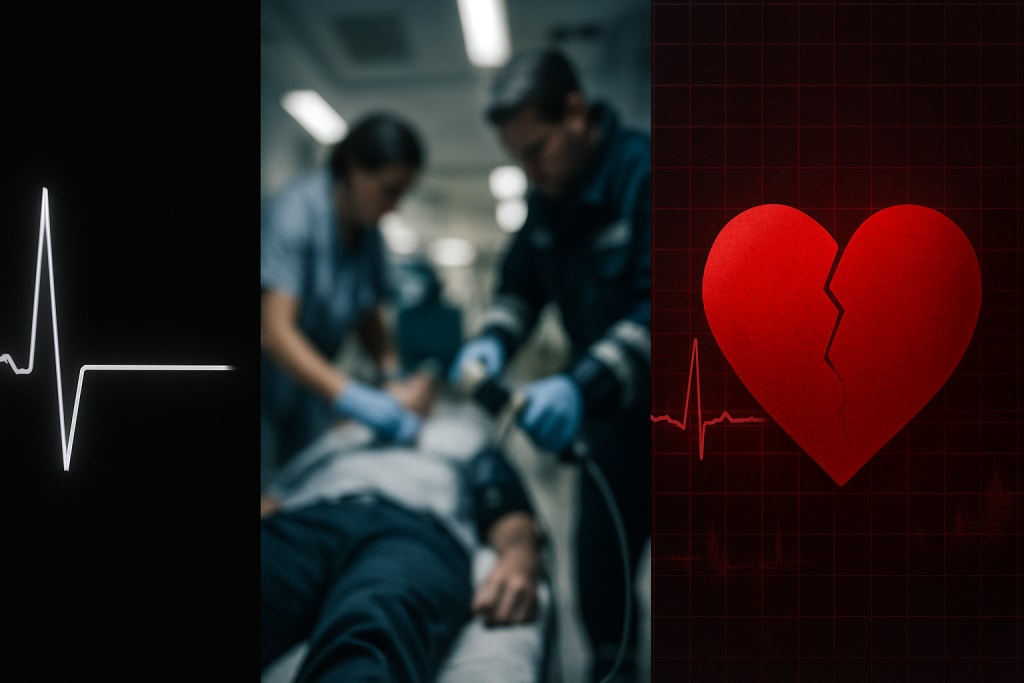
A Guide to Recognizing Sudden Cardiac Arrest and Performing Lifesaving CPR
Cardiac arrest is a sudden, life-threatening condition that occurs when the heart unexpectedly stops beating. Without immediate intervention, it can lead to death within minutes. Unlike a heart attack, which is caused by a blockage in the coronary arteries, cardiac arrest results from a disruption in the heart's electrical system, causing the heart to stop pumping blood effectively.
What Is Cardiac Arrest?
Cardiac arrest happens when the heart's electrical system malfunctions, leading to an irregular or absent heartbeat. The most common cause is an arrhythmia called ventricular fibrillation, where the heart quivers instead of contracting properly. When this occurs, blood stops flowing to the brain and other vital organs, resulting in loss of consciousness and, without intervention, death.
Unlike many other medical emergencies, cardiac arrest strikes suddenly and without warning. It can happen to anyone—young or old, healthy or chronically ill. Each year, more than 350,000 out-of-hospital cardiac arrests occur in the United States alone, and survival depends heavily on how quickly and effectively a response is initiated.
---
Cardiac Arrest vs. Heart Attack: What’s the Difference?
Many people mistakenly use the terms cardiac arrest and heart attack interchangeably. However, they are distinct conditions:
Heart Attack: Caused by a blockage in one or more of the coronary arteries, preventing blood from reaching part of the heart muscle. The heart usually continues to beat.
Cardiac Arrest: An electrical problem that causes the heart to stop beating suddenly.
A heart attack can lead to cardiac arrest, but not all cardiac arrests are caused by heart attacks.
---
Causes and Risk Factors
Cardiac arrest may be caused by several underlying conditions or triggers, including:
Coronary artery disease
Heart attack
Cardiomyopathy (enlarged heart)
Congenital heart conditions
Arrhythmias (like ventricular fibrillation)
Electrolyte imbalances
Drug overdose or alcohol abuse
Severe blood loss or trauma
Risk increases with age, family history of heart disease, smoking, high blood pressure, diabetes, and sedentary lifestyle. However, cardiac arrest can also strike people with no prior symptoms or history of heart problems.
---
Signs and Symptoms of Cardiac Arrest
Unlike a heart attack, where chest pain and warning signs may develop gradually, cardiac arrest often occurs suddenly and without warning. Key signs include:
Sudden collapse
No pulse
No breathing
Loss of consciousness
Some people may experience symptoms like chest discomfort, shortness of breath, or palpitations minutes or hours before cardiac arrest, but these are not always present.
---
What to Do: Responding to Cardiac Arrest
Immediate action can mean the difference between life and death. Here’s what you should do if someone collapses and is unresponsive:
1. Call Emergency Services
Immediately call emergency services (911 in the U.S.). Time is critical—every minute without CPR reduces the chance of survival by 7–10%.
2. Start CPR
If the person is unresponsive and not breathing (or only gasping), start cardiopulmonary resuscitation (CPR) immediately.
Push hard and fast in the center of the chest, at a rate of 100–120 compressions per minute.
Allow the chest to fully recoil between compressions.
If you are trained in rescue breaths, alternate 30 compressions with 2 breaths. If not, continue with hands-only CPR.
3. Use an AED if Available
An automated external defibrillator (AED) can analyze the heart’s rhythm and deliver a shock to restore normal rhythm. AEDs are often found in public places such as airports, malls, and schools.
Turn it on and follow the spoken instructions.
Place the pads on the person’s bare chest as indicated.
Do not touch the person during rhythm analysis or shock delivery.
---
The Importance of Early Intervention
Survival from cardiac arrest depends heavily on bystander intervention. According to the American Heart Association:
Immediate CPR can double or triple the chance of survival.
However, only about 40% of cardiac arrest victims receive CPR from a bystander.
Fewer than 10% survive an out-of-hospital cardiac arrest.
This stark statistic underscores the importance of public education and CPR training. Communities that invest in widespread CPR and AED training consistently report higher survival rates.
---
Preventing Cardiac Arrest
While not all cardiac arrests can be prevented, many risk factors are manageable. Prevention strategies include:
Managing high blood pressure, cholesterol, and diabetes
Maintaining a healthy diet and regular exercise
Avoiding smoking and excessive alcohol
Getting regular check-ups if you have a history of heart disease
Using medications as prescribed
Addressing warning signs like fainting, chest pain, or irregular heartbeat
In people at high risk, doctors may recommend an implantable cardioverter-defibrillator (ICD)—a device that detects and corrects abnormal rhythms automatically.
---
Conclusion
Cardiac arrest is a sudden and deadly condition, but it doesn’t have to be a death sentence. Quick recognition, immediate CPR, and use of an AED can greatly improve outcomes. Every second counts, and everyone can play a role in saving lives.
Knowing how to act in an emergency, getting trained in CPR, and advocating for AED accessibility are simple yet powerful ways to make a difference. You might just save a life—perhaps even someone you love.
---
About the Creator
Keep reading
More stories from writers in Education and other communities.
Why Agricultural Harvesters Are Transforming Modern Farming?
To make farms more efficient and sustainable, agriculture has continued to evolve. Agricultural harvesters are one of the most important inventions in agriculture, as they allow for the harvesting of the crop in a field rapidly and accurately, considerably reducing the need for human labor to perform this task.
By deepanshu Thakur2 days ago in Education
The Meaningful Impact of Reading on Modern Life
In a rapidly changing world filled with digital distractions, reading remains a timeless source of inspiration, knowledge, and personal enrichment. Although technology shapes how people interact today, books still offer something deeper, something that screens cannot fully replace. They invite readers to slow down, reflect, and explore ideas with intention. As a result, reading habits play a vital role in shaping how individuals think, learn, and understand the world around them.
By Herve Comeau3 days ago in Education
The Tango Connection
I suppose I've become a writer so I wouldn't bore everyone to death telling them my stories. Reading them is reading. Not the same. There's rhythm. And timing and, most importantly, drama and suspense. Unless you have tremendous magnetism and an undeniable stage presence, there's no way you can engage an audience the way you can by writing your story. That's my opinion.
By Rene Volpi 5 days ago in Beat


Comments
There are no comments for this story
Be the first to respond and start the conversation.