
Understanding Bipolar Disorder
Some Symptoms And The Keys To Self-Help
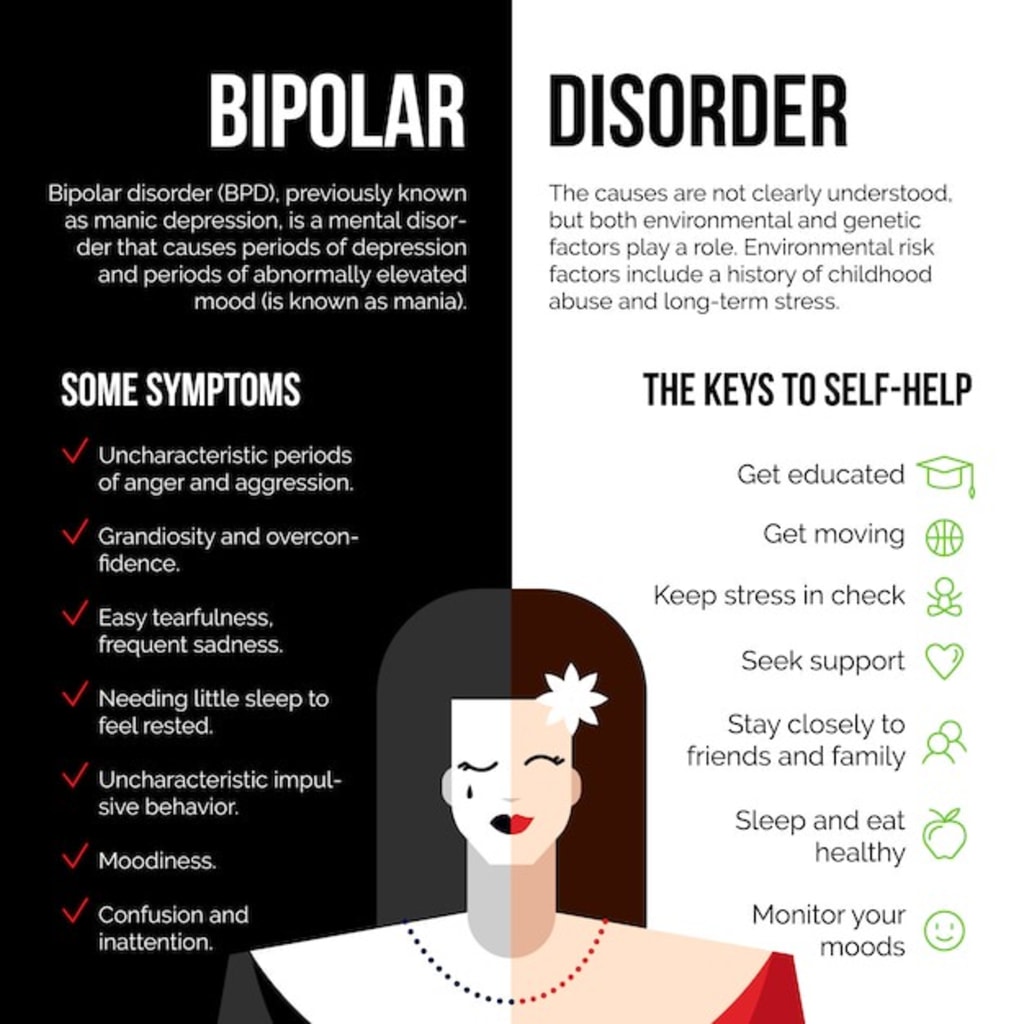
I am a mental health professional and I have seen how devastating bipolar disorder can be. It is a complex condition that affects millions of people worldwide. Bipolar disorder, also known as manic depression, is a mental health condition that causes extreme mood swings. People with bipolar disorder experience episodes of mania, which is a state of high energy and activity, and episodes of depression, which is a state of low mood and energy.
Types of Bipolar Disorder
Bipolar disorder is classified into four types, based on the severity and frequency of episodes. Bipolar I disorder is characterized by manic episodes that last at least one week and depressive episodes that last at least two weeks. Bipolar II disorder is characterized by hypomanic episodes that last at least four days and depressive episodes that last at least two weeks. Cyclothymic disorder is a milder form of bipolar disorder, where a person experiences hypomanic and depressive symptoms for at least two years, but not meeting the criteria for a full-blown episode. Finally, other specified and unspecified bipolar and related disorders include conditions that don't fit into the other categories, but still involve mood swings.
Common Symptoms of Bipolar Disorder
The symptoms of bipolar disorder can vary, depending on the type of bipolar disorder a person has. The most common symptoms of bipolar disorder include:
Manic or hypomanic episodes: feeling elated, energetic, and irritable, having racing thoughts or talking fast, having grandiose ideas, taking risks or making impulsive decisions, and having a decreased need for sleep.
Depressive episodes: feeling sad, hopeless, and helpless, losing interest in activities, feeling tired, having trouble concentrating, and having suicidal thoughts or behaviors.
People with bipolar disorder may also experience mixed episodes, where they have symptoms of both mania and depression at the same time. These episodes can be particularly challenging to manage.
Lifestyle Changes to Manage Bipolar Disorder Symptoms - Diet and Exercise
I believe that making lifestyle changes can help manage the symptoms of bipolar disorder. Diet and exercise are two lifestyle changes that can have a significant impact on mental health. Eating a healthy and balanced diet that is rich in nutrients, such as vitamins, minerals, and omega-3 fatty acids, can help improve mood and reduce inflammation in the body. Exercise can also help improve mood, reduce stress, and promote better sleep.
Lifestyle Changes to Manage Bipolar Disorder Symptoms - Sleep Patterns
Sleep is essential for overall health and well-being, and it is particularly important for people with bipolar disorder. Disrupted sleep patterns can trigger manic or depressive episodes. It is recommended that people with bipolar disorder aim for at least 7-8 hours of sleep per night and establish a regular sleep routine. Avoiding caffeine and alcohol and reducing screen time before bed can also help improve sleep quality.
Lifestyle Changes to Manage Bipolar Disorder Symptoms - Stress Management Techniques
Stress can trigger episodes of bipolar disorder, so learning stress management techniques can be helpful. Techniques such as mindfulness meditation, deep breathing exercises, and progressive muscle relaxation can help reduce stress and promote relaxation. It is also important to identify and avoid triggers that can cause stress.
Lifestyle Changes to Manage Bipolar Disorder Symptoms - Therapy and Support Groups
Therapy and support groups can be effective in managing the symptoms of bipolar disorder. Cognitive-behavioral therapy (CBT) and interpersonal therapy (IPT) are two types of therapy that can be helpful. CBT focuses on changing negative thought patterns and behaviors, while IPT focuses on improving interpersonal relationships. Support groups can provide a sense of community and understanding, and can help people with bipolar disorder feel less isolated and alone.
Alcoholics Anonymous and Bipolar Disorder
Alcoholism and bipolar disorder are often co-occurring disorders. Alcohol can trigger manic or depressive episodes and can interfere with medication effectiveness. Alcoholics Anonymous (AA) is a support group that can be helpful for people with bipolar disorder who struggle with alcoholism. AA provides a safe and supportive environment where people can share their experiences and receive support from others who are going through similar challenges.
Manic Depression vs. Other Types of Depression
Manic depression, or bipolar disorder, is different from other types of depression. While depression involves feelings of sadness and hopelessness, bipolar disorder involves extreme mood swings between mania and depression. It is important to differentiate between the two conditions, as they require different treatment approaches.
Conclusion
In conclusion, bipolar disorder is a complex condition that requires ongoing management. Making lifestyle changes such as eating a healthy diet, getting regular exercise and sleep, learning stress management techniques, and seeking therapy and support can help manage the symptoms of bipolar disorder. It is also important to address co-occurring conditions such as alcoholism and to differentiate bipolar disorder from other types of depression. With the right treatment and support, people with bipolar disorder can lead fulfilling and productive lives.
About the Creator
Keep reading
More stories from Worldwide Stories and writers in Education and other communities.
Think Twice Before Trying This Popular DIY Skin Care Trend - Pickles on Your Face
As a skincare enthusiast, I'm always on the lookout for new and innovative ways to improve my skin's health and appearance. Recently, I've come across a DIY skin care trend that's been making waves on social media - using pickles on your face. While it may sound strange and even a little gross, some people swear by this unconventional method of skincare. In this article, I'll explore the potential benefits and risks of using pickles on your face, provide expert advice on the best skin care routine, and offer alternatives to using pickles for skin care.
By Worldwide Stories 3 years ago in FYI
Was Alexander the great really that great?
Order, order! Who do we have on the stand today? Alexander... the Great, eh? Well, what’s so great about him? Your honor, the better question is, what's not great about him? He was the King of Macedon and considered a living demigod by Egyptians and Greeks alike. He conquered Persia when it was one of Earth's largest empires. And he was a thoughtful student of Aristotle, creative enough to untie the impossibly tight Gordian knot by cutting it in half. The Gordian knot is a myth— just like the countless other stories invented to enhance Alexander’s legend!
By Munesh Yadav3 days ago in Education
Preparing Health Systems to Perform Under High-Stakes Crisis Conditions
High-stakes crises have become an increasingly common challenge for health systems worldwide. Whether dealing with infectious disease outbreaks, natural disasters, mass casualty incidents, or cybersecurity breaches, healthcare organizations must be ready to respond rapidly and effectively. Preparation is essential not only to ensure patient safety but also to maintain operational stability during times of extreme pressure. Health systems that invest in proactive planning, strong leadership, and resilient infrastructure are better equipped to manage crises without compromising care quality. Preparing for high-stakes situations requires a comprehensive approach that focuses on readiness, coordination, and continuous learning.
By Craig Kenta day ago in Education
The CEO of Everything
They say "jack of all trades, master of none," but they forgot to mention the part where the jack of all trades is also the camera woman, the makeup artist, and the person currently yelling at a tangled Wii microphone cable in a her own bathroom while recording herself singing and trying to make it look realistic and professional. (As professional as you can make it with nothing but a cell phone camera and a mic that doesn't work)
By Sara Wilson4 days ago in Humans


Comments
There are no comments for this story
Be the first to respond and start the conversation.