
Types of Human Skin and Their Importance
How Many types Human Skin & Its Important

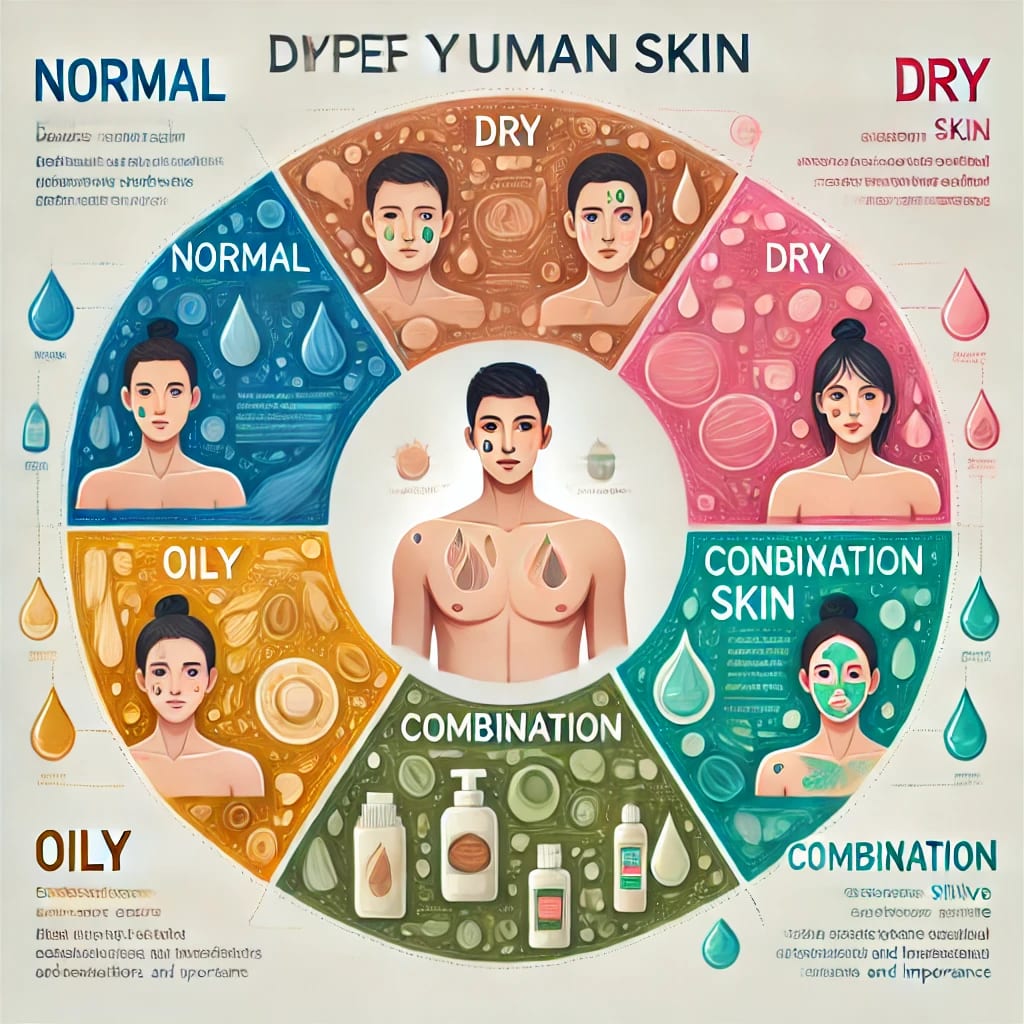
Types of Human Skin and Their Importance
Skin is the largest organ of the human body and acts as the first line of defense. It not only protects us from the external environment but also plays a crucial role in regulating body temperature, sensing sensations, and synthesizing vitamin D. The type and characteristics of skin depend on an individual’s health, lifestyle, and genetics. In this article, we will discuss the different types of human skin, their characteristics, and their importance in detail.
Structure and Functions of the Skin
The skin is composed of three main layers
Epidermis The outermost layer of the skin, which protects us from the external environment. It contains melanocytes, the cells responsible for skin pigmentation.
Dermis The middle layer that contains blood vessels, nerves, sweat glands, and hair follicles. This layer provides flexibility and strength to the skin.
Hypodermis The innermost layer, composed of fat tissues. It helps in regulating body temperature and provides protection against external impacts.
Types of Skin
Skin types are classified based on their characteristics, oiliness, dryness, and sensitivity. The five main types of skin are
Normal Skin
Dry Skin
Oily Skin
Combination Skin
Sensitive Skin
Normal Skin
Normal skin is well-balanced, neither too oily nor too dry. It maintains the right balance of moisture and oil, making it smooth, soft, and healthy.
Characteristics
Even skin tone with a natural glow
Small, barely visible pores
Fewer issues like acne or blemishes
Elastic and well-hydrated
Importance normal skin is ideal as it has minimal skin problems. People with normal skin require basic care, including regular cleansing and moisturizing, to maintain its health.
Dry Skin
Dry skin lacks oil, making it rough and lifeless. Due to the lack of moisture, it may feel tight and itchy.
Characteristics
Rough and flaky texture
Redness and itchiness
Small, less visible pores
Reduced elasticity, making wrinkles appear sooner
Importance
Dry skin needs extra care, including regular moisturizing and hydration. It is delicate and requires protection from sun exposure and pollution.
Oily Skin
Oily skin produces excess sebum (oil), making it shiny and greasy. This type of skin is more prone to acne and blackheads.
Characteristics
Shiny and greasy appearance
Large, visible pores
Increased risk of acne, blackheads, and whiteheads
Thick and resilient texture
Importance
People with oily skin should focus on cleansing their skin regularly. Using oil-free skincare products and exfoliating can help control excess oil.
4. Combination Skin
Combination skin has both oily and dry areas. Typically, the T-zone (forehead, nose, and chin) is oily, while the cheeks and jawline are dry or normal.
Characteristics
Oily T-zone with a shiny appearance
Dry or normal skin on the cheeks and jawline
Large, visible pores in the T-zone
Different areas of the face may have different concerns
Importance
People with combination skin should use skincare products suitable for both oily and dry areas. Oil-free products for the T-zone and moisturizing products for dry areas are recommended.
5. Sensitive Skin
Sensitive skin is highly delicate and prone to allergies or irritation. People with this skin type need to be cautious while choosing skincare products.
Characteristics
Redness, itching, and irritation
More prone to rashes and allergies
Very delicate and sensitive to skincare products
Quick reaction to certain ingredients
Importance
People with sensitive skin should use hypoallergenic and natural skincare products. It is important to choose products with minimal chemicals to avoid irritation.
How to Determine Your Skin Type?
You can determine your skin type using the following methods
Self-Examination Check your skin in the morning. If it appears shiny and oily, it is oily skin. If it feels dry and tight, it is dry skin.
Tissue Paper Test After cleansing your face, press a tissue paper on it. If the tissue has oil marks, your skin is oily. If it remains clean, your skin is dry.
Consult a Dermatologist If you are unsure about your skin type, consulting a dermatologist is the best option.
Tips for Skin Care
Regular Cleansing Cleanse your skin twice dailyonce in the morning and once before bed.
Moisturizing Use a moisturizer suitable for your skin type. Dry skin needs a heavy moisturizer, while oily skin requires a lightweight one.
Sunscreen Protect your skin from UV rays by applying sunscreen daily. It helps maintain skin health.
Balanced Diet Consume a nutritious diet with fruits, vegetables, and plenty of water to keep your skin healthy.
Stress Management Stress can harm your skin. Practice yoga and meditation to reduce stress levels.
Skin is a vital organ of our body, and taking care of it is our responsibility. Understanding your skin type and taking appropriate care can keep your skin healthy and beautiful. Whether you have normal, dry, oily, combination, or sensitive skin, each type requires specific care. By maintaining a proper skincare routine with cleansing, moisturizing, and sunscreen application, you can keep your skin healthy. Additionally, a balanced diet and stress management play crucial roles in skin health. Proper skincare not only enhances skin health but also boosts confidence.
About the Creator
Nikita Angel
Hello friends, whoever reads my story and subscribes to my page on Vocal Media, I will definitely give him views and subscriptions. So go ahead and take the others with you. Thank you.
Keep reading
More stories from Nikita Angel and writers in Education and other communities.
How to Get Ahead in the Race of Life? 10 Success Mantras That Will Change Your Life
How to Get Ahead in the Race of Life? 10 Success Mantras That Will Change Your Life In today's world, everyone wants to be successful. Whether it’s career, studies, relationships, or personal life, people are constantly striving to achieve their goals. But have you ever wondered why some people become highly successful while others struggle to reach their goals? Is it just a game of luck, or is there something more to it?
By Nikita Angelabout a year ago in Education
Speed and Flexibility in Real Estate Financing
Real estate investors often compete for properties that sell very quickly. In these situations, waiting for traditional bank financing can cause missed opportunities. This is why many investors turn to private money lending. It offers faster approvals, simpler requirements, and flexible terms.
By Ruvim Khemchan7 days ago in Education
The Politics of Playing Dress-Up
Well, to start off I'd like to say a happy world book day to all who celebrate. I know I haven't really posted anything on my socials about it but I'm not a jubilant kind of person. I lay low most of the time. Let's start off with a popular anecdote from the vaults...
By Annie Kapur7 days ago in Geeks



Comments (1)
I love human skin! I’m wearing a human skin suit right now! Great work! Wonderful’