
Type 2 Diabetes Risk May Be Increased by Common Food and Drink Additive Combinations
Common food and drink additive combinations may increase the risk of Type 2 diabetes.

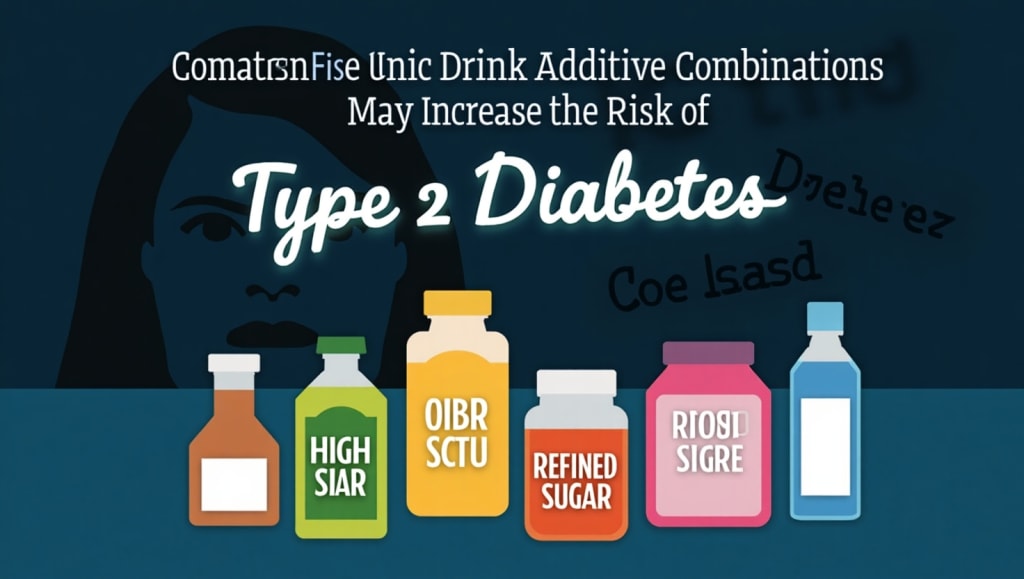
Recent studies have shown that some additive combinations commonly found in ultra-processed foods may increase the risk of type 2 diabetes. This discovery may cause the health guidelines for additive use to be reexamined.
The study, led by a team from Sorbonne Paris North University in France, adds to a growing body of information exploring the potential health impacts of these food additives, which are added to food to enhance its flavor and prolong its shelf life.
The researchers stated in their published analysis that "billions of people around the world consume mixtures of food additives on a daily basis." "So far, safety assessments have been performed substance by substance due to lack of data on the effect of multi-exposure to combinations of additives."
"Our objective was to identify most common food additive mixtures, and investigate their associations with type 2 diabetes incidence in a large prospective cohort."
The researchers used public health data from 108,643 people who were followed for an average of almost 8 years to chart food records vs type 2 diabetes occurrences. Computer techniques were used to calculate the additive mixtures across eating behaviors.
Two of the five additive combinations that were analyzed were linked to an increased risk of type 2 diabetes. In the first, an 8% higher risk was associated with a mixture of modified starches, guar gum, and carrageenan, a popular ingredient in sauces, dairy desserts, and broths.
The second mixture, commonly found in soft drinks and other sweetened liquids, was composed of citric acid, sodium citrates, and artificial sweeteners. It was associated with a 13% higher incidence of type 2 diabetes.
The evidence, which suggests that these chemicals are the cause of a higher number of type 2 diabetes cases, does not clearly show a cause-and-effect relationship, as is common with studies of this nature. However, the relationships are significant enough to raise concerns.
"To our knowledge, these findings provide the first insight into the food additives that are frequently ingested together (due to their co-occurrence in industrially-processed food products or resulting from the co-ingestion of foods in dietary patterns) and how these additive mixtures may be involved in type 2 diabetes etiology," the researchers wrote.
There are a few serious problems with the study. The majority of participants in this study were women, and it's not obvious how broadly these findings may apply, for example, in other countries with differing dietary legislation. Furthermore, it may be difficult to accurately compute additive mixes and overlap across a variety of dietary practices.
"The observed associations are both less than 20 percent, so residual confounding is likely a significant problem within this study," says Alan Barclay, an Honorary Associate at the University of Sydney who was not involved in this study.
It does, however, raise an issue that has rarely been considered previously: the possible combination of chemicals and their impact on human health. Future research could focus on the reasons behind this connection and how it advances our knowledge of the detrimental impacts of highly processed foods.
"These findings suggest that a combination of food additives may be of interest to consider in safety assessments, and they support public health recommendations to limit non-essential additives," the researchers concluded.
About the Creator
Aref
Passionate writer and storyteller exploring life's depths through words. I share insights, personal experiences, and creative tales to connect with readers. Join me on this journey of discovery and inspiration!
Rockwell International Corp: A Legacy of Innovation in Aviation and Aerospace
The aviation and aerospace industries have evolved through the work of several pioneering manufacturers that introduced groundbreaking engineering technologies. One of the most influential companies in this field was Rockwell International, an American industrial giant that contributed significantly to aircraft manufacturing, defense systems, and space exploration.
By Beckett Dowhanabout 13 hours ago in Education
Smart Healthcare Systems: Transforming Medical Operations Through Digital Innovation
The healthcare industry is undergoing a profound transformation as digital technologies reshape the way medical organizations operate. Hospitals, clinics, and healthcare networks are increasingly adopting advanced technological solutions to enhance efficiency, improve patient outcomes, and reduce administrative burdens. As healthcare demands continue to rise globally, technology has become an essential tool for streamlining operations and supporting better coordination among healthcare professionals.
By Brady Beitlich6 days ago in Education



Comments
There are no comments for this story
Be the first to respond and start the conversation.