
Trump’s Executive Order on AI in Schools
A Bold Vision or a Politicized Overreach?

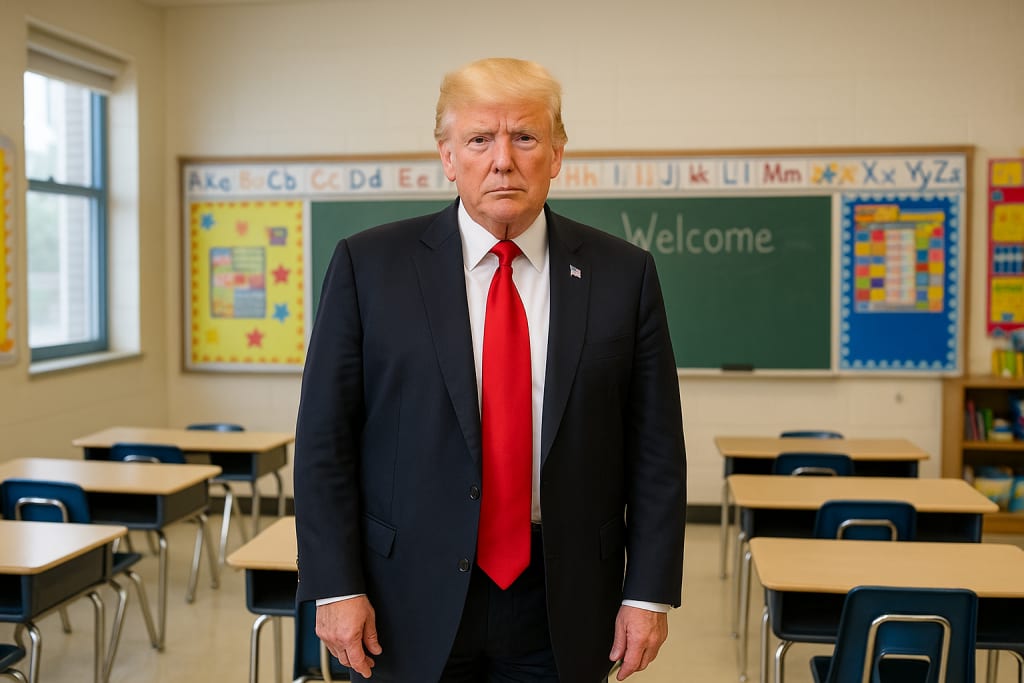
On April 23, 2025, President Donald Trump signed a sweeping executive order aimed at integrating artificial intelligence (AI) education into America's K-12 schools. This initiative mandates the Department of Education and Labor to develop AI-focused curricula and certification programs, incentivizes AI training for teachers, and establishes a White House task force on AI education. While the move underscores the administration's commitment to technological advancement, it also raises questions about federal overreach, ideological motivations, and the broader implications for the U.S. education system.
The Executive Order: Key Provisions
The executive order directs the Departments of Education and Labor to collaborate on developing AI curricula and certification programs for primary and secondary schools. It encourages the integration of AI tools into classrooms and provides incentives for teacher training in AI technologies. A White House Task Force on AI Education, led by Michael Kratsios and including Education Secretary Linda McMahon and Labor Secretary Lori Chavez-DeRemer, will oversee the implementation of these initiatives. This effort is part of the broader "Presidential AI Challenge," which aims to foster public-private partnerships to facilitate the adoption of AI in education.
Potential Benefits: Preparing Students for the Future
Integrating AI education into K-12 schools could offer several advantages:
- Workforce Readiness: As AI continues to transform various industries, equipping students with AI literacy can prepare them for future job markets.
- Educational Enhancement: AI tools can personalize learning experiences, identify student needs, and provide targeted support, potentially improving educational outcomes.
- Global Competitiveness: By fostering AI skills early, the U.S. can maintain its leadership in technological innovation and remain competitive on the global stage.
Concerns and Criticisms
Despite the potential benefits, the executive order has sparked several concerns:
- Federal Overreach: Education policy traditionally falls under state and local jurisdiction. This federal initiative may be seen as encroaching on local control of education systems.
- Ideological Motivations: The administration's emphasis on developing AI "free from ideological bias" and its broader campaign against diversity, equity, and inclusion (DEI) initiatives suggest that political considerations may be influencing educational content.
- Implementation Challenges: Developing and integrating AI curricula across diverse school districts with varying resources could be logistically complex and financially burdensome.
Broader Educational Reforms and Political Context
The AI education initiative is part of a series of executive orders signed by President Trump aimed at reshaping U.S. education policy. These orders include measures to:
- Threaten withdrawal of federal funding from universities that fail to disclose foreign financial contributions.
- Dismantle DEI practices within higher education institutions.
- Encourage universities to prioritize "intellectual diversity" among faculty and to track student outcomes without consideration of race, ethnicity, or sex.
Critics argue that these actions represent an aggressive federal intrusion into education and reflect an ideologically driven agenda. Organizations like the American Federation of Teachers have criticized the selective nature of these reforms.
Personal Perspective: Balancing Innovation and Autonomy
The integration of AI into education is a forward-thinking initiative that acknowledges the evolving technological landscape. However, the success of such a program hinges on careful implementation that respects the autonomy of local education systems and avoids politicization.
While standardizing AI education can ensure a baseline of knowledge, it's crucial to allow flexibility for schools to adapt curricula to their unique contexts. Moreover, the development of AI tools and content should be guided by educational objectives rather than political ideologies.
Conclusion
President Trump's executive order to incorporate AI education into K-12 schools represents a significant shift in U.S. education policy. While it holds promise for preparing students for a technologically advanced future, it also raises important questions about federal involvement, ideological influences, and the practical challenges of implementation. As this initiative unfolds, it will be essential to monitor its impact on educational equity, local control, and the broader goals of fostering an informed and capable citizenry.
About the Creator
Roy Hendershot
AI enthusiast sharing insights, articles, and trends on how artificial intelligence is reshaping industries, creativity, and everyday life. Let’s explore the future together!
Keep reading
More stories from Roy Hendershot and writers in Education and other communities.
How to Make Money With Artificial Intelligence
Profiting from the Algorithm: Your Guide to Making Money with Artificial Intelligence The rise of artificial intelligence is reshaping industries, transforming workflows, and creating entirely new economic opportunities. Far from being a futuristic concept, AI is a present-day reality offering diverse avenues for individuals and businesses to generate income. Understanding how to harness this powerful technology is becoming increasingly vital for financial growth and professional relevance in the 21st century. Making money with AI is not limited to data scientists or machine learning experts; it is increasingly accessible to entrepreneurs, freelancers, content creators, and even those in traditional roles who learn to leverage AI tools effectively. This guide explores various practical strategies for turning artificial intelligence capabilities into revenue streams.
By Roy Hendershot9 months ago in Geeks
The Psychology of Conviction: How Successful People Execute Bold Ideas Fearlessly
Executing bold ideas requires more than just ambition and creativity; it demands a powerful mindset. Many people come up with great ideas, but only a few can confidently and consistently turn those ideas into reality. What separates those who execute fearlessly from those who hesitate or abandon their plans is a deep psychological understanding of conviction.
By Brian Ferdinand7 days ago in Education
Co-Parenting in the Digital Age
Co-Parenting in the Digital Age: Shared Circles, Alerts, and Neutral Tech Tools Modern co-parenting requires a modern toolkit. Beyond shared calendars, technology offers powerful ways to foster cooperation, ensure consistency, and prioritize your child's safety. The right digital approach can reduce conflict and create a more stable environment for everyone.
By Olivia Martinez6 days ago in Education
The Devil's Cut
“Comrade, finally you’re awake.” The voice was smooth, sensual. A flickering incandescent bar was all that lit the white, sterile room. All Vladimir remembered was everything going black. He tried to move his arms and found them strapped to the gurney.
By Matthew J. Fromm7 days ago in Fiction


Comments
There are no comments for this story
Be the first to respond and start the conversation.