
Trump Proposes to Reopen Alcatraz: A Look Back at the Legendary Prison's History
Exploring the Infamous Past of Alcatraz Island and Its Notable Inmates

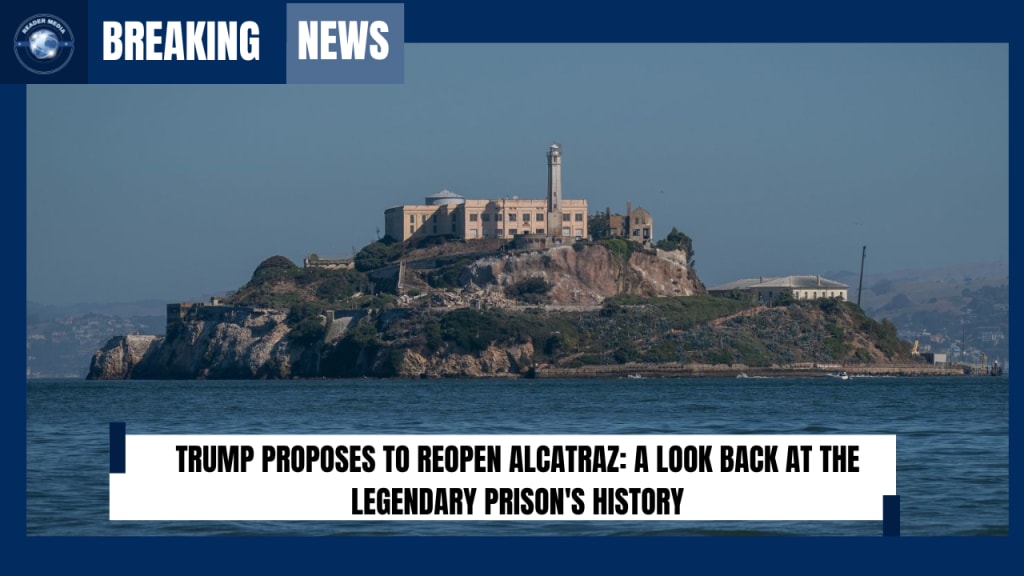
In an unexpected announcement, President Donald Trump recently proposed reopening one of the most famous prisons in American history – Alcatraz. Located on a small island off the coast of San Francisco, Alcatraz was home to some of the most notorious criminals of the 20th century, including the likes of Al Capone, George “Machine Gun” Kelly, and James “Whitey” Bulger.
Trump, who made the statement on Sunday through his social media platform, Truth Social, suggested that Alcatraz could be restored as a symbol of law, order, and justice. While he mentioned that it was just an idea and not a confirmed plan, the announcement has sparked conversations about the past and legacy of the infamous prison.
The History of Alcatraz Prison
From Military Fort to Maximum-Security Prison
Alcatraz Island, with its strategic location in San Francisco Bay, has a long history that goes beyond being a federal prison. In the 1850s, the U.S. Army established a fort on the island to protect the bay from potential foreign invasions, especially during the Civil War. Over time, the island transformed into a military prison, where it remained until 1933.
In 1934, Alcatraz was officially handed over to the U.S. Department of Justice, marking the beginning of its decades-long history as a maximum-security federal penitentiary. It became known as “The Rock,” a place where the most dangerous and unmanageable criminals were sent. With its isolated location and harsh conditions, it was designed to house those considered too dangerous for other prisons.
Life Behind Bars: A Harsh Existence
The Strict Regime and Minimal Privileges at Alcatraz
Alcatraz was known for its strict regime and minimal privileges. Prisoners were given only the basic essentials: food, clothing, shelter, and medical care. All other rights, including family visits, reading materials, and access to recreational activities, had to be earned through good behavior. It was a place that served to send a clear message about the federal government's commitment to justice and control during a time of rising crime in America.
The prison housed a relatively small population – about 260 to 275 prisoners at any given time – making up less than 1% of the total federal prison population. Most inmates were transferred to Alcatraz because they were considered “escape risks” or had been unruly in other institutions.
The Infamous 1962 Escape Attempt
A Daring Escape that Became a Legend
One of the most famous stories in Alcatraz’s history is the daring 1962 escape of three inmates: Frank Morris, and brothers John and Clarence Anglin. They managed to break free using a series of homemade tools, including spoons, and constructed a raft out of stolen raincoats. After escaping their cells and crawling through ducts, the trio managed to make it to the prison’s roof before disappearing into the waters of San Francisco Bay.
While the FBI’s investigation concluded that the escapees likely drowned in the cold, turbulent waters, no bodies were ever recovered. The mysterious escape became the stuff of legends, and it was even made into a movie, Escape from Alcatraz starring Clint Eastwood.
Despite numerous attempts, Alcatraz remained escape-proof, and officially, no one ever succeeded in leaving the island alive.
The Birdman of Alcatraz
Robert Stroud’s Fascinating, Yet Troubling, Legacy
Another well-known figure associated with Alcatraz was Robert Stroud, known as the "Birdman of Alcatraz." Stroud was convicted of manslaughter in 1909 and later killed a prison guard, earning him a life sentence. While imprisoned at Alcatraz, he gained notoriety for his work with birds, particularly canaries. Despite being confined to solitary confinement, Stroud published books on bird diseases and raised birds within his cell. However, his time in Alcatraz was not without controversy, as he also used equipment intended for his bird studies to create a makeshift distillery.
Stroud's time in Alcatraz sparked the public’s fascination with both the prison and his life. His story was later turned into a popular movie, Birdman of Alcatraz, starring Burt Lancaster.
The End of Alcatraz as a Federal Prison
High Costs and Decaying Infrastructure Lead to the Prison’s Closure
By the 1960s, the conditions at Alcatraz had deteriorated. The buildings were corroding due to the salty sea air, and it became increasingly expensive to maintain the facility. It was estimated that it would cost between $3 million and $5 million to restore the prison, excluding daily operational expenses. With high maintenance costs and declining infrastructure, the U.S. government closed Alcatraz in 1963.
After the prison closed, the island remained largely unused until 1969 when a group of Native American activists occupied it in protest. They argued that the U.S. government had broken its promises to Native Americans under the Treaty of Fort Laramie. Their occupation lasted for 19 months, drawing significant attention to the plight of Native Americans.
Alcatraz Today: A Popular Tourist Destination
Alcatraz as a National Landmark and Tourist Attraction
Today, Alcatraz is operated by the National Park Service and serves as a major tourist attraction. Visitors can explore the prison’s historic cell blocks, view exhibits detailing its past, and learn about the famous figures who spent time there. The island attracts about 1.2 million visitors each year and was designated as a National Historic Landmark in 1986.
Although Alcatraz now serves as a peaceful historical landmark, its dark past as a prison continues to captivate the public’s imagination.
Could Alcatraz Reopen?
Trump’s Proposal Sparks Debate on the Feasibility and Relevance of Reopening Alcatraz
President Trump’s suggestion to reopen Alcatraz has prompted both intrigue and skepticism. Some see it as a way to reinstate a strong symbol of justice, while others, including former House Speaker Nancy Pelosi, have dismissed it as a non-serious proposal. The decision to reopen the prison would not only raise questions about its cost and practicality but also about its role in the modern criminal justice system.
Alcatraz's history is a testament to its role in shaping the American penal system, but whether or not it will ever house criminals again remains uncertain. For now, the island stands as a historical reminder of the past, offering a glimpse into one of the country’s most infamous and heavily guarded prisons.
Alcatraz’s Legacy: A Symbol of America’s Toughest Prison
Alcatraz’s reputation as one of America’s most notorious prisons endures to this day, thanks to its history of high-profile criminals, daring escape attempts, and its lasting cultural impact. Whether President Trump’s idea of reopening the prison will become a reality or not, it remains an undeniable symbol of America’s complex relationship with law and justice. For now, it continues to stand as a fascinating piece of American history, drawing millions of tourists each year, who are eager to learn about its past and its infamous inmates.
Disclaimer
This content has been created by an AI language model and is intended to provide general information. While we strive to deliver accurate and reliable content, it may not always reflect the latest developments or expert opinions. The content should not be considered as professional or personalized advice. We encourage you to seek professional guidance and verify the information independently before making decisions based on this content.
This information is sourced from CNN
About the Creator
Reader Media News
Welcome to Reader Media – your go-to source for the latest news, expert insights, and in-depth articles across business, tech, health, entertainment, sports, and more. Stay informed and engaged with the world through quality content.
Keep reading
More stories from Reader Media News and writers in Education and other communities.
Trump Claims He’s “Bringing Back” Columbus Day — But It Never Left
Former President Donald Trump made headlines again by claiming he will "reinstate" Columbus Day as a federal holiday. However, the reality is a bit different. Columbus Day remains a federal holiday, even though many states and cities now celebrate Indigenous Peoples Day instead.
By Reader Media News11 months ago in Education
Smart Borrowing Strategies Before Applying for a Property Loan
Property ownership is often viewed as a symbol of financial stability and long-term success. Whether purchasing a home for personal use or investing in real estate for income, most buyers rely on financing to complete the transaction. While borrowing money makes property ownership possible for many people, it also introduces long-term financial responsibilities. Taking a loan without careful preparation can create financial strain that lasts for years. For this reason, planning before borrowing is one of the most important steps in the property-buying process.
By Eric Kleiner5 days ago in Education



Comments
There are no comments for this story
Be the first to respond and start the conversation.