
Tragedy in Mianwali: Electrocution Highlights Hidden Dangers of Solar Panel Maintenance
Take care every one

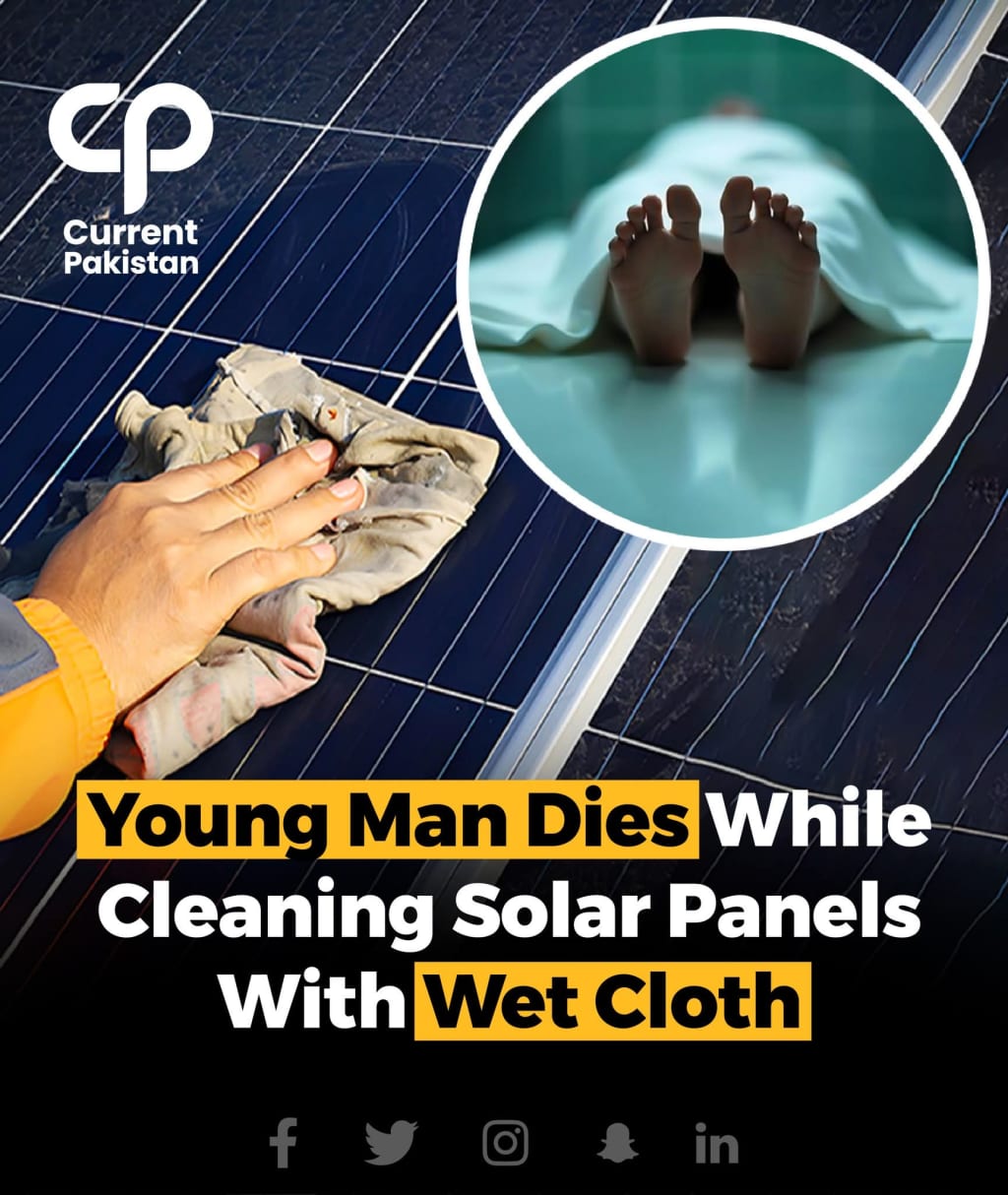
Tragedy in Mianwali: Electrocution Highlights Hidden Dangers of Solar Panel Maintenance
In a deeply saddening incident that has left a community in shock, a young boy from Mianwali, Punjab, lost his life due to electrocution while cleaning solar panels. What began as a routine task turned into a fatal accident, underscoring the importance of proper safety protocols when handling solar energy systems.
The boy, whose name has not been released for privacy reasons, was reportedly cleaning rooftop solar panels using a damp cloth—a common practice in households trying to maintain the efficiency of their solar setups. However, under direct sunlight, the solar panels had become fully charged. As electricity naturally flows through conductive materials like water, the wet cloth created a direct path for electric current to pass through his body. The result was a fatal electric shock.
This tragic event serves as a powerful reminder that while solar panels are often seen as clean, safe, and eco-friendly sources of energy, they can pose serious electrical hazards if not handled correctly. The assumption that solar panels are "safe because they are not connected to the grid" is dangerously misleading. In reality, solar panels generate electricity the moment they are exposed to sunlight, and under peak sunlight, the voltage can be high enough to cause serious injury or death.
The Danger of Direct Current (DC) Electricity
One key factor that makes solar panels particularly dangerous is that they generate direct current (DC) electricity, as opposed to the alternating current (AC) typically used in homes. DC electricity is more persistent and can be harder to interrupt, making electric shocks more severe. While a solar system may be designed to operate at safe voltage levels, panels connected in series can cumulatively produce voltage in excess of 400 volts.
When the young boy in Mianwali used a damp cloth, he unintentionally provided a low-resistance path for the current. The moisture in the cloth acted as a conductor, and since his body was likely in contact with metal frames or other conductive surfaces, the electrical circuit completed through him. Sadly, the outcome was irreversible.
Cleaning Solar Panels: Best Practices
Cleaning solar panels is a common and often necessary task, especially in areas with dust, pollution, or frequent bird droppings, which can affect panel efficiency. However, experts strongly advise that anyone performing such maintenance follow strict safety protocols to avoid dangerous accidents.
Here are some key guidelines for safely cleaning solar panels:
Turn Off the System: Always switch off the inverter or controller before beginning any maintenance. This helps minimize the risk of electric shock.
Avoid Water When Panels Are Active: Never use water or a damp cloth when the panels are active (i.e., when they are exposed to sunlight). If cleaning is necessary during the day, use a dry microfiber cloth or a specialized brush with an insulating handle.
Use Proper Tools: Tools designed specifically for solar panel cleaning—such as non-conductive poles and soft brushes—should be used. These reduce the risk of damaging the panels or creating an electric circuit.
Wear Protective Gear: Rubber gloves, rubber-soled shoes, and non-metallic ladders are recommended to reduce the risk of electrocution.
Schedule Cleaning During Low Light Hours: Ideally, cleaning should be done early in the morning or late in the evening when the panels are not generating electricity, or on overcast days when solar activity is minimal.
Seek Professional Help: If there is any doubt about safety or technique, it is always advisable to hire trained professionals who understand the risks and proper safety measures.
The Need for Public Awareness
The accident in Mianwali is not an isolated case. As solar power becomes more accessible and widely adopted in Pakistan and other developing countries, especially in off-grid or rural areas, there is a growing need for public awareness campaigns on solar safety. Unfortunately, in many households, solar panels are installed without adequate education about their potential dangers.
Electricians and solar technicians often assume users know how to operate and maintain the system safely. But for most families, especially those living in remote areas, the systems are handed over without detailed instruction or written safety guidelines.
Preventable Losses
What makes the tragedy in Mianwali even more heartbreaking is that it was entirely preventable. With better awareness, education, and simple precautionary measures, this young life could have been saved.
Parents and community members must be educated about the risks associated with solar panels. Children should be warned never to go near the system, especially when it is active. Maintenance tasks, no matter how simple they seem, should always be supervised or conducted by someone with at least basic electrical safety knowledge.
Role of Government and Industry
This incident should serve as a wake-up call for regulatory authorities and the solar energy industry. Manufacturers, vendors, and installers have a responsibility to provide safety training and documentation along with every solar system sold. Instructions on safe cleaning procedures, voltage warnings, and emergency shutdown protocols should be made mandatory.
In addition, government bodies like the Pakistan Alternative Energy Development Board (AEDB) should consider launching nationwide awareness campaigns to educate citizens about the potential hazards of solar technology. These can be in the form of community workshops, TV or radio programs, and printed materials in regional languages.
Final Thoughts
The loss of a young life in Mianwali is a tragedy no family should have to endure. As Pakistan and other countries embrace renewable energy sources like solar power, it is critical to pair that transition with education, training, and robust safety protocols.
Solar power is a powerful tool in the fight against energy poverty and climate change, but with great power comes great responsibility. Proper handling, maintenance, and respect for the technology can prevent such devastating incidents in the future.
Let this tragedy not be in vain—let it be a turning point for greater awareness, responsibility, and care in how we use the power of the sun.
About the Creator
Israr khan
I write to bring attention to the voices and faces of the missing, the unheard, and the forgotten. , — raising awareness, sparking hope, and keeping the search alive. Every person has a story. Every story deserves to be told.
Keep reading
More stories from Israr khan and writers in Education and other communities.
Why the Sun’s Core Is Hotter Than Its Surface: The Science Behind the Sun’s Extreme Temperatures
Introduction: A Cosmic Mystery in the Sky Every day, the Sun rises and lights up our world. It warms the oceans, powers plants through photosynthesis, and drives Earth’s climate system. Yet behind this familiar glow lies one of the most fascinating mysteries of astrophysics: the Sun’s core is far hotter than its surface.
By shahkar jalal2 days ago in Education
Hottest in the Office
Dear Rafi, You’re very distracting to work around. For the first second I saw you the other day, I thought you were some type of executive. It took a moment to realize no, you were just the new guy, dressed up for the job he wants. Be still, my heart.
By Gabriel Shames6 days ago in Pride




Comments (1)
yes exactly