
Top SRE Certification Trends to Watch in 2024
Emerging Skills and Innovations Shaping the Future of Reliability Engineering
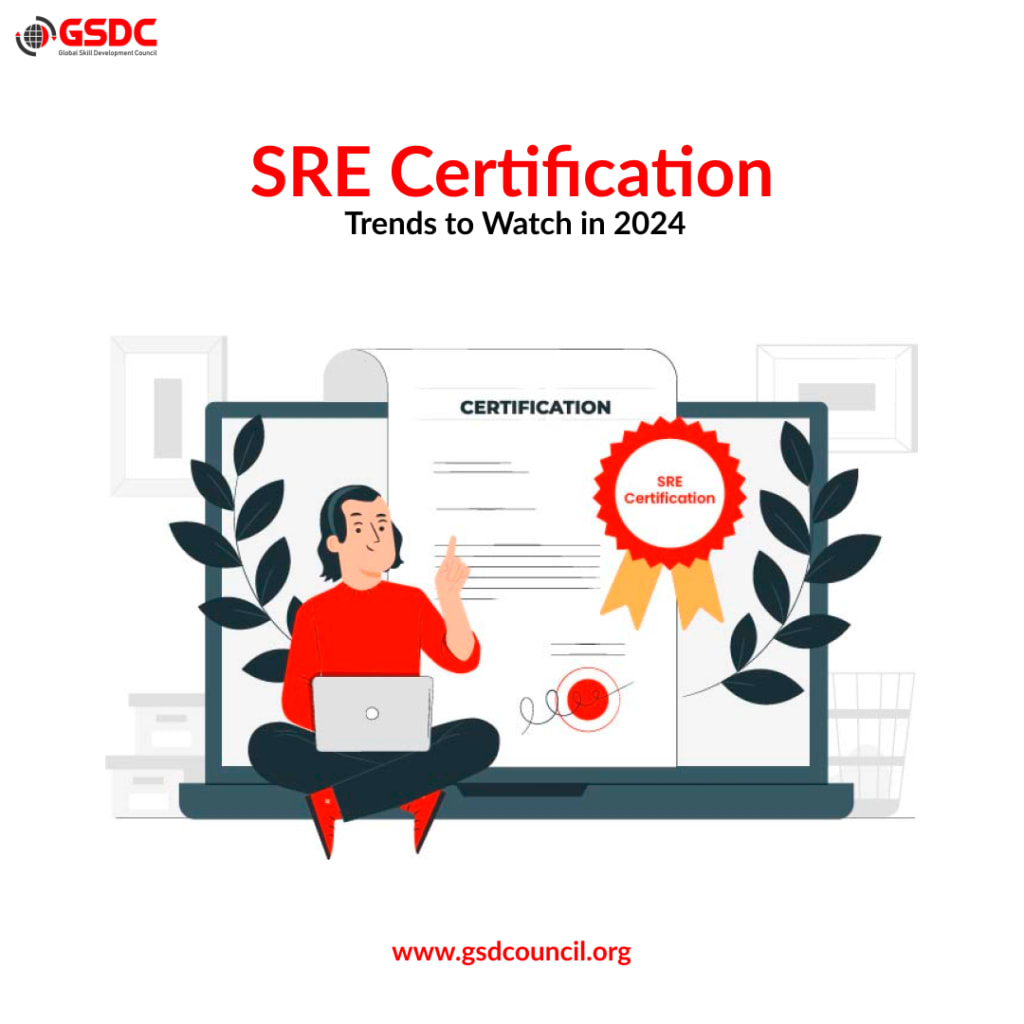
SRE certification demonstrates that individuals possess a certain level of expertise in the principles and practices of site reliability engineering. This can lead to improved problem-solving skills and a deeper understanding of how to maintain and enhance system reliability. New advancements and trends in the IT landscape are found in the continuous growth of Site Reliability Engineering (SRE) certifications. As the need for reliable, scalable, and efficient systems in an ever-complex digital environment grows more pressing, the demand for SRE-certified professionals is on a constant rise. Check out these top SRE Foundation certification trends to watch in 2024:
1. Focus on Cloud-Native SRE Practices
As cloud-native architectures such as Kubernetes and micro services are becoming the norm, certifications in SRE are now specialized into cloud-native tools and practices. The trend has shifted to more training in reliability management in dynamic clouds and hybrid clouds and multi-cloud environments. Automation, container orchestration, observability, and cloud-native monitoring tools like Prometheus and Grafana.
2. AI and ML in Operations
AI and ML are used to predict system failures, automate incident resolution, and optimize system performance. SRE certificate programs are incorporating AI/ML principles to teach professionals how to integrate intelligent automation into their workflows. AI-driven observability, predictive monitoring, and automated root cause analysis.
3. Specialized Certifications for Industry Verticals
Many organizations in industries, such as healthcare, finance, and retail, have different requirements for reliability. Certifications are slowly shifting to be more industry-specific. New certifications that focus on teaching how to handle only the challenges that differ based on the industry concerning regulatory, compliance, and reliability challenges.
Banks could look for certifications that include studying for reliability under strict regulation constraints.
4. Focus on SLOs, SLIs, and Error Budgets
Service Level Objectives (SLOs), Service Level Indicators (SLIs), and error budgets continue to be the heart of SRE best practices. Specialized advanced modules are now being introduced by certifications. Advanced certification modules emphasize the practice of implementing, monitoring, and optimizing SLOs and SLIs to gain reliability while keeping up with innovation. Balancing feature deliverability and system stability.
5. Global Standardization of SRE Certification
As organizations around the globe move towards SRE practices, certification bodies are attempting to create standardizations for SRE-related certifications. More and more organizations are moving to globally recognized certifications so that there is uniformity in one's skills and knowledge. It Helps employers easily benchmark a given candidate and career mobility for professionals.
6. Blended Learning Models and Hands-on Training
SRE certifications have evolved toward flexible delivery formats combined with online courses, virtual labs, and real-world projects. Programs now emphasize experiential learning, where candidates can take concepts such as incident response and reliability testing and apply them in simulations.
7. SRE for DevSecOps Integration
Integration of security into DevOps often referred to as DevSecOps is becoming the norm. Certifications are starting to consider how SRE can be integrated with security practices in system design and operations. Certifications in SRE now emphasize secure automation, monitoring, and incident management.
8. Promising SRE to be a Leader
With SRE crossing the technical boundary, certifications are adding leadership and strategic management skills that develop future leaders Certifications now include modules on team management, stakeholder communication, and aligning reliability with business goals. Certified professionals are also built up as potential leaders, such as SRE managers and directors.
9. Edge Computing and IoT SRE Certification
Edge computing and IoT are accelerating the growth of SRE to develop its best practice for a very decentralized environment. Certifications now begin to cover reliability practices in edge systems localized fault tolerance and monitoring with low latency.
The SRE certification landscape is evolving rapidly, reflecting the growing importance of reliability in IT operations. From cloud-native systems and automation to leadership and IoT, these trends demonstrate that SRE certification is no longer optional but a vital tool for staying relevant in a dynamic IT environment.
Professionals who continue to pursue SRE certifications in 2024 will be ahead of innovation. They can handle the complexity of modern systems and help organizations meet their reliability goals.
About the Creator
GSDC
Reasearch Analyst
Restored to Its Roots: The Homecoming of a Historic Waterwheel
The quiet sound of rushing water once again spins a historic waterwheel in its original location. After decades of absence, the wheel has returned to the same stream it once relied on for power, bringing a sense of closure and continuity to a community that never forgot its value. This return marks not just the restoration of a structure but the revival of a piece of living history.
By Grady Gaston3 days ago in Education
How to Enhance Team Productivity
Team productivity improves when leadership replaces guesswork with structure, clarity, and accountability. Through Strategic coaching, businesses enhance productivity by aligning teams around clear outcomes, defined roles, strong communication systems, and leadership driven standards creating high performance teams that operate without constant supervision.
By Alice Adams2 days ago in Education
Smart phones, Humans and Aliens.
WARNING. I will be tapping into one of your favorite creative tensions: The absurdity of humans worshipping their glowing rectangles as if they were tiny oracles. There’s something deliciously poetic about that contradiction, and it lends itself beautifully to an instructive proviso.
By Novel Allen6 days ago in Poets


Comments
There are no comments for this story
Be the first to respond and start the conversation.