
Top 15 FAQs Answered by a Kidney Specialist: From Diagnosis to Treatment
Kidney disease is a growing global health concern. It can develop silently over many years and often goes unnoticed until it reaches an advanced stage.

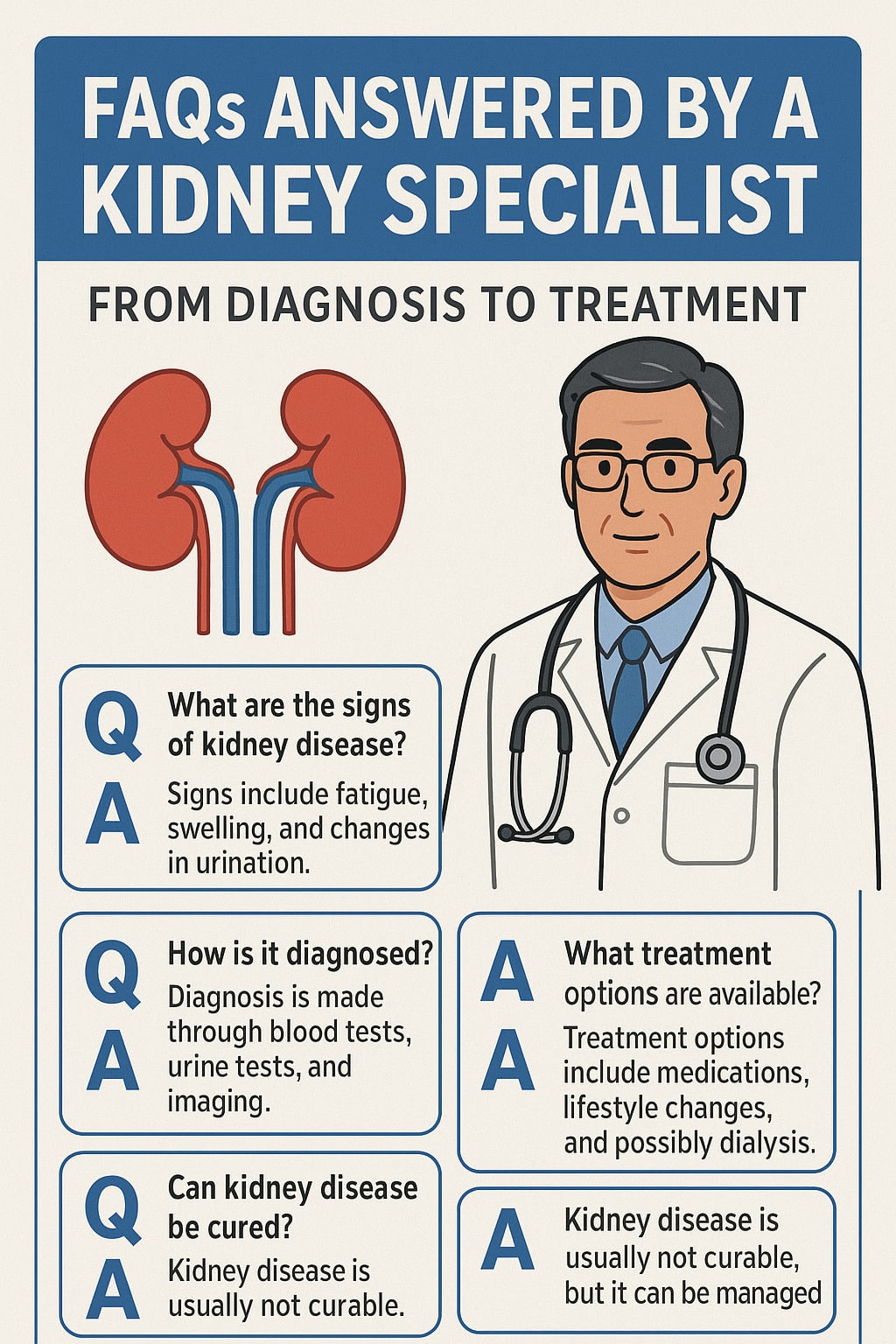
Kidney disease is a growing global health concern. It can develop silently over many years and often goes unnoticed until it reaches an advanced stage. To promote awareness and better management, we’ve compiled 15 of the most commonly asked questions answered by a nephrologist—your kidney specialist.
1. What do the kidneys actually do?
Your kidneys are vital organs that perform several essential tasks: they filter blood to remove waste products and excess fluids, regulate blood pressure by balancing salt and water, balance electrolytes like sodium, potassium, and calcium, and produce hormones that support red blood cell production and bone health. Each day, your kidneys filter about 50 gallons of blood and remove around 2 quarts of waste and water through urine.
2. What are the common symptoms of kidney disease?
Kidney disease is often called a “silent disease” because symptoms may not appear until the damage is significant. Watch for fatigue or unexplained weakness, swelling in the feet, ankles, or face, foamy or dark-colored urine, frequent or reduced urination, nausea, high blood pressure, and difficulty concentrating.
3. What causes kidney disease?
The most common causes of chronic kidney disease (CKD) are diabetes and high blood pressure. Other causes include autoimmune diseases like lupus, genetic disorders such as polycystic kidney disease, repeated urinary tract infections, and long-term use of medications like NSAIDs.
4. How is kidney disease diagnosed?
Diagnosis involves blood tests to measure creatinine and estimate GFR (glomerular filtration rate), urine tests to detect protein or blood, imaging tests such as ultrasound or CT scans, and in some cases, a kidney biopsy to determine the specific cause.
5. Can kidney disease be reversed?
It depends on the type of kidney disease. Chronic kidney disease is usually not reversible, but its progression can be slowed or stabilized with proper management. Acute kidney injury is often reversible if treated early.
6. What is GFR and why is it important?
GFR (glomerular filtration rate) estimates how well your kidneys are filtering your blood. A normal GFR is 90 or higher. Lower values indicate stages of kidney disease, with stage 5 being kidney failure.
7. What are the stages of kidney disease?
There are five stages:
* Stage 1: Kidney damage with normal function
* Stage 2: Mild decline in function
* Stage 3: Moderate decline
* Stage 4: Severe decline
* Stage 5: Kidney failure (may require dialysis or transplant)
8. What diet changes are needed for kidney patients?
A renal-friendly diet typically includes limiting sodium to control blood pressure, reducing protein intake, avoiding foods high in potassium and phosphorus, and managing fluid intake if necessary. A kidney dietitian can help personalize these guidelines.
9. What medications should be avoided with kidney disease?
People with kidney issues should be cautious with NSAIDs like ibuprofen, certain antibiotics, contrast dyes used in imaging tests, and unregulated herbal supplements. Always check with your doctor before starting any new medication.
10. Is dialysis the only option for kidney failure?
Dialysis is a common treatment, but not the only one. Options include hemodialysis, peritoneal dialysis, kidney transplant, and in some cases, conservative care without dialysis, depending on the patient's condition and preferences.
11. How does dialysis work and what should I expect?
Dialysis removes waste and excess fluid from your body when your kidneys can no longer do it. Hemodialysis involves filtering your blood through a machine, usually several times a week. Peritoneal dialysis uses a solution in your abdomen to clean your blood daily. Each method has pros and cons depending on your lifestyle and health needs.
12. Can you live a normal life with one kidney?
Yes. Many people live healthy lives with one kidney, whether from donation, surgery, or being born with one. Regular monitoring and a healthy lifestyle are key.
13. Is kidney disease hereditary?
Some types of kidney disease are inherited, such as polycystic kidney disease (PKD) and Alport syndrome. If you have a family history, it’s wise to discuss screening with your healthcare provider.
14. How can I prevent kidney disease?
You can reduce your risk by maintaining healthy blood pressure and blood sugar, staying hydrated, eating a balanced diet, exercising regularly, avoiding smoking and excessive alcohol, and getting regular kidney function tests if you're at risk.
15. When should I see a kidney specialist?
You should see a nephrologist if your GFR is below 60, if you have protein or blood in your urine, if you have uncontrolled high blood pressure or diabetes, if you’re experiencing symptoms of kidney dysfunction, or if you’re approaching kidney failure and need help planning treatment.
Final word
Kidney disease is serious but manageable. The key is early detection, lifestyle changes, and staying informed. If you suspect any issues with your kidneys or have risk factors like diabetes or hypertension, speak with your doctor or a kidney specialist sooner rather than later.
About the Creator
Epitome Hospital
Epitome Kidney Urology Institute & Lions Hospital, a proud part of Integrated Kidney Solutions Pvt. Ltd., is more than just a hospital – it’s a promise of excellence in healthcare. With 80 beds, including a 24/7.
Keep reading
More stories from Epitome Hospital and writers in Education and other communities.
Early Signs of Kidney Disease You Shouldn’t Ignore
Kidney disease is often referred to as a “silent killer” because its early symptoms can be subtle or mistaken for other conditions. By the time many people notice something is wrong, the damage to their kidneys may already be significant. Early detection is key to managing kidney disease and slowing its progression. That’s why understanding the early warning signs—and seeking expert medical care when needed—is so critical.
By Epitome Hospital9 months ago in Writers
Everyday Cooking Skills That Turn Home Kitchens Into Creative Spaces
Cooking at home is more than a routine task. It is a practical life skill that supports better health, saves money, and encourages creativity. While recipes are helpful, true kitchen confidence comes from understanding essential cooking skills that work across countless dishes. When home cooks grasp these fundamentals, they can adapt recipes, solve problems, and cook with freedom rather than fear.
By Erika Mackinnonabout 18 hours ago in Education


Comments
There are no comments for this story
Be the first to respond and start the conversation.