
Top 10 Sustainable Building Materials for Green Construction
Unique materials for Green Constructions

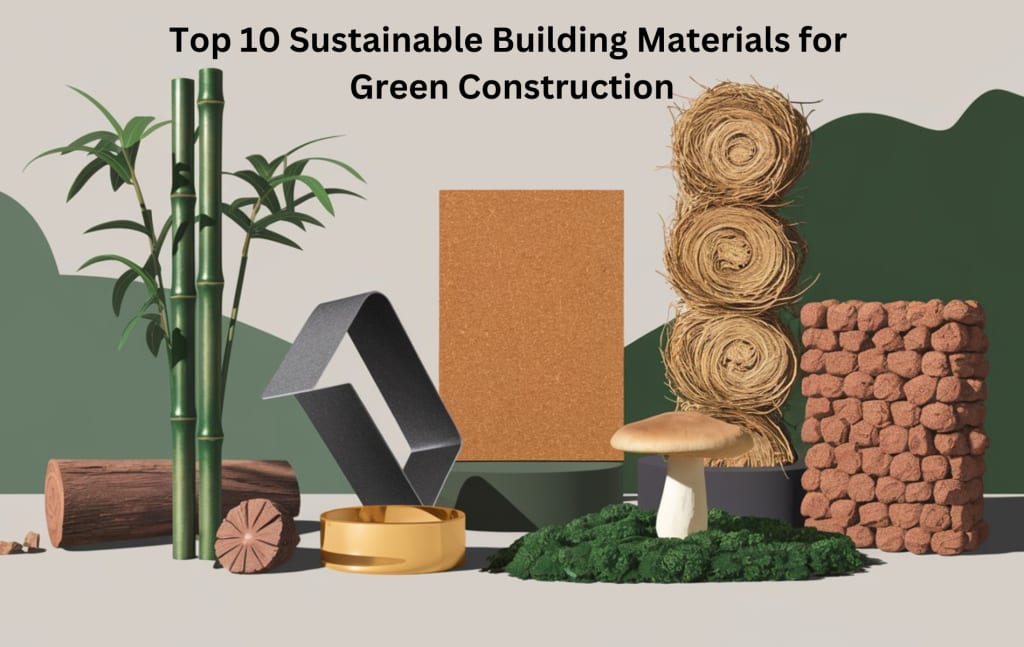
Buildings are undoubtedly an artefact of culture. Just think of red brick houses in suburban American centres, wood-clad cabins in rural Finland, and complex adobe structures in West Africa. Depending on where you look , the materials we build with vary based on resource availability and scarcity , climate, and culture. The beauty of architecture and construction comes from its flexibility in design.
However, some building materials are more sustainable than others , and as the construction industry races to reduce CO2 emissions and build more sustainably, new green building materials are here to stay. Proper use of building materials helps reduce the embodied carbon emissions in a structure, which is why we are exploring some of the best materials for green building
These are the best sustainable materials for construction:
1. Recycled steel
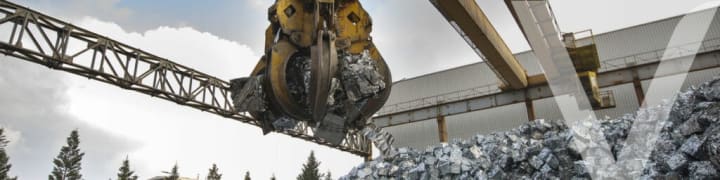
You may not know it, but steel is one of the most recycled building materials due to its durable nature. Used steel can be just as good as new, which is why it is a reliable and age-old building material.
Initial steel production can be harmful to the environment due to its significant CO2 footprint during manufacturing. Therefore, given the high demand for steel in the construction sector, using its recycled version is an excellent way to reduce the overall carbon footprint of the project.
In addition, this material is water and pest resistant, durable and does not require frequent maintenance, which also contributes to reducing operational carbon emissions.
2. Bamboo
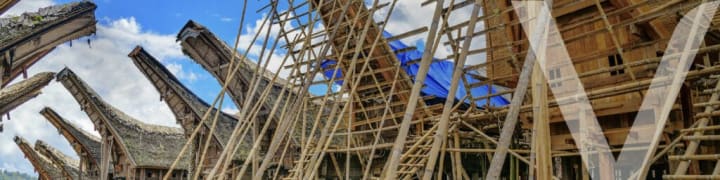
Did you know that bamboo can grow up to 1.5 inches per day? Due to its fast-growing properties, flexible nature, and abundance in nature, bamboo tops our list as one of the most sustainable and cost-effective building materials .
Bamboo grows on every continent except Europe and Antarctica, and has an incredible strength-to-weight ratio, making it a valuable material in projects around the world.
3. Cork

Cork comes from the “cork oak” tree, which is one of the few trees where harvesting the bark does not cause harm. Cork has practical applications in our everyday lives – think of wine corks and cork boards – but it is also an excellent recyclable and renewable building material.
Cork is not only lightweight, water-resistant, abrasion-resistant and fire-retardant, but it also has immense insulation capabilities, which is why its use in internal and external cladding is growing in the industry. In fact, due to its neutral tones, its attractive aesthetic appearance makes it a hit among designers and architects.
4. Hempcrete

A new concept in construction is the use of materials with a minimal carbon footprint, those that absorb carbon dioxide during their lifespan. Hempcrete is one of these so-called carbon-negative materials. Hemp fibre, the raw material behind Hempcrete, is similar to wood, except that it renews itself much faster.
Combined with lime, Hempcrete has a similar shape and strength to concrete, but with a much lighter weight. Its use in construction is mainly as an insulator, since it has excellent thermal and acoustic properties and is fire resistant.
5. Precast concrete

I bet you weren’t expecting to see concrete on this list; however, precast concrete is, in fact, a sustainable building material and here’s why. Precast concrete is manufactured off-site in a factory environment, which reduces many of the CO2 emissions in ready-to-use concrete that is poured and hardened on-site.
With precast concrete, manufacturers can ensure exact measurements, reducing waste and the amount of energy needed to produce and assemble traditional concrete. Additionally, some new varieties of concrete can reabsorb up to 25% of their embodied carbon footprint over their lifetime. Precast concrete is a sustainable alternative to the most in-demand and widely used material in industry.
6. Recycled or reclaimed wood

Reclaimed or recycled wood goes beyond aesthetics. While it is the perfect material to create a rustic feel, recycled or reclaimed wood can help save trees and reduce the amount of wood waste that ends up in our landfills. Lightweight yet strong, reclaimed wood is a sustainable building material that indirectly promotes biodiversity by reducing the number of trees needed for harvesting.
7. Mycelium

Mycelium is a network of fine fungal filaments called hyphae. Think of it like the root of a plant, but in fungi. Although mycelium varies greatly in size, from microscopic to gigantic, it is playing an important role in Green Building.
When dried, mycelium can be used as an environmentally sustainable building material that is resistant to water, mold, and fire. When combined with pasteurized sawdust, mycelium can be transformed into almost any shape.
Mycelium is still largely experimental in the construction industry, but there is a growing desire to incorporate this biodegradable material into new and renovated buildings.
8. Recycled plastic
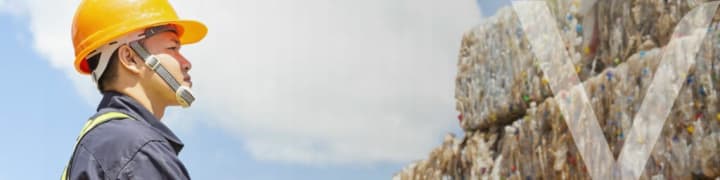
Single-use plastics are one of the biggest threats to the environment, so their reuse is a great opportunity for green construction and promoting a circular economy .
Recycled plastic can be used to create plastic sheeting, concrete, bricks, wood, pipes, roofing, flooring, and PVC. Plastic typically has a low recycling rate, so its recycled form helps reduce the amount of waste clogging our water bodies and landfills.
9. Terrazzo

Terrazzo is officially the most unique building material on our list , as no two finishes are the same. Terrazzo is a composite material used primarily for flooring, countertops, and stairs.
It is made of marble, granite, quartz, glass and other materials, usually bonded with cement or epoxy resin. Its history dates back more than 500 years to Italy , where workers collected materials from high-end projects and reused them in their own homes and terraces.
The use of repurposed raw materials is what makes terrazzo an eco-friendly building option. Plus, thanks to its durability compared to other flooring options (e.g. carpet), it can lead to less waste and more savings in the long run.
10. Recycled glass

Glass is a difficult material to recycle, which is why it is one of the most common materials thrown away in landfills. This gives us more reason to explore its possibilities for reuse and recycling
About the Creator
Nazir Bhatkar
I am a digital marketer and content writer.
Keep reading
More stories from Nazir Bhatkar and writers in Education and other communities.
Sleep instead of excess weight.
By 2025, one in five people on Earth will be obese, according to a forecast from a collaboration studying risk factors for non-communicable diseases. And it’s not just about poor nutrition and low physical activity. As several research teams note, lack of sleep prevents you from getting rid of extra pounds. Anyone who sleeps less than the recommended eight hours a night tends to have difficulty losing weight, even if they follow a strict diet.
By Nazir Bhatkar2 years ago in Education
The Impact of Virtual Reality on Healthcare Innovation and Medical Practice
Virtual reality is steadily transforming the healthcare industry by offering immersive digital environments that support medical education, treatment planning, and patient care. Unlike traditional tools, VR allows healthcare professionals to interact with highly detailed simulations that replicate real medical situations. These interactive experiences provide opportunities for learning and preparation that were previously difficult to achieve through conventional training methods.
By Alex Kipman2 days ago in Education
Why the Sun Will Become a Red Giant: The Future of Our Solar System Explained
Every morning, the Sun rises as it has for billions of years, bathing Earth in light and warmth. To us, it feels permanent and unchanging. Yet in the vast timeline of the universe, the Sun is only halfway through its life.
By shahkar jalalabout 5 hours ago in Education




Comments
There are no comments for this story
Be the first to respond and start the conversation.