
Tokenizing Traditional Finance: How Blockchain Brings Real-World Assets to the Digital Era
Unlocking Real-World Assets Through Blockchain Technology

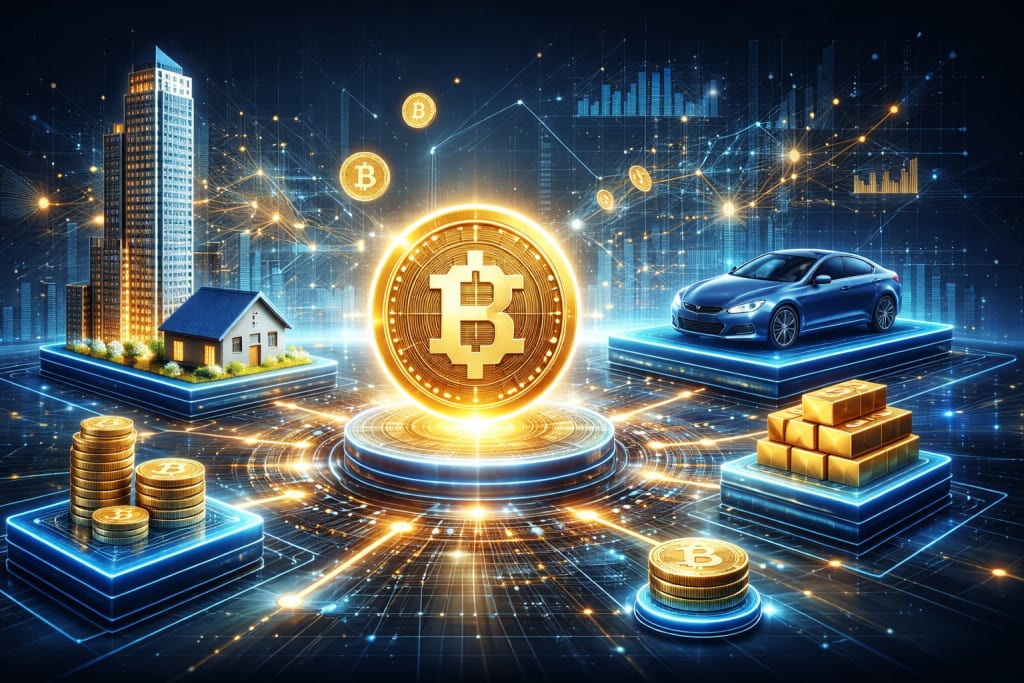
The financial industry is undergoing a profound transformation as blockchain technology continues to reshape how assets are created, traded, and managed. One of the most revolutionary developments in this space is the tokenization of traditional finance—the process of converting real-world assets (RWAs) such as real estate, stocks, bonds, or commodities into digital tokens on a blockchain. This paradigm shift not only enhances accessibility and liquidity but also introduces unprecedented transparency, security, and efficiency into financial markets.
By bridging the gap between traditional finance and digital assets, blockchain-based tokenization is enabling investors, institutions, and enterprises to participate in markets in ways that were previously impossible. This blog explores how blockchain facilitates the tokenization of real-world assets, the benefits it offers to investors and institutions, the technical frameworks that enable this transformation, and the future outlook of tokenized finance.
Understanding Real-World Asset Tokenization
Tokenization is the process of representing ownership of a real-world asset through digital tokens that exist on a blockchain. Each token acts as a verifiable digital representation of a fraction or the entirety of the underlying asset. Tokenization effectively converts illiquid, physical, or traditional assets into digital units that can be traded, transferred, or utilized within decentralized finance (DeFi) ecosystems.
Real-world assets suitable for tokenization include:
- Real Estate: Residential, commercial, and industrial properties can be fractionalized into tokens, allowing multiple investors to participate in ownership and income streams.
- Equities and Bonds: Shares of companies or government bonds can be tokenized to facilitate easier trading and global access.
- Commodities: Gold, silver, oil, and other commodities can be represented as tokens, enabling secure digital trading without the need for physical transfer.
- Collectibles and Intellectual Property: Artwork, patents, and digital media can be tokenized to monetize traditionally illiquid assets.
Tokenization bridges the gap between traditional financial markets and blockchain technology by creating a digital representation of value that can seamlessly interact with decentralized protocols and platforms.
How Blockchain Enables Real-World Asset Tokenization
Blockchain technology underpins the tokenization process, providing the transparency, security, and efficiency that make digital representation of assets possible. Several core features of blockchain contribute to the effective of real-world assets tokenization:
1. Immutable and Transparent Ledger
Every transaction on a blockchain is recorded in a decentralized, immutable ledger. This means that once an asset is tokenized and transferred, its ownership and history are permanently documented and verifiable by all participants. For investors, this transparency eliminates reliance on third-party intermediaries and provides full visibility into asset ownership and transaction history.
2. Smart Contracts for Automation
Smart contracts are self-executing digital agreements that enforce predefined rules. In tokenized finance, smart contracts automate key functions such as:
- Distributing dividends or rental income to token holders.
- Managing compliance checks for investors (e.g., KYC/AML).
- Facilitating asset transfers or secondary market sales.
This automation reduces administrative overhead, increases efficiency, and minimizes human error.
3. Fractional Ownership and Divisibility
Blockchain enables fractional ownership of assets by dividing them into smaller, tradeable units. For example, a $1 million property could be represented as 1,000 tokens worth $1,000 each. This allows retail investors to participate in high-value markets, democratizing access to previously inaccessible assets.
4. Programmable Compliance
Tokenization platforms can integrate regulatory compliance directly into tokens using programmable logic. This ensures that assets remain compliant with local laws, including securities regulations, tax requirements, and investor eligibility restrictions. Tokens can be automatically restricted to approved participants or regions, reducing legal risk for issuers and investors.
5. Global and 24/7 Access
Unlike traditional markets, blockchain networks operate continuously and globally. Tokenized assets can be traded at any time across borders, providing access to international investors without relying on centralized exchanges or intermediaries. This liquidity and accessibility are particularly valuable for assets that were historically illiquid, such as private real estate or fine art.
Benefits of Tokenizing Traditional Finance
Tokenization brings several transformative benefits to investors, institutions, and the broader financial ecosystem:
1. Enhanced Liquidity
Traditional assets such as real estate or private equity are often illiquid, requiring months or years to buy or sell. Tokenization enables secondary markets where fractionalized assets can be traded quickly and efficiently. Investors can enter or exit positions with relative ease, making previously illiquid markets more dynamic.
2. Reduced Barriers to Entry
High-value assets often require substantial capital, limiting participation to institutions or wealthy individuals. Tokenization lowers the minimum investment threshold by allowing fractional ownership, enabling retail investors to access premium assets.
For instance, a single apartment worth $500,000 could be tokenized into 500 tokens, each priced at $1,000, allowing small investors to own a share of the property and receive proportional rental income.
3. Transparency and Trust
Blockchain’s immutable ledger ensures full transparency in asset ownership and transaction history. Token holders can verify ownership, track income distribution, and audit transactions without relying on centralized authorities. This level of transparency increases investor confidence and reduces the risk of fraud.
4. Automated Operations and Cost Efficiency
Smart contracts automate operational processes such as dividend payments, voting, and compliance enforcement. This reduces administrative costs, shortens settlement times, and minimizes human error. Asset managers can streamline operations while investors benefit from faster, more predictable returns.
5. Global Investor Reach
Tokenization makes it possible to attract international investors without complex cross-border procedures. Blockchain networks provide a single infrastructure for global transactions, reducing dependence on intermediaries, banks, and jurisdiction-specific regulations. This opens up new markets for asset issuers and provides diversified opportunities for investors.
Use Cases of Tokenized Real-World Assets
1. Real Estate Tokenization
Real estate is one of the most prominent applications of tokenization. Tokenizing properties allows multiple investors to own fractional shares, receive rental income, and benefit from property appreciation. Platforms such as RealT and Slice have already demonstrated success by offering tokenized access to U.S. and international real estate markets.
2. Tokenized Securities
Equities and bonds can be tokenized to improve liquidity and accessibility. Investors can purchase fractions of a company’s shares or bonds, trade them digitally, and receive automated dividend payments. Tokenized securities also allow faster settlement and reduced intermediary fees.
3. Tokenized Commodities
Physical commodities like gold, silver, and oil can be represented as tokens. This enables traders and investors to gain exposure to commodities without the need for physical handling or storage. Tokenized commodities are particularly attractive for global markets and institutional investors seeking diversified portfolios.
4. Alternative Assets
Art, collectibles, and intellectual property rights can also be tokenized, unlocking liquidity for markets that were previously highly illiquid. Fractionalized art ownership, for instance, allows multiple investors to share in the appreciation of valuable artwork.
Technical Frameworks for Tokenized Assets
Tokenized finance typically relies on a combination of blockchain infrastructure, smart contracts, and compliance layers. Common elements include:
- Blockchain Network: Ethereum, Solana, and other blockchains are often used for issuing and managing tokens.
- Smart Contracts: Automate asset management, dividend distribution, and compliance verification.
- Custody Solutions: Secure storage of physical assets, tokenized digital assets, or collateral.
- APIs: Connect tokenized assets with trading platforms, wallets, and payment systems.
- KYC/AML Systems: Ensure only eligible investors participate in tokenized offerings.
Together, these components form a robust ecosystem for tokenized real-world assets, enabling secure, transparent, and efficient operations.
Challenges and Considerations
Despite its promise, tokenizing traditional finance is not without challenges:
1. Regulatory Uncertainty
Different jurisdictions have varying regulations regarding tokenized assets, securities, and cross-border trading. Compliance is critical, and regulatory uncertainty can slow adoption or limit access for international investors.
2. Liquidity Limitations
While tokenization improves liquidity, the depth of secondary markets can be limited, particularly for niche assets. Building sufficient market participation is essential for functional liquidity.
3. Technology Risks
Blockchain networks and smart contracts must be secure. Vulnerabilities or bugs can lead to loss of funds, mismanagement of assets, or other operational risks. Robust auditing and secure coding practices are critical.
4. Valuation and Price Discovery
For illiquid or unique assets, accurate pricing and valuation remain challenging. Tokenized markets rely on transparent and trustworthy valuations to ensure fair trading and investor confidence.
The Future of Tokenized Finance
The future of finance is likely to be increasingly digital, fractionalized, and global. Tokenization bridges the traditional and digital financial worlds, offering:
- Greater inclusion by lowering barriers to entry for retail investors.
- Faster, automated operations through blockchain and smart contracts.
- Increased transparency and trust in ownership and transactions.
- Global market access and liquidity for previously illiquid assets.
Institutional adoption is also accelerating, with banks, asset managers, and investment funds exploring tokenized products to optimize liquidity, compliance, and operational efficiency. As regulatory frameworks mature and technology evolves, tokenization is expected to become a mainstream financial practice, redefining how we invest in and interact with real-world assets.
Conclusion
Blockchain-powered tokenization is transforming traditional finance by digitizing real-world assets and enabling a new era of financial accessibility, efficiency, and transparency. From real estate and securities to commodities and alternative assets, tokenization unlocks liquidity, reduces operational costs, and allows investors to participate in markets that were previously inaccessible.
As blockchain networks, smart contracts, and tokenized ecosystems continue to mature, the integration of traditional finance into the digital era will accelerate, providing investors and institutions with unprecedented opportunities. Tokenizing real-world assets is no longer a theoretical concept—it is a practical, scalable solution that is revolutionizing finance for the digital age.
About the Creator
Gabrielle
Blockchain enthusiast and NFT writer dedicated to merging technology with art on decentralized platforms, driving innovation for a creative future. Embracing the potential of digital expression.
How a Brush Cutter Engine Works: A Simple Explanation
Understanding How a Brush Cutter Engine Works: A Simple Explanation is very important for farmers, gardeners, and landscaping workers in Pakistan. Brush cutters are widely used across villages, farms, roadsides, and housing societies to cut grass, weeds, bushes, and small plants efficiently.
By Abdul Alim6 days ago in Education
Before the Bell: Daily Pre-Market Steps That Drive Consistent Trading Wins
In daily trading, the difference between consistency and chaos often comes down to what happens before the session starts. The most reliable traders don’t wait for the bell to decide what to do—they use the early hours to map out a plan, filter distractions, and establish a tactical approach to the day.
By Agast Mishra3 days ago in Education
📢 Raise Your Voice Thread: 01/08/2026
Our “Raise Your Voice Threads” are hosted most alternating Thursdays at 12PM ET to offer creators more avenues to uncover exceptional stories on Vocal. As we are continuously searching for fresh creators and inspiring stories, this thread provides an opportunity to exchange and discuss the stories that have moved and motivated us on Vocal.
By Raise Your Voice by Vocal4 days ago in Resources




Comments
There are no comments for this story
Be the first to respond and start the conversation.