
To Conquer the Unconquered Enemy
Who wields the power?

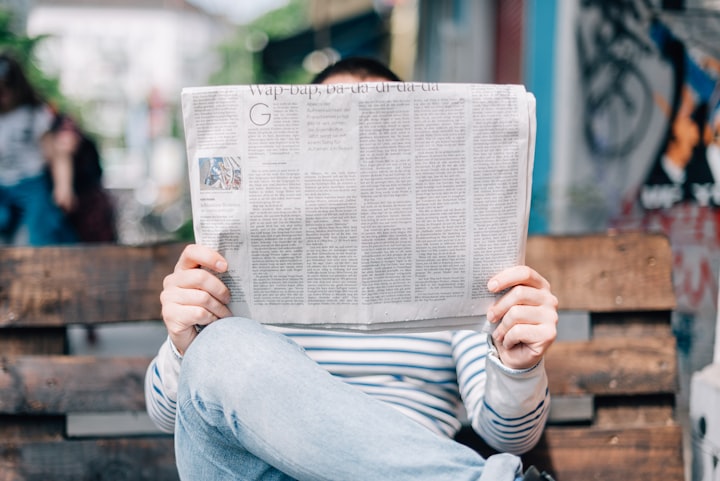
The big irony that still prevails not only in the Philippines is that some of the government officials are using ‘fake news’ to silence the media and glorify themselves. It is often used as a way of diverting the attention of the people, claiming that the bigger enemy of this society is not incompetence or corruption, but disinformation and misinformation. However, given the national and international situations, the real problem does not lie within the fourth estate. It lies within the ignorance of consumers to the truth and failure to comprehend how fake news were used— the reason why we need news literacy.
Such irony is true in the Philippines as President Rodrigo Duterte condemns media such as Rappler for being a peddler of "fake news." It rooted in publishing editorial and news reports that exposed the dark sides of his regime, the reason why he’s blaming the media for people’s distrust of the government. A lot of people, particularly his supporters, came to the realization that such ‘fake news peddlers are the ones that hinder the progression of the Dutere Administration. But then, they failed to realize that they are the ones being manipulated away from the truth that it has been fatal weaponry against literacy and awareness.
In fact, journalists in the Philippines have been known to face threats, violence, and intimidation. Based on a report released by the Philippine Center for Investigative Journalism, at least 128 cases and attacks against journalists have been substantiated under President Rodrigo Duterte's regime. The majority of them were accusations against media outlets disseminating fake news, and several are currently being red-tagged. As a result, it is evident that allegations of fake news are rampant in the Philippines, and the administration has even normalized them by issuing hateful statements against critics and encouraging skepticism against the media such as Rappler.
Now, is it safe to say that fake news happens when the media criticized and exposed the dark sides of government? Therefore, it is consequently important to explore news literacy not only for journalists to know how they should write and report accurately but also for every citizen to realize how should they react and adapt to the news they consume about the statements of the current administration. For as to the first principle of News Literacy, free expression is not only the foundation but the cornerstone of democracy as well. This freedom has made its way for news to circulate in our country nowadays and it is up to us whether we’ll comprehend what hides within, or let its own agendas devour our whole social system.
Because at the end of the day, we, the consumers of daily news, still wield the power. It is our commitment to be news literate in terms of what we read and consume in order to distinguish between truth and falsification— and recognize who’s the real enemy.
The Service of Public, Truth, and Justice
Injustice, threats, mistrust, and misinformation plague the Philippines Media as journalists are faced with problems that are in dire need of attention. These challenges degrade not only the quality of freedom of expression but post discouragement for media aspirants as we plea for change and call for the government to listen to our clamors. For in the service of public, truth, and justice, nothing must stand in the way; herein lays the role of news literacy.
As it is intended to develop intellectual integrity so that students can assess the validity and veracity of information derived from newspapers, radio, or the internet, news literacy is not only designed for journalists. Is also intended for every citizen as long as he/she consumes news every day. The thing is, misinformation poses a significant concern in today's media climate and the journalists could only establish credibility by delivering objective and truthful content to the public. Thus, in a country where the truth must be found, as violence and crime exist and occur at every possible moment and every imaginable place, Filipinos face the danger of not comprehending the significance of credible news in a democratic society.
In line with this, since we all expect news as fast as possible in the digital period, quickening the dissemination of news in any form of media has raised the likelihood that the information will be inaccurate. Additionally, the rise of online media has made it feasible to pick only the information that favors our interests rather than nurturing solutions to these problems. As a result of these barriers, a novel form of competency with the ability to determine if the information is credible has emerged. News literacy will help solve these problems by raising educated and enlightened people who can stabilize a robust and compelling community. It guides by minimizing the number of people who are receptive to unverified news and by giving journalists a stronger comprehension of how the media functions and takes action, as well as why they commit lapses.
Recognizing that news is vital and becoming a more attentive news consumer are also the reinforcements that news literacy provides. If Filipinos learned to assess and contextualize media stories from all news media channels depending on the strength of facts rendered and the sources' credibility, then the Philippines Media doesn’t have to worry about the attacks that dictate all other hurdles in the path of journalists. It is the incompetent government that should worry who has grown afraid of those whose eyes are open— the very people whom we should have been working with to serve the masses.
Nothing is more important than having a new class of citizens who are well-informed about the news and literate with regards to the promotion of content with the best quality. If only the Philippines has that efficiency to raise news literate people to shape the future of journalism, then the Philippine Media will be an effective catalyst to make someone oppose what must be challenged and express what must be said, regardless of what’s on the line.
About the Creator
George Ryan Tabada
George Ryan Tabada is a fourth-year journalism student at Polytechnic University of the Philippines.
Keep reading
More stories from George Ryan Tabada and writers in Education and other communities.
Death of Truth
In our country doomed by the seemingly never-ending greed, the ambitious cravings of the self-centered public officials had our journalists bearing the cross of suffering, pressure, and torment upon their shoulders, walking through the path of uncertainties; barefooted on the ruthless road of intimidation. Slashed with the whips of heavy loads and responsibilities to reveal the truth yet being condemned by the threats of libel.
By George Ryan Tabada2 years ago in Critique
Beyond the Bottle: Meet the Hidden Forces Shaping Modern Wine
In recent years, wine lovers have expanded their curiosity beyond labels and tasting notes. Today, they seek stories, craftsmanship, and authenticity. As a result, the spotlight has slowly shifted toward the people who work tirelessly behind the scenes. While celebrity winemakers and vineyard owners often receive recognition, many other contributors quietly shape every glass we enjoy. These professionals represent the true innovators of the wine industry, and they deserve far more attention than they currently receive.
By Joel Barjenbruch7 days ago in Education
How Human Vision Limits What We See in Space
The Basics of Human Vision To understand the limits, we must first understand how vision works. Light enters the eye through the cornea and pupil, is focused by the lens, and reaches the retina at the back of the eye. The retina contains two types of photoreceptor cells:
By shahkar jalal6 days ago in Education
Review of 'Man on the Run'
My wife and I saw Man on the Run, a nearly 2-hour documentary on Amazon Prime, about Wings, Paul McCartney's group that flew around the world from shortly after The Beatles broke up in early 1970 to shortly after John Lennon was murdered at the end of 1980, making a Beatles reunion forever impossible.
By Paul Levinson4 days ago in Beat




Comments