
TITANIC: UN-RESCUED PASSENGERS
WHY ARE THE PASSENGERS NOT RESCUED
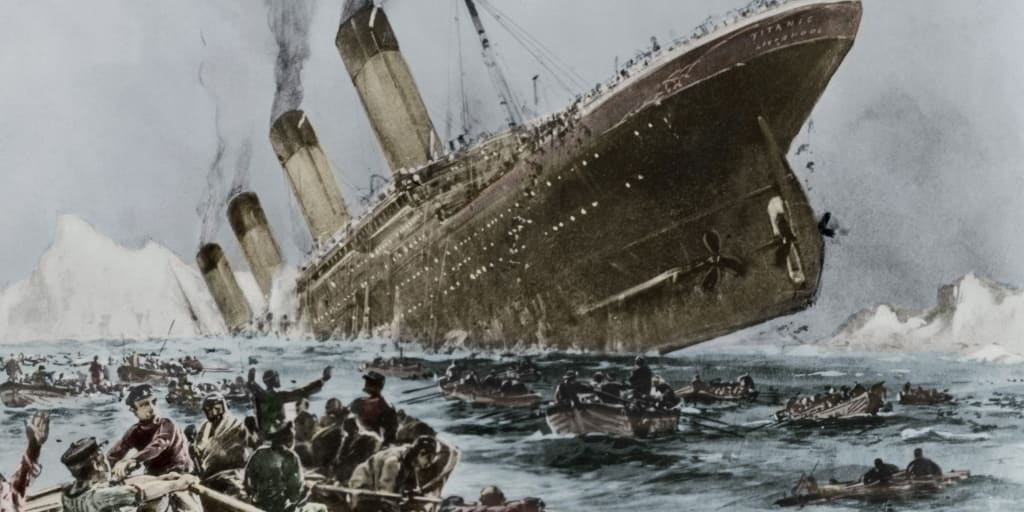
The Titanic's failure to rescue its passengers remains a perplexing question. In April 1912, a tragic event unfolded, etching its place in history as one of the most devastating maritime disasters. The Titanic, touted as the unsinkable vessel and a marvel of engineering at the time, met its fateful end on a moonless night. While there were opportunities to save the passengers, another ship, mere miles away, failed to come to their aid. This isn't a mythical tale or a mere conjecture; it is a well-documented reality supported by records and witness statements. The question that lingers is: why did this ship not extend a helping hand? To understand the events of that night, let's explore three different perspectives.
Let's begin with the account from the Titanic's version. It was 11:30 PM, and the moon was concealed behind ominous black clouds, resulting in poor visibility. All was calm on the Titanic, guided by the captain's steady hand. The communication operator maintained contact with the mainland through the radio. However, at that moment, an unknown individual intruded upon the frequency, disrupting the operator's communication. The operator, unable to decipher the intruder's intentions, angrily demanded a disconnection, thereby severing the connection.
At 11:40 PM, disaster struck as the Titanic collided with an iceberg, causing the hull to breach and water to flood the lower decks. Despite the dire situation, panic had not yet set in among the passengers. It wasn't until midnight, 20 minutes after the collision, that the ship's crew transmitted a distress signal via radio. Unfortunately, few comprehended the gravity of the situation.
By 12:20 AM, lifeboats began to be lowered with passengers aboard, and at 12:25 AM, a response to the distress signal arrived. It was the RMS Carpathia, reporting that they were already sailing at maximum speed towards the Titanic's location. However, the crash site was approximately 58 miles away, meaning that the Carpathia would take four hours to reach them.
At 12:45 AM, the sinking ship released rockets into the sky, which, unbeknownst to them, contributed to the tragic fate of many passengers. Ninety minutes later, the Titanic's deck gave way, plunging the ship underwater. Finally, at 4:10 AM, the Carpathia arrived at the shipwreck site and valiantly rescued 705 survivors. It was at this moment that another ship, the SS Californian, appeared on the scene. While the Carpathia headed towards the New York coast with the survivors, the Californian searched for passengers but found only debris. Despite being just a few miles away, the Californian did nothing to assist the sinking ship. Captain Stanley Lord's inaction, one of the gravest offenses a sailor can commit, earned him the disdain of the world. Though he faced no charges or punishment, his career was irrevocably ruined, as no other ship company would hire him. However, until his dying day, he maintained his innocence, refusing to confess his guilt.
Now, let's explore the Californian's perspective. On the night of April 14th, the Californian sailed through the frigid waters of the North Atlantic. Encountering a section with numerous icebergs at 10:10 PM, Captain Lord decided it was too perilous to continue navigating. The ship came to a halt, but an hour later, it began drifting as it was impossible to maneuver safely in those treacherous conditions and poor visibility.
Recognizing the imminent danger that the Titanic faced, Captain Lord instructed the radio operator to warn the ship. The operator attempted to establish contact for approximately 30 minutes, finally succeeding in sending a message to the Titanic. However, the operator on the Titanic dismissed the Californian's warning, stating they were busy and to "shut up." Despite the lack of acknowledgment from the Titanic, Captain Lord decided to keep watch throughout the night, as required by regulations.
Around midnight, some of the crew spotted lights in the distance. Captain Lord, assuming it was another ship, attempted to communicate through Morse lamp and rockets. However, there was no response. Unbeknownst to Captain Lord and his crew, they were witnessing the final hours of the Titanic, sinking just miles away. It wasn't until dawn broke that the Californian could clearly see the debris and lifeboats, leading them to realize the extent of the disaster.
Lastly, let's examine the perspective of the survivors. Imagine being on a ship that was touted as invincible, only to witness it succumb to the wrath of the sea. Panic and chaos ensued as the iceberg's impact sent shockwaves through the vessel. Many passengers initially found it hard to comprehend the severity of the situation, unaware that their lives hung in the balance. As time passed, the urgency intensified, and the scramble for lifeboats became desperate.
While the Carpathia ultimately rescued the survivors, it is a bitter pill to swallow that the Californian, within reach and sight of the sinking ship, did not come to their aid. The survivors watched as another vessel failed to act, leaving them to fend for themselves in the icy waters. The emotional scars of that night would forever be etched in their memories, haunted by the thought of what could have been if timely assistance had arrived.
In conclusion, the events of that fateful night aboard the Titanic and the Californian remain a tragedy that continues to captivate the world's imagination. From the perspective of the Titanic, a series of unfortunate events unfolded, leading to its catastrophic demise. The Californian, hindered by communication difficulties and poor visibility, failed to grasp the urgency of the situation and extend a helping hand. And for the survivors, the memory of being abandoned by a nearby ship would forever haunt them.
The sinking of the Titanic serves as a reminder of the importance of communication, preparedness, and swift action in times of crisis. It also highlights the profound impact of individual decisions and the consequences they can have in moments that define history. While we may never know the full truth or the extent of human error that contributed to this tragedy, we must remember the lessons learned from that night and strive to prevent such disasters from occurring again.
About the Creator
Keep reading
More stories from Oladeji Showunmi and writers in Education and other communities.
Mysterious Voyages:
Have you ever heard of the story of Pan Am Flight 914? The story goes that the plane disappeared in 1955, only to reappear 37 years later in 1992. The passengers and crew were all unharmed, but they claimed to have no memory of the intervening years.
By Oladeji Showunmi3 years ago in Education
VFX in Education Market to Reach USD 6.9 Bn by 2034, Driven by Immersive Learning Demand
Introduction The VFX in education market refers to the integration of visual effects technologies into formal and informal learning environments. It encompasses tools, software, and course content that use visual effects to create realistic simulations, animated visualizations, and interactive learning aids. These elements are designed to help students grasp complex concepts more easily and support educators in delivering engaging lessons.
By Roberto Crum5 days ago in Education
Unofficial Challenge: Black History Celebration
Forward: February 28th, 10:53 PM, EST... The final hour of Black History Month, 2026. Hello fellow writers. I've had this challenge waiting in my drafts for most of the month. But I held off on publishing it, until now.
By Sam Spinelli6 days ago in Writers




Comments
There are no comments for this story
Be the first to respond and start the conversation.