
Thinking, Fast and Slow-Daniel Kahneman [Book Summary]
Book Summary

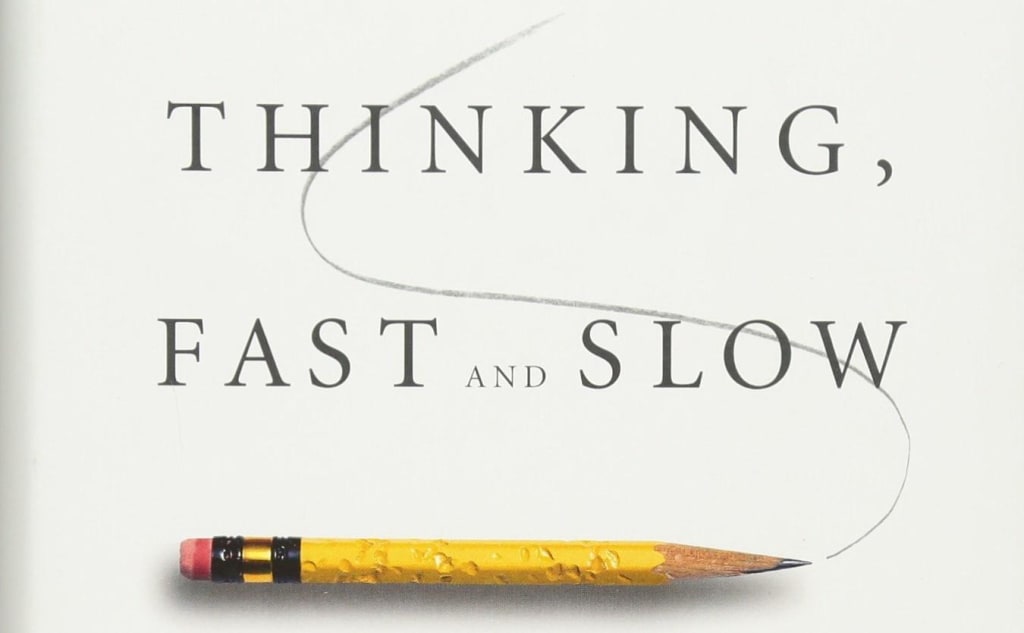
“Thinking, Fast and Slow” is a book written by Nobel Prize-winning psychologist Daniel Kahneman that explores the two distinct systems of thinking that humans use in decision-making.
System 1 thinking is fast, intuitive, and automatic, relying on mental shortcuts or heuristics. It operates quickly and effortlessly, but can be prone to biases and errors, especially when dealing with complex or uncertain situations.
System 2 thinking is slower, more deliberate, and more effortful. It involves conscious reasoning and analysis, and is more likely to lead to accurate and rational decisions. However, it is also more susceptible to mental fatigue and can be overridden by the ease and simplicity of System 1 thinking.
Throughout the book, Kahneman provides numerous examples and studies to illustrate the strengths and weaknesses of both systems, and how they interact in various contexts. He also discusses the pervasive influence of biases and heuristics in our everyday lives, such as confirmation bias, availability heuristic, and the framing effect.
Kahneman argues that by becoming aware of these cognitive biases and limitations, individuals can learn to make better decisions, both in their personal and professional lives. He also emphasizes the importance of taking a systematic and analytical approach to decision-making, particularly in situations that are high-stakes or involve significant uncertainty.
Overall, “Thinking, Fast and Slow” provides a comprehensive and accessible overview of the science of decision-making, and has become a widely-read and influential book in the fields of psychology, economics, and behavioral science.
Main Points of Book
The main points of “Thinking, Fast and Slow” by Daniel Kahneman are:
- Humans have two systems of thinking: System 1, which is fast, intuitive, and automatic, and System 2, which is slow, deliberate, and effortful.
- System 1 thinking operates quickly and effortlessly, but can be prone to biases and errors, especially in complex or uncertain situations.
- System 2 thinking involves conscious reasoning and analysis and is more likely to lead to accurate and rational decisions, but is also more susceptible to mental fatigue and can be overridden by System 1 thinking.
- Cognitive biases, such as confirmation bias, availability heuristic, and the framing effect, are pervasive and can influence decision-making in many ways.
- By becoming aware of these cognitive biases and limitations, individuals can learn to make better decisions in their personal and professional lives.
- High-stakes decisions, such as those in finance, medicine, and public policy, require a systematic and analytical approach to minimize the influence of biases and improve outcomes.
- The book provides numerous examples and studies to illustrate these points, including the concept of loss aversion, the role of intuition in expert decision-making, and the limitations of statistical prediction models.
- The book has become a widely-read and influential work in the fields of psychology, economics, and behavioral science, and has inspired further research and applications in decision-making and related fields
10 Lessons
Here are ten lessons that can be gleaned from “Thinking, Fast and Slow” by Daniel Kahneman:
- Humans have two distinct systems of thinking, and both can influence decision-making.
- System 1 thinking can lead to cognitive biases and errors, especially in complex or uncertain situations.
- System 2 thinking is more deliberate and analytical, but can be overridden by System 1 thinking or hindered by mental fatigue.
- Cognitive biases, such as confirmation bias and the availability heuristic, can significantly impact decision-making in many areas of life.
- Emotions can also play a significant role in decision-making, and can sometimes interfere with rational thinking.
- Analytical thinking, statistical models, and other tools can help mitigate the influence of biases and improve decision-making.
- When making decisions, it’s important to consider both the short-term and long-term consequences.
- It’s important to be aware of the limitations of one’s own thinking and decision-making abilities.
- Experts in a particular field can often make intuitive decisions based on their expertise, but this can also lead to biases.
- Understanding the nuances of decision-making can help individuals make better decisions in their personal and professional lives.
And there you have it! Many thanks for persisting to the end of this article! Hope you have found it helpful.
About the Creator
𝐒 𝐀 𝐐 𝐄 𝐁 𝐀 𝐌 𝐈 𝐍
WE ARE WHAT WE CHOOSE
Keep reading
More stories from 𝐒 𝐀 𝐐 𝐄 𝐁 𝐀 𝐌 𝐈 𝐍 and writers in Education and other communities.
The Happiness Hypothesis-Jonathan Haidt [Book Summary]
“The Happiness Hypothesis” is a book written by psychologist Jonathan Haidt that explores the science of happiness and how we can achieve it. Haidt uses insights from philosophy, psychology, and neuroscience to examine the factors that contribute to human well-being and happiness.
By 𝐒 𝐀 𝐐 𝐄 𝐁 𝐀 𝐌 𝐈 𝐍3 years ago in Education
The $73,000 Text Message That Changed Everything
"Just realized I missed the quarterly payment deadline by one day. How bad is this?" I stared at the message, knowing I was about to deliver devastating news. My client—a successful entrepreneur who built his tech consulting firm from zero to $3.2 million in annual revenue—had just cost himself $73,000.
By Nth Degree Tax3 days ago in Education
How Audit Management Solutions Streamline ESG Compliance
Corporate credibility is increasingly defined by Environmental, Social, and Governance (ESG) compliance. Stakeholders, including shareholders, regulatory authorities, consumers, and employees, are placing greater demands on organizations to operate transparently, ethically, and sustainably.
By Matthew Luke3 days ago in Education



Comments
There are no comments for this story
Be the first to respond and start the conversation.