
Thinking Beyond the "Why?": Nurturing Young Minds in Primary School
Encouraging Critical Thinking at a Young Age


In the primary school years, children embark on an extraordinary intellectual and emotional journey. These formative years are not only about acquiring knowledge but about shaping how children understand themselves, others, and the world around them.
The seemingly endless stream of questions—“Why is the sky blue?”, “What happens if...?”, “Can I try it?”—marks the beginning of critical thinking, problem-solving, and independent reasoning.
At its best, primary education encourages children to think beyond the surface. Rather than simply feeding facts, great teaching lights a fire of curiosity, teaching students how to learn, not just what to learn. This progressive mindset is a hallmark of outstanding educational environments across the UK.
Why Curiosity Needs a Framework
Children are naturally curious. But curiosity without structure can be chaotic or short-lived. What transforms raw curiosity into sustained inquiry is a well-designed framework—an approach that guides students to ask better questions, test ideas, draw conclusions, and reflect on their learning.
Effective teachers don’t just answer questions—they model how to ask them. They support students in developing the tools to seek out their own answers, fostering independence and confidence. When done well, this creates not only academically capable pupils but thoughtful, reflective individuals.
The Value of Hands-On Experiences
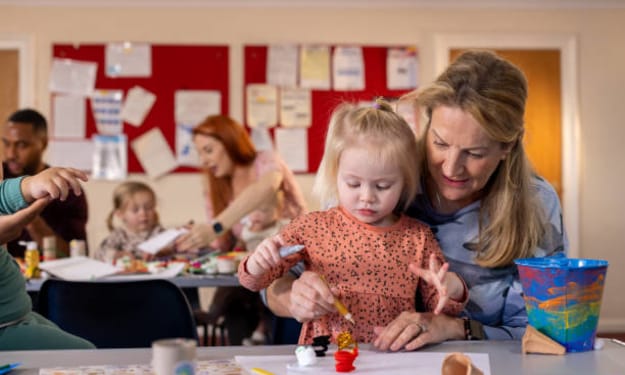
Tactile learning experiences are central to cognitive development in primary years. Children learn best when they are able to manipulate, explore, and create. This is where craft activities for kids become more than just fun—they are vital to learning.
Crafting develops fine motor skills, enhances spatial awareness, and allows children to express themselves in ways that written words often cannot.
Creating a model of the solar system or designing a puppet show allows children to process and articulate their understanding of complex ideas. These activities also encourage perseverance, trial and error, and pride in their accomplishments—essential building blocks of resilience.
Moreover, crafts support cross-curricular integration. A geography lesson can become a creative map-making project. A literature unit can culminate in a diorama of a story scene. By engaging multiple senses, these tasks enhance retention and understanding.
Building Thinkers Through Inquiry
Inquiry-based learning is a proven method to cultivate deeper thinking. Unlike traditional didactic teaching, which delivers information from teacher to student, inquiry flips the script. Students become the investigators, and teachers the facilitators.
In well-established private primary schools Hampshire, this approach is commonplace. Students explore essential questions over weeks or months, using research, observation, and experimentation to form conclusions.
For example, rather than teaching a unit on plants through lectures, students may plant seeds, observe growth under different conditions, chart progress, and hypothesise outcomes.
This method does more than deliver information—it trains the brain. It fosters analytical reasoning, creativity, and the confidence to voice ideas and challenge assumptions. It also mirrors how the adult world functions: rarely are we handed answers. We must seek them out.
Emotional and Social Growth as a Foundation
While academic development is crucial, primary education must also prioritise emotional and social learning. Children must learn how to manage their feelings, communicate effectively, and build healthy relationships. Without these skills, academic success alone cannot lead to a fulfilling life.
Schools that value holistic growth embed social and emotional learning (SEL) into daily routines. Circle time, restorative conversations, and peer mentorship programs are just a few ways this is achieved. Children are taught not only to understand their emotions but to respect others’, building a culture of empathy and kindness.
In these environments, students develop a strong sense of belonging and emotional safety. This psychological foundation is key to intellectual risk-taking and resilience in the face of challenges.
Working Together: School and Home
True growth happens when school and home operate as partners. The best primary schools invite parents into the learning process, offering regular communication, transparency in teaching methods, and opportunities to extend learning at home.
Parent engagement doesn’t mean homework overload—it means understanding what children are learning and reinforcing those lessons with interest and encouragement.
Whether it’s helping with a science fair project or simply listening to a child read aloud, home-based support helps children feel that learning is important and meaningful.
Parents seeking a more personalised, inquiry-rich education often look toward private junior schools in Hampshire. These schools offer an ideal blend of academic rigour and creative freedom, with smaller class sizes, individual attention, and access to broad curricular and extracurricular opportunities.
Conclusion: Raising Thinkers for Tomorrow
Nurturing young minds requires far more than high test scores or rigid curricula. It means creating environments where children feel safe to explore, supported to take intellectual risks, and inspired to think deeply about the world.
Independent schools, particularly in Hampshire, are exemplars of this philosophy. By combining hands-on experiences, inquiry-based learning, strong pastoral care, and a celebration of creativity, these schools are preparing students not just for the next stage of education—but for life.
In a world that increasingly values innovation, empathy, and adaptability, education must evolve to meet the needs of the whole child. It’s no longer just about answering “Why?”—it’s about equipping children to ask better questions, seek thoughtful answers, and think boldly for themselves.
About the Creator
William Henry
At Best Independent Schools UK, we are here to make your journey smoother by providing detailed information about some of the best nurseries and preparatory schools in England
Keep reading
More stories from William Henry and writers in Education and other communities.
Small Groups, Big Impact: The Power of Class Size in Independent Schools
When it comes to education, bigger is not always better. In fact, many educators, parents, and researchers agree that smaller class sizes are one of the most significant contributors to improved student outcomes.
By William Henry10 months ago in Education
Understanding the Quiet Shift: What You Need to Know About the Move Toward Value-Based Healthcare
A significant transformation is unfolding in the healthcare industry, yet many people outside the field may not fully realize its impact. This quiet shift is the transition from volume-based care, where providers are paid for the number of services they deliver, to value-based healthcare, where reimbursement depends on quality, outcomes, and patient satisfaction. This evolution is reshaping how providers deliver care, how patients experience treatment, and how the entire system measures success. As healthcare becomes more complex and costly, value-based care offers a more sustainable, patient-centered path forward. Understanding what this shift means is essential for anyone interested in the future of healthcare delivery.
By Evan Weiss St Louis7 days ago in Education
Common Lies on Resumes and How Employers Find Them Out
Your CV should tell the tale of your work life. This is the paper that tells a possible employer who you are before you even go to an interview. Some people who are applying feel like they have to lie or even make things up because of the pressure. It might seem like a good idea to correct a few things that aren't quite perfect, but employers are getting better at finding them.
By Novelty Diploma3 days ago in Education


Comments
There are no comments for this story
Be the first to respond and start the conversation.