
There’s a Good Chance Your Kid Uses AI to Cheat
The Rise of AI in education A Revolutionary Tool or a shortcut to cheating

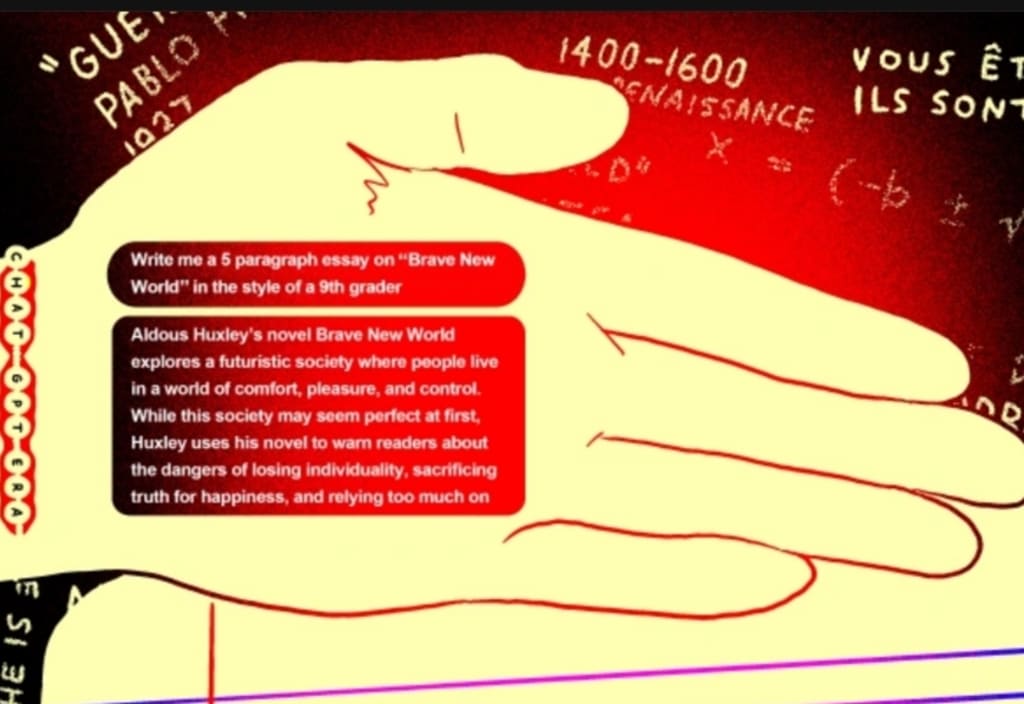
Silicon Valley has long been obsessed with reinventing education, with tech entrepreneurs promising revolutionary changes. Over the past two decades, numerous attempts have been made to integrate technology into learning, from online courses to adaptive learning platforms. Now, the latest hope lies in generative artificial intelligence, which industry leaders claim will transform how students learn.
OpenAI CEO Sam Altman is among those who believe that AI can act as a powerful educational tool, capable of identifying gaps in a student’s knowledge and designing personalized learning plans that cater to their strengths. In theory, AI tutors could offer individualized support at a level never before possible, helping students grasp difficult concepts and reinforcing their understanding in ways traditional teaching methods cannot. Despite these promises, large-scale implementation of AI in education has not yet materialized.
Instead of fundamentally changing how teachers educate students, AI tools are primarily altering how students complete their assignments. Rather than serving as a guide to deeper understanding, AI has increasingly become a tool for convenience. Many students now turn to AI-powered platforms to generate essays, solve math problems, or summarize readings with minimal effort.
This shift raises concerns among educators, many of whom worry about the potential for academic dishonesty and the long-term effects on student learning. If students rely too heavily on AI-generated answers, they may miss out on critical thinking and problem-solving skills that are essential for their development. One of the biggest concerns is that AI could exacerbate the already pressing issue of academic cheating. While plagiarism has long been a problem in education, AI tools now offer an entirely new level of temptation.
A simple prompt can generate an entire essay in seconds, making it harder for teachers to distinguish between original work and AI-generated content. Some students have begun using AI to rephrase existing essays to avoid plagiarism detection, while others rely on AI chatbots to produce assignments with minimal personal input. This raises the question of whether traditional grading methods can still accurately assess a student’s knowledge and effort.
The rise of AI-assisted cheating has also led to a growing industry of companies that openly advertise their services. A search on social media reveals dozens of companies offering AI-driven homework help, essay writing, and even exam assistance. Some of these services market themselves as educational tools, but in reality, they provide ready-made answers that students can submit as their own. This has created a difficult situation for educators, who must now navigate an environment where cheating is easier and harder to detect than ever before. Some schools have attempted to combat this issue by using AI detection software, but these tools are far from perfect. AI detection algorithms can sometimes falsely flag legitimate student work as AI-generated, leading to disputes between students and teachers. At the same time, students who are determined to cheat can find ways to bypass detection methods by tweaking AI-generated content. Another major concern is the impact of AI on student engagement and comprehension.
Learning is not just about getting the right answer it’s about understanding the process and developing critical thinking skills. When students use AI to complete assignments without actively engaging with the material, they risk missing out on the learning process entirely. Teachers have reported instances where students turn in AI-generated essays without even reading them, raising concerns about whether these students are actually absorbing any knowledge. The issue becomes even more complicated when considering standardized tests and college admissions, where original thought and personal expression are valued.
If AI-generated content becomes the norm, schools may struggle to assess genuine student ability. While AI’s impact on education is still unfolding, some schools and educators are attempting to integrate it in a responsible way. Some teachers use AI as a supplementary tool rather than a replacement for traditional learning. For example, AI can help students practice foreign languages by generating conversation prompts, or assist in explaining complex math concepts in different ways.
Some schools are experimenting with AI-driven learning platforms that adapt to a student’s progress, offering personalized exercises and recommendations. These approaches suggest that AI has the potential to enhance education if used correctly, but it requires careful oversight to ensure students are truly learning rather than simply outsourcing their work. Despite the potential benefits, the challenges remain significant. There is still limited research on how AI influences academic performance and student behavior.
While some studies suggest that AI-powered tutoring can improve learning outcomes, others warn of the risks associated with overreliance on automated systems. Without clear guidelines on how to integrate AI into classrooms, many schools are left trying to figure out how to balance its advantages with its risks. Some educators believe that schools should establish firm policies on AI use, setting clear boundaries on when and how students can use these tools.
Others argue that the focus should be on teaching students how to use AI responsibly, just as they are taught to cite sources properly when writing essays. The broader concern is what AI’s growing role in education means for the future of learning. If students increasingly rely on AI for answers, will they still develop the skills needed to succeed in the workforce? Critical thinking, creativity, and problem-solving are key competencies that cannot be easily replaced by technology.
While AI can assist in learning, it cannot replace the experience of struggling through a problem and reaching a solution independently. Some experts warn that an overreliance on AI could lead to a generation of students who are proficient at using technology but lack deeper intellectual engagement.
Education has always evolved alongside technological advancements, from the printing press to the internet. AI represents the latest frontier in this evolution, offering both promise and peril. Whether it ultimately enhances or diminishes education will depend on how it is integrated into classrooms and how students choose to use it. For now, the debate continues, with educators, students, and tech leaders grappling with the challenges and opportunities that AI presents.
About the Creator
Nora Ariana
Empowering through stories and sound igniting purpose, sparking growth, and awakening the power within.
Keep reading
More stories from Nora Ariana and writers in Education and other communities.
A goal is a dream with a deadline
A goal is a dream with a deadline. This powerful quote reminds us that without action, dreams remain just that wishes floating in our imagination. But when we set a timeline and commit to achieving them, they evolve into goals, bringing clarity, direction, and purpose. Many people go through life holding on to dreams, hoping they will come true someday. But someday is not a day on the calendar. Dreams without structure often fade with time or get buried under the weight of daily responsibilities. Turning a dream into a goal is what separates those who achieve from those who continue to wish.
By Nora ArianaExclusive • 10 months ago
Purpose Driven Leadership: How Corporate Success Is Fueling Social Change
Business leaders are often recognized for their ability to build organizations, create economic growth, and guide companies through competitive markets. Yet in recent years, a growing number of executives and entrepreneurs have chosen to extend their influence beyond corporate success. Many are investing their time, expertise, and resources into philanthropic efforts that address social challenges and strengthen communities. This evolution reflects a broader understanding that leadership carries responsibilities not only to shareholders but also to society.
By John Olin Killgore3 days ago in Education


Comments
There are no comments for this story
Be the first to respond and start the conversation.