
The Wright Brothers: Pioneers of Flight and Inventors of the Airplane
A Look into the Lives and Achievements of the Brothers Who Changed the Course of Aviation History

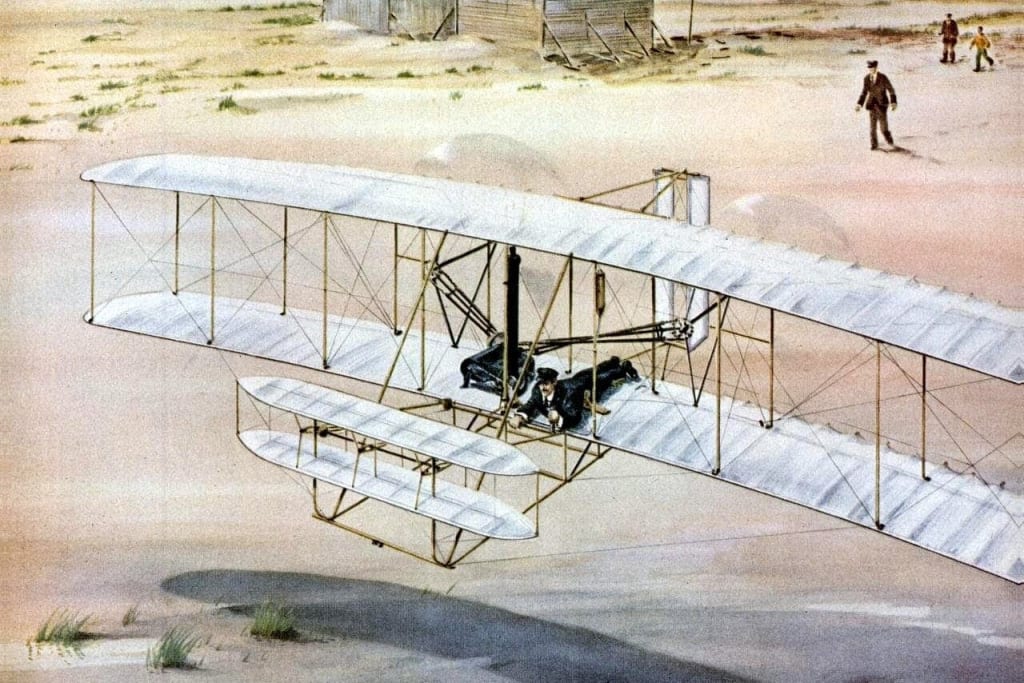
The invention of the airplane is one of the most significant achievements in human history. It opened up new possibilities for transportation, commerce, and communication, and it inspired generations of aviators and engineers. However, the story of the airplane's invention is not just about technology, but also about human ingenuity, perseverance, and passion. And at the heart of this story are two American brothers, Wilbur, and Orville Wright.
Born in the mid-1800s, the Wright brothers grew up in a family of seven children in Dayton, Ohio. Their father was a bishop in the United Brethren Church, and their mother was a homemaker. From a young age, the Wright brothers showed an interest in mechanics and engineering. They built their own toys and devices, such as a printing press and a miniature steam engine.
In 1892, the Wright brothers opened a bicycle shop in Dayton, which became their main source of income. They were successful entrepreneurs, and their shop was known for its high-quality bicycles and innovative designs. However, their true passion was flying. They had been fascinated with flight since they were young, and they spent their spare time studying the works of aviation pioneers such as Otto Lilienthal and Samuel Langley.
In 1899, the Wright brothers began experimenting with gliders, which were aircraft without engines. They tested their gliders at Kitty Hawk, a remote location in North Carolina that had strong winds and soft sand dunes for landing. They used a wind tunnel to test various wing shapes and airfoil designs, and they developed a system of controls that allowed the pilot to adjust the pitch, roll, and yaw of the glider.
Over the next few years, the Wright brothers continued to refine their gliders and eventually added a gasoline engine to create the first powered airplane. They designed and built every part of the airplane themselves, from the engine to the propellers to the control system. They faced numerous challenges and setbacks, including crashes and lack of funding, but they never gave up on their dream of flight.
On December 17, 1903, the Wright brothers made history with their first flight. Orville piloted the airplane, which was named the Wright Flyer, and Wilbur ran alongside to help stabilize it. The flight lasted only 12 seconds but traveled a distance of 120 feet. They made three more flights that day, with the longest lasting 59 seconds and covering a distance of 852 feet.
The Wright brothers' achievement was not just a technological breakthrough, but also a testament to their determination and perseverance. They had to overcome numerous obstacles, including the lack of a suitable engine, the need to develop a reliable control system, and the challenge of finding a suitable location for testing. They also had to overcome skepticism and criticism from the scientific community, who believed that human flight was impossible.
One of the key innovations of the Wright brothers' airplane was the control system. They developed a system of wing warping, which allowed the pilot to adjust the shape of the wings to control the airplane's direction. This was a major improvement over the earlier designs, which relied on weight shifting or rudder control. The Wright brothers' control system became the standard for all airplanes that followed, and it remains in use today.
The Wright brothers continued to improve their airplane and made longer flights, eventually flying for over an hour and covering distances of more than 20 miles. They also founded the Wright Company, which manufactured airplanes and trained pilots. Their company became one of the leading aviation companies in the world, and they sold airplanes to the United States Army and other customers.
The Wright brothers' invention had a profound impact on the world. It opened up new possibilities for transportation, commerce, and communication, and it inspired generations of aviators and engineers. Today, air travel is a vital part of our global economy and a symbol of human progress.
In conclusion, the Wright brothers' legacy as pioneers of flight and inventors of the airplane will always be remembered and celebrated. Their achievement is a testament to the power of human ingenuity and the pursuit of knowledge. As we continue to explore the frontiers of aviation and space, we can look back at the Wright brothers' accomplishment with gratitude and inspiration. They showed that with hard work, perseverance, and a passion for innovation, anything is possible.
About the Creator
OptimalEdge
Hi I'm OptimalEdge. I've been writing my whole life. Writing about realms to escape in, forbidden characters to fall in love with. Sometimes writing opens up the soul to healing, learning, and eventually to living again
Keep reading
More stories from OptimalEdge and writers in Education and other communities.
School is Hell: Unveiling the Harsh Realities and Struggles of the Educational System
Introduction: The school has long been hailed as an institution of learning, growth, and social development. However, beneath the surface lies a darker reality: for many students, the school can be likened to a version of hell. This article sheds light on the challenges and shortcomings that can make the school experience tormenting for individuals, exploring factors such as pressure, conformity, bullying, outdated teaching methods, and inadequate support systems.
By OptimalEdge3 years ago in Education
Speak and Be Heard: A Beginner’s Guide to Becoming a Podcast Host and Growing Your Audience
Becoming a podcast host is an exciting way to share your ideas, inspire others, and build a strong community. Whether you want to teach, entertain, or have great conversations, podcasting gives you a voice that can reach people around the world. But starting a podcast and growing an audience takes more than just a microphone. It requires planning, patience, and a real connection with your listeners. In this guide, you'll learn how to become a podcast host and grow your audience step by step.
By Spencer Hakimian5 days ago in Education



Comments
There are no comments for this story
Be the first to respond and start the conversation.