
The World’s Most Fascinating Underground Cities
Exploring the Depths

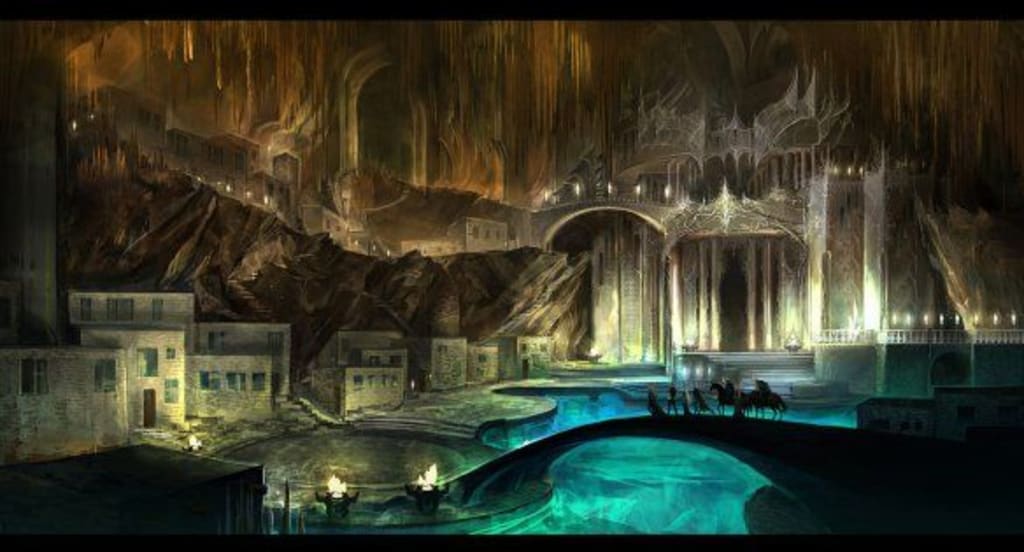
In a world where towering skyscrapers dominate cityscapes, the fascination with reaching for the skies is undeniable. Yet, humanity's architectural ambitions haven't always been vertical. Throughout history, entire civilizations have turned their ingenuity downward, creating vast underground cities to serve as sanctuaries, sacred sites, or marvels of engineering. These subterranean realms, steeped in myth and mystery, offer a glimpse into ancient societies' creativity and resilience. Let’s journey through five of the most enigmatic underground cities that continue to intrigue us today.
1. Wieliczka Salt Mine, Poland: The Subterranean Salt Cathedral
Hidden beneath the town of Wieliczka, Poland, lies a massive underground marvel known as the Wieliczka Salt Mine. Operational since the 13th century, this mine stretches over 287 kilometers (178 miles) and descends more than 300 meters (1,000 feet) underground. Initially a vital source of table salt, operations ceased in 2007, marking the end of a 700-year legacy.
Beyond its industrial importance, the mine is renowned for its intricate carvings and chapels, including statues of mythical figures and religious icons—all sculpted from salt by miners and contemporary artists. The site, now a UNESCO World Heritage Site, attracts over 1.2 million visitors annually, who marvel at its artistic and historical significance.
2. Lalibela, Ethiopia: A Sacred Village of Rock-Hewn Churches
In the highlands of Ethiopia lies Lalibela, a holy town famed for its monolithic churches carved directly into the ground. These 11 interconnected churches, regarded as sacred by the Ethiopian Orthodox Church, are masterpieces of medieval engineering and devotion. Among them, the Church of St. George, shaped like a cross, stands as the most iconic.
Legend has it that angels aided King Lalibela and his workers in constructing these marvels within 24 years during the 13th century. While archaeologists debate the timeline and origins, these churches remain a testament to Ethiopia’s rich spiritual heritage, drawing over 100,000 pilgrims each year.
3. Naours, France: The Forgotten Underground City
In northern France, a vast network of tunnels lies beneath the surface, dating back to Roman times. Initially a limestone quarry, this subterranean site evolved into a hidden refuge during invasions and wars. By the Middle Ages, the network expanded to include over 300 rooms, capable of housing 3,000 people.
During the 30 Years' War, it served as a sanctuary for civilians, while in modern times, it saw use in both World Wars. Rediscovered in the 19th century, Naours now offers visitors a glimpse into a time when survival meant going underground.
4. Derinkuyu, Turkey: The Ancient Underground Metropolis
Deep beneath Turkey’s Derinkuyu district lies one of the largest known underground cities in the world. Believed to date back as far as 1200 BCE, this multi-level complex could house up to 20,000 people. Its 18 levels include living quarters, kitchens, schools, churches, and even tombs, suggesting long-term habitation.
Intriguingly, Derinkuyu is thought to connect to nearby underground cities through hidden tunnels, hinting at a network of subterranean civilizations. Rediscovered in the 1960s, it remains a mystery how such an advanced city was constructed so long ago.
5. Petra, Jordan: The Rose-Red City of the Nabataeans
Known as the "Rose-Red City," Petra is an architectural wonder carved into the sandstone cliffs of southern Jordan. Once a thriving caravan city, it served as the Nabataean Empire's capital between 400 BCE and 106 CE. With temples, tombs, and an advanced irrigation system, Petra sustained a population of up to 20,000.
The city was "lost" to the Western world until its rediscovery in the 19th century. Today, its most famous structure, the Treasury, sparks imaginations with tales of hidden riches and connections to biblical events. Only 15% of Petra has been uncovered, leaving much of its story buried beneath the desert sands.
A Glimpse Into the Depths
These underground cities reflect humanity’s resilience and adaptability in the face of challenges—whether war, environmental hardship, or the quest for spiritual fulfillment. While these sites inspire awe with their engineering and artistry, they also invite us to ponder the mysteries that remain hidden beneath our feet. As we continue to unearth these marvels, we uncover not just structures, but stories of survival, creativity, and the indomitable human spirit.
About the Creator
Keep reading
More stories from Georgia M. and writers in Education and other communities.
Unveiling the Mystery of the Evil Eye
Throughout history, humanity has grappled with unexplained misfortunes—sudden illnesses, unexpected losses, and streaks of bad luck. While such events are often dismissed as coincidence, many cultures believe in a more sinister force: the curse of the evil eye.
By Georgia M.about a year ago in Education
Clear Paths to Discover Your Purpose in Life
Finding direction in life is a common human search. Many people want their work and daily actions to feel meaningful. When you discover your purpose in life, you gain a sense of direction and inner peace. Purpose does not appear in a single moment for most people. It often grows through reflection, action, and learning. Small steps can lead to deep insight.
By Philip Raymond Baquieabout 16 hours ago in Education
This Is What I Do When People Throw Rocks At Me
Rocks have been thrown at me for a greater part of my life. Some have been small and missed hitting me. When people don't get a reaction from me, they throw bigger rocks with a better aim. Many have been hurled at me with precision over the years. For a long time, I thought my only options were to dodge them or be crushed by them.
By Margaret Minnicks7 days ago in Confessions



Comments
There are no comments for this story
Be the first to respond and start the conversation.