
The World of the Famous Einstein
Exploring the Genius, Wisdom, and Legacy of Albert Einstein Through His Most Inspiring Words

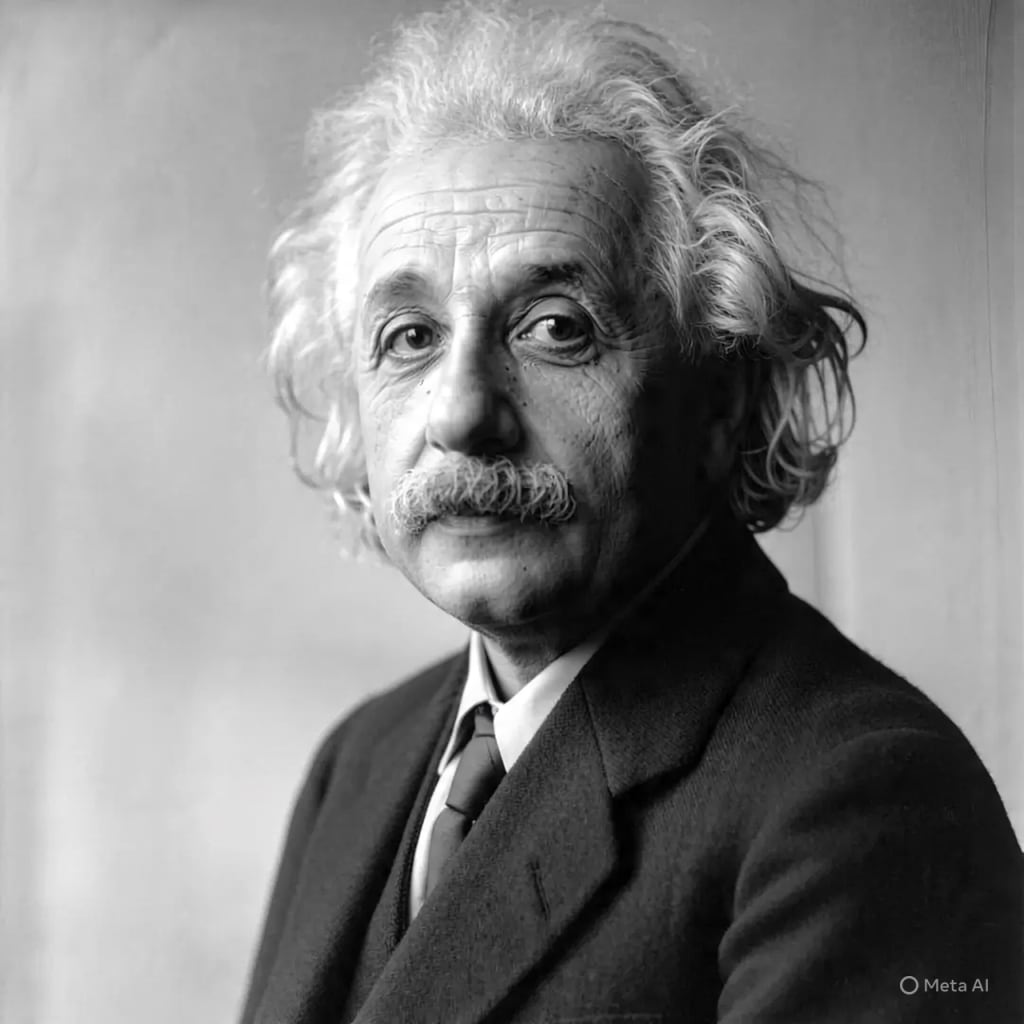
The World of the Famous Einstein
Albert Einstein is a name that resonates around the world as a symbol of genius, curiosity, and profound insight into the mysteries of the universe. Born on March 14, 1879, in Ulm, Germany, Einstein transformed the world of physics with his groundbreaking theories and timeless wisdom that extended far beyond science.
One of Einstein’s most famous sentences captures his philosophy perfectly: “Imagination is more important than knowledge.” This statement reflects his belief that the ability to think creatively and envision possibilities beyond existing facts is crucial for innovation and discovery. Unlike many scientists of his time who focused solely on mathematical calculations and established theories, Einstein dared to imagine new ways of understanding the world.

Einstein’s most revolutionary contribution to science was the theory of relativity, which forever changed the way we perceive space, time, and gravity. The famous equation E=mc², which he derived from his special theory of relativity, showed the equivalence of energy (E) and mass (m), with “c” representing the speed of light in a vacuum. This simple but powerful formula revealed that mass could be converted into energy, leading to enormous scientific and practical implications, including the development of nuclear energy.

Beyond his scientific achievements, Einstein was also a deep thinker on life, philosophy, and humanity. He once said, “Life is like riding a bicycle. To keep your balance, you must keep moving.” This sentence is more than a metaphor; it is a lesson on perseverance and resilience. Einstein’s life itself was a testament to this principle. He faced challenges such as political persecution and personal hardships but continued to pursue his work and ideals with unwavering determination.

Another famous Einstein quote, “The important thing is not to stop questioning. Curiosity has its own reason for existing,” reflects his relentless pursuit of knowledge and truth. Even after formulating some of the most fundamental theories in physics, Einstein never ceased to question the nature of reality. This attitude of continuous inquiry inspired generations of scientists and thinkers to push the boundaries of human understanding.
Einstein’s impact went beyond the realm of science and into social and political spheres. He was an outspoken advocate for peace, civil rights, and humanitarian causes. During the rise of Nazism in Germany, Einstein, who was Jewish, fled to the United States and used his voice to oppose fascism and nuclear weapons. He famously said, “Peace cannot be kept by force; it can only be achieved by understanding.” His commitment to justice and human dignity remains an inspiration to many around the globe.
Interestingly, Einstein also expressed humility about his genius. When asked about his intelligence, he remarked, “I have no special talents. I am only passionately curious.” This sentence reminds us that curiosity and hard work often matter more than innate talent. Einstein’s curiosity drove him to explore fundamental questions about the universe that many considered impossible to answer.
In addition to his scientific and philosophical insights, Einstein had a playful and poetic side. He once wrote, “If you want your children to be intelligent, read them fairy tales. If you want them to be more intelligent, read them more fairy tales.” This highlights his belief in the power of imagination and storytelling as tools for learning and creativity.
Einstein’s legacy continues to shape modern science and culture. His name has become synonymous with genius, and his ideas laid the foundation for many technological advancements we enjoy today—from GPS systems that rely on relativity theory to the atomic age. Yet, his words continue to resonate because they speak to universal human experiences—curiosity, perseverance, humility, and the quest for peace.

In conclusion, Albert Einstein’s world was one of extraordinary intellect and deep humanity. His famous sentences not only illuminate his scientific discoveries but also offer timeless wisdom on life and the human spirit. As Einstein himself advised, “Try not to become a man of success, but rather try to become a man of value.” This powerful message encourages us to seek meaning and contribution rather than mere achievement.
Einstein’s life teaches us that the world advances through imagination and courage to ask difficult questions. His sentences are not just words; they are guiding lights that invite us to explore, understand, and ultimately, make the world a better place.
About the Creator
Keep reading
More stories from MoneyOrbit and writers in Education and other communities.
The Last Lunchbox
The Last Lunchbox" — A Realistic Emotional Story About a Father's Love Ravi was an ordinary man. He worked as a security guard at a private school in Mumbai. His monthly salary was just enough to pay rent, buy groceries, and cover school fees for his daughter, Mahi. He had no savings, no luxuries — only dreams. And all his dreams wore a school uniform with two tight braids and a smile that lit up his tired evenings.
By MoneyOrbit5 months ago in Education
US Urges Its Citizens to Flee Venezuela Amid Reports of Paramilitaries
The United States has issued a strong warning urging its citizens to immediately leave Venezuela, citing growing security risks and alarming reports of armed paramilitary groups operating across the country. The advisory, released by the US State Department, reflects escalating concern over the deteriorating safety situation as political instability, armed violence, and lawlessness intensify.
By Aarif Lashari6 days ago in Education




Comments
There are no comments for this story
Be the first to respond and start the conversation.