

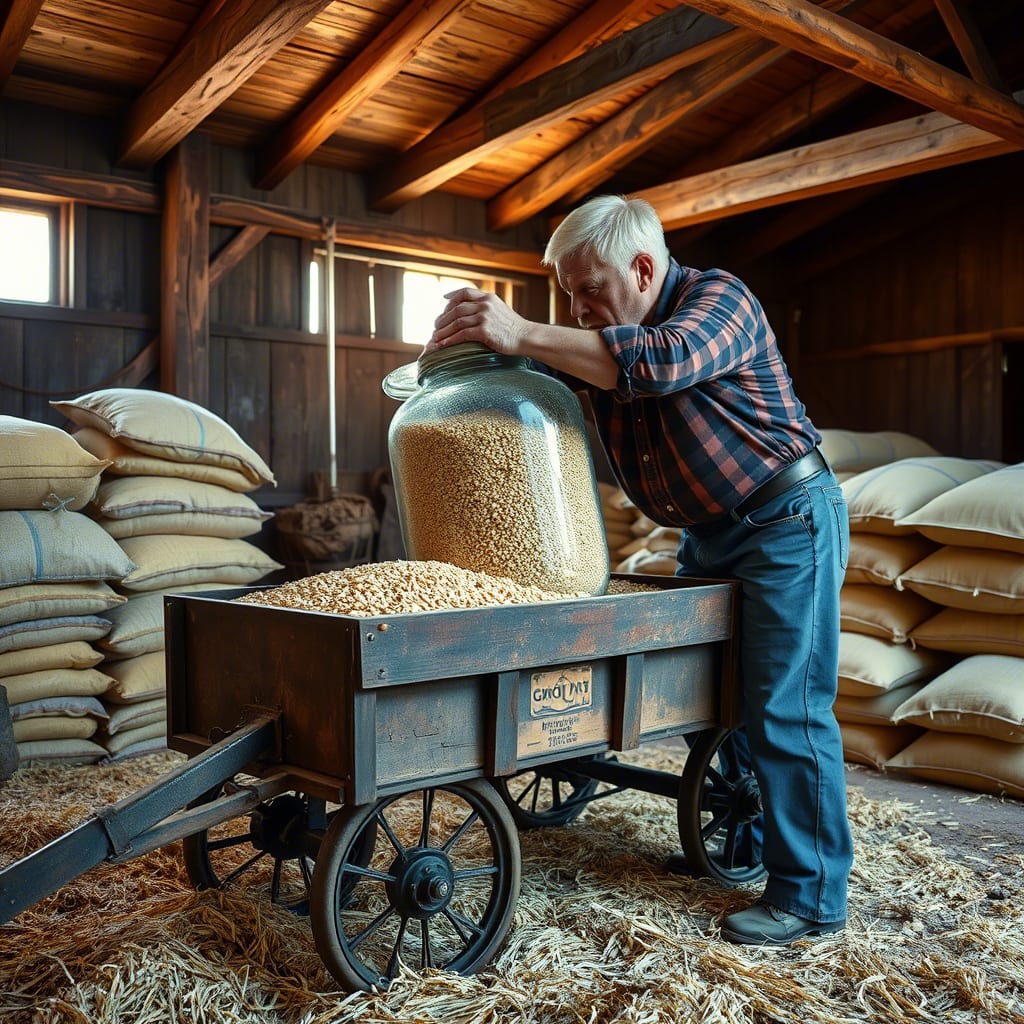
In a quiet village nestled between hills and fields, there lived a kind and curious girl named Asha. Though she was only 12, she had the wisdom of someone much older. She was known for asking questions—big, meaningful questions that often left even the village elders scratching their heads.
One day, while helping her grandmother clean the attic, Asha found an old, dusty jar with a lid tightly sealed. It was heavy—much heavier than any jar its size should have been.
“What’s in here?” Asha asked.
Her grandmother looked at the jar and smiled. “That’s the Jar of Regrets,” she said. “Your great-grandfather carried it every day.”
“Regrets?” Asha echoed. “Like... mistakes?”
“Exactly,” her grandmother said. “Every time he felt guilt or disappointment—he wrote it down, folded it into a paper, and put it in this jar. Over time, it grew heavier and heavier.”
Asha frowned. “Why didn’t he throw it away?”
Her grandmother sighed, “He believed regrets were a part of life. But he never realized that carrying them made his journey harder.”
That night, Asha couldn’t sleep. She kept thinking about the jar—how something invisible like a feeling could become so heavy.
The next morning, she carried the jar around the house, just to understand. Within an hour, her arms ached. By lunch, she’d knocked over a plant, spilled a cup of tea, and tripped over her own feet twice.
At dinner, her grandmother chuckled. “You’re learning something, aren’t you?”
Asha nodded. “I think I am.”
That evening, she sat down and opened the jar. One by one, she unfolded the regrets.
“I should have helped my neighbor more.”
“I was too proud to say sorry.”
“I let fear stop me from following my dream.”
Some notes were smudged by tears. Others were scribbled in frustration. But all of them shared a common thread: they were things left undone, words left unsaid, and chances not taken.
Suddenly, Asha had an idea.
She ran to her room, pulled out her journal, and started writing—not regrets, but resolutions.
“I will say sorry when I need to.”
“I will help someone without expecting anything.”
“I will try, even if I’m afraid.”
Each time she read one of her great-grandfather’s regrets, she wrote a matching resolution and placed it in a new jar.
She called it the Jar of Hope.
Over the next few weeks, Asha kept both jars side by side. She continued to read one regret each day—but now, she matched it with an action. One day, she apologized to a classmate she had once ignored. Another day, she offered help to a lonely old man at the market. Slowly, she began turning her ancestor’s regrets into lessons—and into change.
Months passed, and one day, Asha noticed something incredible. The original Jar of Regrets felt lighter.
She opened it to find fewer papers. Confused, she asked her grandmother, “Did you take some out?”
Her grandmother smiled knowingly. “No, child. But maybe you’re no longer carrying the same weight.”
Asha thought about it. She hadn’t thrown anything away—but somehow, acting on those old regrets had helped her release their power.
She realized something beautiful: regrets don’t have to be permanent weights—they can be bridges to better choices.
From that day on, Asha shared her story with others in the village. She told them to write not only their mistakes, but also their intentions. She encouraged them to keep two jars: one for what they wished they hadn’t done—and one for what they would now choose to do.
Her story spread far and wide. And though many people still carried regrets, they now had a way to transform the weight into wisdom.
🌱 Moral of the Story:
Regret is heavy, but it doesn’t have to stay that way. When we turn regret into action, we lighten the load and grow stronger.
About the Creator
Keep reading
More stories from VISHWANATHA and writers in Education and other communities.
The Compassionate Farmer
The Compassionate Farmer Once upon a time, in a small village nestled between lush green hills and fertile fields, there lived a farmer named Ramesh. He was known throughout the village for his hard work and dedication to farming. His crops were always abundant, and his animals healthy. However, what truly set him apart from others was not just his success but also his kindness.
By VISHWANATHA9 months ago in Education
7 Business-Boosting Benefits of an HCI Solution
A hyperconverged infrastructure solution is a modern way for businesses to run their computer systems and data centers. In simple terms, it combines computing power, storage, and networking into a single easy platform. Many companies worldwide are choosing HCI solutions to make their work faster, easier, and cheaper.
By Amelia Hebrewabout an hour ago in Education
Best Advice for Home Buying in 2026
If you're considering buying a home in 2026, this is probably the top advice you could have. Whether this is your first home or your last home or anywhere in between, some of these things might be a given, some you probably already know, but some are important for 2026. Regardless, here's the best advice for home buying in 2026.
By Tammy Emineth5 days ago in Education



Comments
There are no comments for this story
Be the first to respond and start the conversation.