
The Twilight Zone: A Timeless Legacy of Sci-Fi, Horror, and Social Commentary
From Creepy Costumes to Thought-Provoking Messages: The Enduring Appeal of the Show

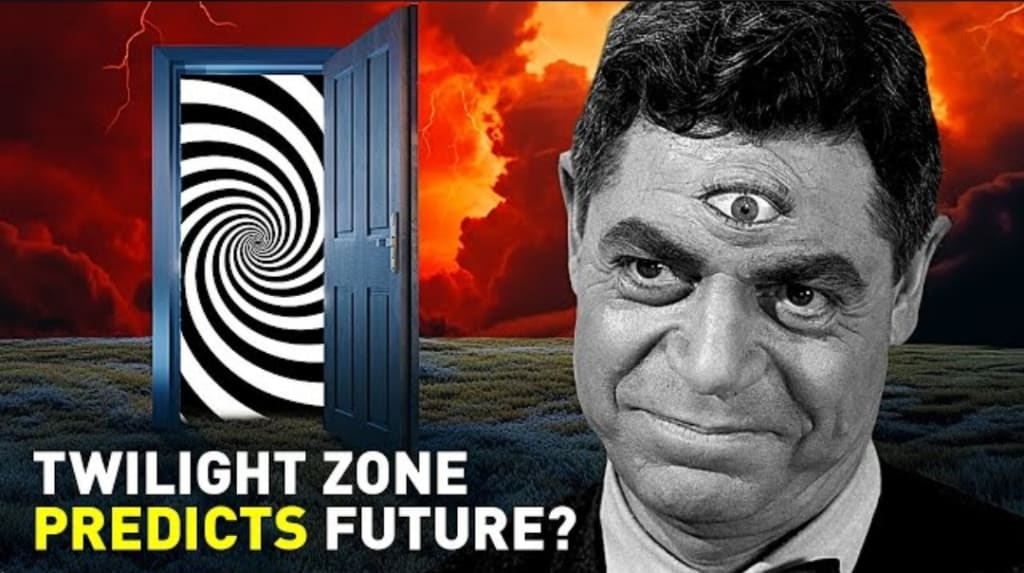
There’s a TV show from the 1960s that still holds immense influence today, inspiring everything from *Final Destination* to *Black Mirror*. This show, *The Twilight Zone*, created by Rod Serling, became a cornerstone in sci-fi and horror television. Its impact is so strong that it still ranks among the TV guide’s 50 greatest TV shows, decades after its original run.
*The Twilight Zone* was not just another anthology series—it became a cultural phenomenon. Each episode presented a new story where ordinary people were confronted with strange, often unsettling events, and the signature twist ending always left viewers with something to ponder. Serling, the mastermind behind it all, was the executive producer, head writer, and narrator of the show. His voice delivered the chilling intros and outros that framed the bizarre happenings, often explaining how characters ended up in “The Twilight Zone.”
Interestingly, the term “Twilight Zone” entered the lexicon in the 1990s as a way to describe situations where reality seemed to blur with the unreal, a feeling of being stuck between two worlds. Over time, it even came to represent the deepest, most mysterious parts of the ocean, where no sunlight reaches. The name perfectly matched the surreal, otherworldly feel of the series.
The show attracted a wide range of actors, many of whom went on to have significant careers in Hollywood. It was also a launching pad for younger stars. Icons like Buster Keaton even made appearances—Keaton starred in season 3, episode 13, an example of the kind of cross-generational appeal the show had.
Though *The Twilight Zone* aired originally in the late 1950s and early 1960s, its influence stretched far beyond its time. For Halloween, it became synonymous with spooky TV marathons, with people gathering to watch the show’s eerie episodes. It also offered up plenty of costume inspiration, as characters like the frightening “Talking Tina” from season 5, episode 6, prefigured the likes of Chucky and Annabelle in later horror films.
One of the most unsettling episodes is “Eye of the Beholder” from season 2, episode 6, which keeps viewers on the edge of their seats, wondering what lies beneath the bandages of Miss Janet Tyler. The darkness and suspense of the episode continue to be a classic choice for Halloween viewing. The show even inspired official holidays, such as National Twilight Zone Day on May 11th, a day to celebrate its lasting cultural influence.
It’s not just TV shows that owe a debt to *The Twilight Zone*—films and other media took inspiration from its themes. For instance, *The Simpsons* often parodied the show, and George R.R. Martin, the creator of *Game of Thrones*, began his writing career by contributing to the *Twilight Zone* revival in the 1980s. While the revival didn’t have the same level of success as the original, it helped launch his career. This experience provided him with valuable lessons in TV writing.
The series also influenced blockbuster films like *The Truman Show* and *Final Destination*, which built upon *The Twilight Zone’s* themes of predestination, fate, and the strange intersection between the real and the imaginary. The episode “The Monsters Are Due on Maple Street” centers around a neighborhood that falls apart after rumors of an alien presence, which directly inspired the 2007 film *The Mist*, directed by Frank Darabont.
Another episode, “Mirror Image,” about a woman encountering her doppelganger at a bus station, clearly inspired Jordan Peele’s 2019 horror masterpiece *Us*. Even *The Sixth Sense* and *Jacob’s Ladder* trace their roots to *The Twilight Zone*, particularly the story “An Occurrence at Owl Creek Bridge,” which featured a twist ending that made waves in the world of psychological horror.
In the episode “Five Characters in Search of an Exit,” five people find themselves in a strange room with no memory of how they got there. This premise, which plays with the concept of being trapped in an inexplicable space, shares similarities with the 2007 movie *Cube*, where strangers are confined to a deadly maze. While the director of *Cube* never confirmed the inspiration, fans have often drawn parallels between the two.
Some of the *Twilight Zone’s* episodes were groundbreaking and ahead of their time. One such episode, “The Encounter,” was banned for 50 years. This episode, which tackled themes of war, hidden biases, and racial tension, made a bold statement about social issues—something that *The Twilight Zone* was known for. Interestingly, sci-fi allowed the show to address these deeper societal problems, as TV networks were more willing to air stories about extraterrestrials and the unknown than straightforward drama series.
What made the show stand out was its format: each episode was a self-contained story. Unlike most TV shows of the time, which followed ongoing story arcs, *The Twilight Zone* presented a new tale each week. These stories were usually about ordinary people in extraordinary circumstances, often with a moral lesson or a twist that left viewers questioning the nature of reality.
Despite its massive success, the show was canceled in 1962, just before the start of season 4. It had been facing difficulties—finding a sponsor was a struggle, and CBS changed its schedule, replacing the show with a comedy series, *Fair Exchange*. Though *Fair Exchange* failed to gain traction, and CBS sought to bring Serling back, by that point, he had burned out. The show’s move to a full hour in season 4 also didn’t sit well with audiences, and ratings began to decline.
Serling’s daughter, Anne, had an interesting relationship with the show. When she was younger, she didn’t understand her father’s role in creating such strange and eerie stories. One day, a schoolmate asked her where her father got his ideas, leaving her puzzled. Years later, after her father’s death, Anne began watching the show as a way to feel closer to him. The surreal nature of *The Twilight Zone* took on new meaning for her, offering a connection to the father she had lost.
Rod Serling’s role as the narrator was initially offered to Orson Welles, but the latter’s high fee made him unaffordable. Serling, however, stepped in and became synonymous with the show’s tone and atmosphere.
Today, *The Twilight Zone* is available on streaming platforms, and its legacy continues to captivate new generations. If you decide to watch the series, you’re diving into one of the most influential shows in TV history—a series that blurred the lines between reality and imagination, sparking creativity in TV, film, and beyond.
About the Creator
Nora Ariana
Empowering through stories and sound igniting purpose, sparking growth, and awakening the power within.
Keep reading
More stories from Nora Ariana and writers in Education and other communities.
A goal is a dream with a deadline
A goal is a dream with a deadline. This powerful quote reminds us that without action, dreams remain just that wishes floating in our imagination. But when we set a timeline and commit to achieving them, they evolve into goals, bringing clarity, direction, and purpose. Many people go through life holding on to dreams, hoping they will come true someday. But someday is not a day on the calendar. Dreams without structure often fade with time or get buried under the weight of daily responsibilities. Turning a dream into a goal is what separates those who achieve from those who continue to wish.
By Nora ArianaExclusive • 9 months ago
How Global Experiences Shape Smarter, More Creative Leaders
Leadership today demands more than experience and technical skill. It requires imagination, empathy, and the ability to see problems from new angles. One of the most potent ways leaders develop these qualities is through travel. When leaders step outside familiar routines, they gain insight that books and meetings cannot offer. Exposure to new cultures, environments, and ways of thinking shows clearly how creative leadership through travel can unlock ideas that change how leaders think, decide, and inspire others.
By Nathalie Kyriakoua day ago in Education
Can You Really Earn Money With Transcription? The Real Income Reality
The short answer is yes—you can earn money with transcription. But the more honest, useful answer is this: transcription only becomes worthwhile when you understand how the income actually works, not how it’s often presented online.
By Mahesh Kumar3 days ago in Education
Ludacris and Nelly draw backlash over bookings at MAGA-coded music festival
Ludacris and Nelly headlining a mostly right-wing event is good for them. It’s also great for the genre of hip hop. The two rap veterans have showcased their talents on other stages. Why can’t they perform for mostly MAGA folks and grab that bag?
By Skyler Saunders3 days ago in Beat


Comments
There are no comments for this story
Be the first to respond and start the conversation.