

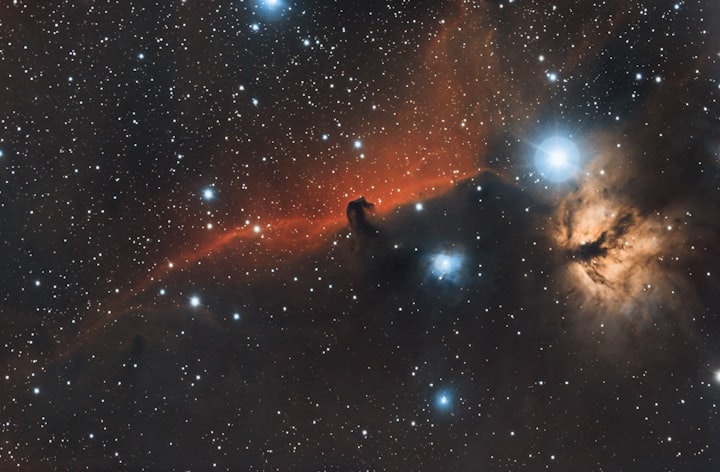
The planetary system we call home is located in an outer spiral arm of the Milky Way galaxy.
Our solar system consists of our star, the Sun, and everything bound to it by gravity – the planets Mercury, Venus, Earth, Mars, Jupiter, Saturn, Uranus, and Neptune; dwarf planets such as Pluto; dozens of moons; and millions of asteroids, comets, and meteoroids.
Beyond our own solar system, there are more planets than stars in the night sky. So far, we have discovered thousands of planetary systems orbiting other stars in the Milky Way, with more planets being found. Most of the hundreds of billions of stars in our galaxy are thought to have planets of their own, and the Milky Way is but one of perhaps 100 billion galaxies in the universe.
While our planet is in some ways a mere speck in the vast cosmos, we have a lot of company out there. It seems that we live in a universe packed with planets – a web of countless stars accompanied by families of objects, perhaps some with life of their own.
Namesake
There are many planetary systems like ours in the universe, with planets orbiting a host star. Our planetary system is called “the solar system” because we use the word “solar” to describe things related to our star, after the Latin word for Sun, "solis."
Size and Distance
Our solar system extends much farther than the eight planets that orbit the Sun. The solar system also includes the Kuiper Belt that lies past Neptune's orbit. This is a sparsely occupied ring of icy bodies, almost all smaller than the most popular Kuiper Belt Object – dwarf planet Pluto.
Pluto
NASA’s New Horizons spacecraft captured this high-resolution enhanced color view of Pluto on July 14, 2015. Credit: NASA/JHUAPL/SwRI | Full caption and image
Beyond the fringes of the Kuiper Belt is the Oort Cloud. This giant spherical shell surrounds our solar system. It has never been directly observed, but its existence is predicted based on mathematical models and observations of comets that likely originate there.
The Oort Cloud is made of icy pieces of space debris - some bigger than mountains – orbiting our Sun as far as 1.6 light-years away. This shell of material is thick, extending from 5,000 astronomical units to 100,000 astronomical units. One astronomical unit (or AU) is the distance from the Sun to Earth, or about 93 million miles (150 million kilometers). The Oort Cloud is the boundary of the Sun's gravitational influence, where orbiting objects can turn around and return closer to our Sun.
The Sun's heliosphere doesn't extend quite as far. The heliosphere is the bubble created by the solar wind – a stream of electrically charged gas blowing outward from the Sun in all directions. The boundary where the solar wind is abruptly slowed by pressure from interstellar gases is called the termination shock. This edge occurs between 80-100 astronomical units.
Two NASA spacecraft launched in 1977 have crossed the termination shock: Voyager 1 in 2004 and Voyager 2 in 2007. Voyager 1 went interstellar in 2012 and Voyager 2 joined it in 2018. But it will be many thousands of years before the two Voyagers exit the Oort Cloud.
Moons
There are more than 200 known moons in our solar system and several more awaiting confirmation of discovery. Of the eight planets, Mercury and Venus are the only ones with no moons. The giant planets Jupiter and Saturn lead our solar system’s moon counts. In some ways, the swarms of moons around these worlds resemble mini versions of our solar system. Pluto, smaller than our own moon, has five moons in its orbit, including the Charon, a moon so large it makes Pluto wobble. Even tiny asteroids can have moons. In 2017, scientists found asteroid 3122 Florence had two tiny moons.
Solar System Family Portrait
These six narrow-angle color images were made from the first-ever 'portrait' of the solar system taken by Voyager 1, which was more than 4 billion miles from Earth and about 32 degrees above the ecliptic. Credit: NASA Planetary Photojournal
Formation
Our solar system formed about 4.5 billion years ago from a dense cloud of interstellar gas and dust. The cloud collapsed, possibly due to the shockwave of a nearby exploding star, called a supernova. When this dust cloud collapsed, it formed a solar nebula – a spinning, swirling disk of material.
At the center, gravity pulled more and more material in. Eventually, the pressure in the core was so great that hydrogen atoms began to combine and form helium, releasing a tremendous amount of energy. With that, our Sun was born, and it eventually amassed more than 99% of the available matter.
Matter farther out in the disk was also clumping together. These clumps smashed into one another, forming larger and larger objects. Some of them grew big enough for their gravity to shape them into spheres, becoming planets, dwarf planets, and large moons. In other cases, planets did not form: the asteroid belt is made of bits and pieces of the early solar system that could never quite come together into a planet. Other smaller leftover pieces became asteroids, comets, meteoroids, and small, irregular moons.
Structure
The order and arrangement of the planets and other bodies in our solar system is due to the way the solar system formed. Nearest to the Sun, only rocky material could withstand the heat when the solar system was young. For this reason, the first four planets – Mercury, Venus, Earth, and Mars – are terrestrial planets. They are all small with solid, rocky surfaces.
Meanwhile, materials we are used to seeing as ice, liquid, or gas settled in the outer regions of the young solar system. Gravity pulled these materials together, and that is where we find gas giants Jupiter and Saturn, and the ice giants Uranus and Neptune.
About the Creator
Reader insights
Outstanding
Excellent work. Looking forward to reading more!
Top insights
Compelling and original writing
Creative use of language & vocab
Easy to read and follow
Well-structured & engaging content
Excellent storytelling
Original narrative & well developed characters
Expert insights and opinions
Arguments were carefully researched and presented
Eye opening
Niche topic & fresh perspectives
Heartfelt and relatable
The story invoked strong personal emotions
Masterful proofreading
Zero grammar & spelling mistakes
On-point and relevant
Writing reflected the title & theme
Keep reading
More stories from Abdulhadi Khakwani and writers in Education and other communities.
Pakistan and its Future
Pakistan is a nation with a rich and complex history, and its future is just as dynamic as its past. Despite facing many challenges, including political instability, economic inequality, and security concerns, Pakistan has the potential to become a prosperous and thriving nation in the years to come. In this essay, we will explore some of the key factors that will shape the future of Pakistan and how the country can work towards a brighter future. One of the most critical challenges facing Pakistan today is political instability. The country has experienced multiple military coups in the past, and democratic institutions remain fragile. However, recent years have seen some positive changes in this regard, with greater transparency and accountability in government institutions. With a well-established democratic setup and a growing awareness of the importance of a stable political environment, Pakistan has the potential to build a more robust and effective government system in the future. Another significant challenge facing Pakistan is economic inequality. While the country has made significant progress in recent years in terms of economic growth, poverty rates remain high, with a large portion of the population living below the poverty line. Addressing economic inequality will require a combination of measures, including investments in education, healthcare, and infrastructure. By ensuring that all citizens have access to quality education and healthcare, and by investing in infrastructure development, such as roads and public transportation, Pakistan can create a more equitable society and ensure that its economic growth is sustainable and inclusive. The security situation in Pakistan has also been a major concern for many years. The country is facing threats from numerous extremist groups, and there have been several major terrorist attacks in recent years. Addressing the security concerns will require a multifaceted approach that combines military measures with social and economic development. By promoting a culture of tolerance and inclusivity, and by investing in the education and the economy of the country’s different regions, Pakistan can work towards a more peaceful and prosperous future. One of the key drivers of future growth in Pakistan will be its youth population. With a median age of just 22 years, Pakistan has one of the youngest populations in the world. This youth demographic represents a tremendous opportunity for the country, provided that it is harnessed effectively. By investing in education and providing training and job opportunities, Pakistan can empower its young people to become active participants in the country’s economy and society. This would not only help to lift millions of people out of poverty but would also drive innovation and contribute to the country's long-term economic growth. Despite these challenges, Pakistan has made significant progress in recent years, particularly in terms of economic growth. The country’s economy has been expanding at an average rate of 4% per year, and there have been major investments in infrastructure projects such as the China Pakistan Economic Corridor (CPEC). These developments bode well for Pakistan's future, but there is still much work to be done to ensure that economic growth is sustainable and that the benefits are shared widely. In conclusion, Pakistan's future is full of promise but also contains significant challenges. Political instability, economic inequality, and security concerns all continue to pose significant obstacles. However, the country has made strides in recent years, and there is a growing sense of optimism about the future. By addressing these challenges head-on, Pakistan can build a more stable, prosperous, and inclusive society. Key strategies such as investing in education, empowering youth, and promoting social and economic development will be critical for Pakistan to achieve its full potential. With the right policies and investments, Pakistan has the potential to emerge as a leading economic and political power in the region and the world.
By Abdulhadi Khakwani3 years ago in Humans
The Power of Service Beyond the Uniform in Everyday Life
Service reaches far beyond the moments spent in uniform, shaping lives long after formal duties end. Veterans, first responders, and public servants carry lessons that extend into workplaces, families, and communities. Their values of discipline, compassion, teamwork, and integrity influence how they interact with others and how they continue serving in new ways. As they go about their everyday lives, their actions show that service is not defined by a role but by a mindset. Because of that mindset, countless communities benefit from their leadership and steady presence.
By Eric Schnabel4 days ago in Education
Importance of Technology in Learning Islamic Education
Islamic education has always been rooted in knowledge, reflection, and understanding. From handwritten manuscripts to traditional madrasa systems, learning has continuously evolved with time. Today, technology is shaping a new chapter in how Islamic education is taught, accessed, and understood. Rather than replacing traditional learning, technology enhances it, making Islamic knowledge more accessible, structured, and engaging for learners of all ages.
By Arslan Shahbaz4 days ago in Education


Comments
There are no comments for this story
Be the first to respond and start the conversation.