
The Science of Telepathy: Myth or Reality?
Exploring the Science Behind Telepathy: Fact, Fiction, or Future Possibility?

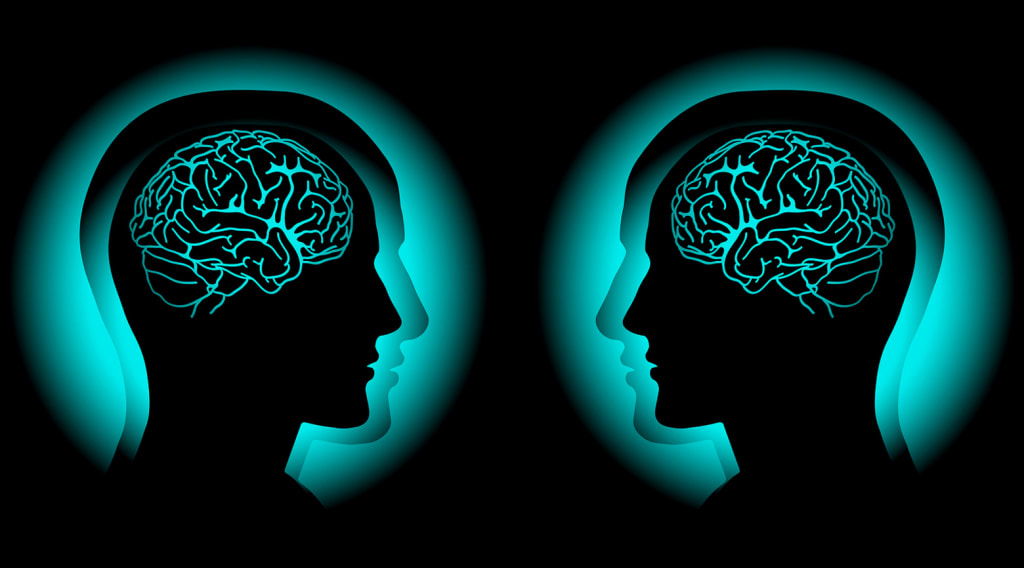
Telepathy, often depicted in science fiction as a mystical or futuristic power, has fascinated people for centuries. The idea of reading someone’s mind or transmitting thoughts across vast distances without any form of physical interaction sounds like pure fantasy, but could there be some basis in reality? In this article, we’ll explore the scientific perspective on telepathy and whether it could ever be proven to exist.
What is Telepathy?
Telepathy is commonly defined as the direct transmission of thoughts or information from one mind to another without using any traditional sensory channels or physical interaction. In simple terms, it’s the ability to “read minds” or “send thoughts” without speaking, writing, or using any other conventional means of communication.
Over the years, many have reported instances where they seemingly knew what someone else was thinking, or felt an unexplainable connection to others. But is there any scientific evidence to support these claims, or are they simply coincidences or products of the mind?
The Scientific Challenge
From a scientific standpoint, telepathy presents numerous challenges. The first and most obvious obstacle is that there is no known mechanism in the human body that would allow for the transmission of thoughts. All our communication is based on electrical signals that travel through neurons in the brain. While these signals are crucial to brain function, they are generally confined to our body’s nervous system and don’t have an external reach that could affect another person’s mind directly.
Moreover, the brain itself is incredibly complex. Although modern neuroscience has made significant strides in understanding how our brain processes thoughts and emotions, the exact workings of consciousness remain a mystery. Without a clear understanding of how thoughts are formed and transmitted within the brain, the idea of transferring them across space seems far-fetched.
The Role of the Mind and Quantum Physics
Some proponents of telepathy argue that the mind may be connected to the universe in ways that go beyond our current understanding of physics. They speculate that quantum mechanics, particularly the phenomenon known as quantum entanglement, could provide a basis for telepathy. Quantum entanglement refers to a situation where two particles become linked in such a way that the state of one particle can affect the state of another, even if they are separated by vast distances.
However, applying this concept to the human mind is highly speculative. While quantum entanglement has been observed in particles, there is no evidence to suggest that the human brain operates in this way. Most scientists agree that the brain functions on a much larger scale and operates according to classical physics rather than quantum mechanics.
The Research and Experiments
Despite the lack of a clear scientific explanation, the phenomenon of telepathy has been studied in various research settings. One of the most notable examples is the experiments conducted by Joseph B. Rhine at Duke University in the 1930s. Rhine coined the term "extrasensory perception" (ESP) and conducted a series of studies to determine whether individuals could transmit thoughts to others or perceive information without using the five senses.
While Rhine’s experiments led to some interesting results, they were often criticized for lack of rigorous controls and for failing to produce consistent evidence. Over the years, similar studies have been conducted, but none have provided definitive, reproducible evidence of telepathic abilities. Most findings have been inconclusive, and many scientists dismiss them as statistical anomalies or the result of experimental biases.
Psychological and Sociological Perspectives
Some researchers suggest that experiences attributed to telepathy could be better explained by psychological phenomena, such as the power of suggestion, intuition, or non-verbal cues. Humans are incredibly adept at picking up subtle body language, facial expressions, and other non-verbal signs, which can sometimes give the impression of telepathy. Additionally, our minds are highly suggestible, and people may misinterpret coincidences as meaningful connections.
Another possibility is that telepathic experiences are a result of strong emotional bonds. Close friends and family members, for example, may experience a sense of knowing what the other person is thinking or feeling because of their deep emotional connection and familiarity with each other’s behavior and thought patterns.
Is Telepathy Possible?
At present, there is no conclusive scientific evidence that proves the existence of telepathy. The scientific community remains largely skeptical, with most experts pointing to the lack of a plausible mechanism and the absence of reproducible results in telepathy experiments.
However, this doesn’t mean the door is completely closed on the topic. As neuroscience and quantum physics continue to evolve, our understanding of the brain and consciousness may one day reveal new insights. Until then, telepathy remains an intriguing mystery—a concept rooted in fiction, but with a spark of curiosity that continues to captivate our imagination.
Conclusion
While telepathy remains unproven by science, its allure persists in both popular culture and personal experience. Whether it’s through psychological connections, unexplained coincidences, or the mysteries of quantum physics, the question of whether telepathy exists continues to provoke interest and debate. For now, we can only wonder: Could there be more to the mind than we know, or is telepathy simply an illusion?
About the Creator
Alice Ararau
I'm passionate about travel, investments, and personal development. Here, I share tips on tourism, stocks, crypto, motivation, nutrition and reviews to help you grow personally and professionally. Follow for valuable insights!
Keep reading
More stories from Alice Ararau and writers in Education and other communities.
Ways to Invest in the Online Environment: A Comprehensive Guide
In today’s digital age, the internet has become a powerful tool for investment. Whether you’re looking to grow your wealth, diversify your portfolio, or enter a new investment space, the online environment offers numerous opportunities. From stocks and crypto to online businesses and digital assets, there are plenty of ways to invest in the virtual world. This article explores the most popular and profitable ways to invest online and provides insights into their advantages and risks.
By Alice Ararau10 months ago in Education
Before the Bell: Daily Pre-Market Steps That Drive Consistent Trading Wins
In daily trading, the difference between consistency and chaos often comes down to what happens before the session starts. The most reliable traders don’t wait for the bell to decide what to do—they use the early hours to map out a plan, filter distractions, and establish a tactical approach to the day.
By Agast Mishra7 days ago in Education
Image-to-text technology, also known as Optical Character
Image-to-text technology, also known as Optical Character Recognition (OCR), has transformed the way we interact with visual information. It allows machines to extract text from images, enabling various applications across multiple industries. From digitizing printed documents to reading text from scanned images, OCR plays a vital role in making printed content accessible, editable, and searchable. The need for such technology has grown exponentially with the increasing reliance on digital data and the rapid shift from physical to digital content in nearly all sectors of life. As the digital world continues to expand, image-to-text technology has paved the way for more seamless workflows, enabling businesses and individuals alike to save time, effort, and resources.
By Alexander Jackson4 days ago in Education
Getting Serious About Comedy (Part I)
If I were asked to remark on my life and the childhood that paved some road leading me to this point, I would have to say something about all the funny people who surrounded me for the last 26,872 days (and counting). Somewhere along that road, I became a big fan of laughter and the comedy that spawns it – and, I mean not only my own laughter, but the laughter of others, some of which I have actually been responsible for inducing.
By John Oliver Smith7 days ago in Humor



Comments
There are no comments for this story
Be the first to respond and start the conversation.