
The Role of Artificial Intelligence in Shaping the Future of Industries
The Rise of Artificial Intelligence
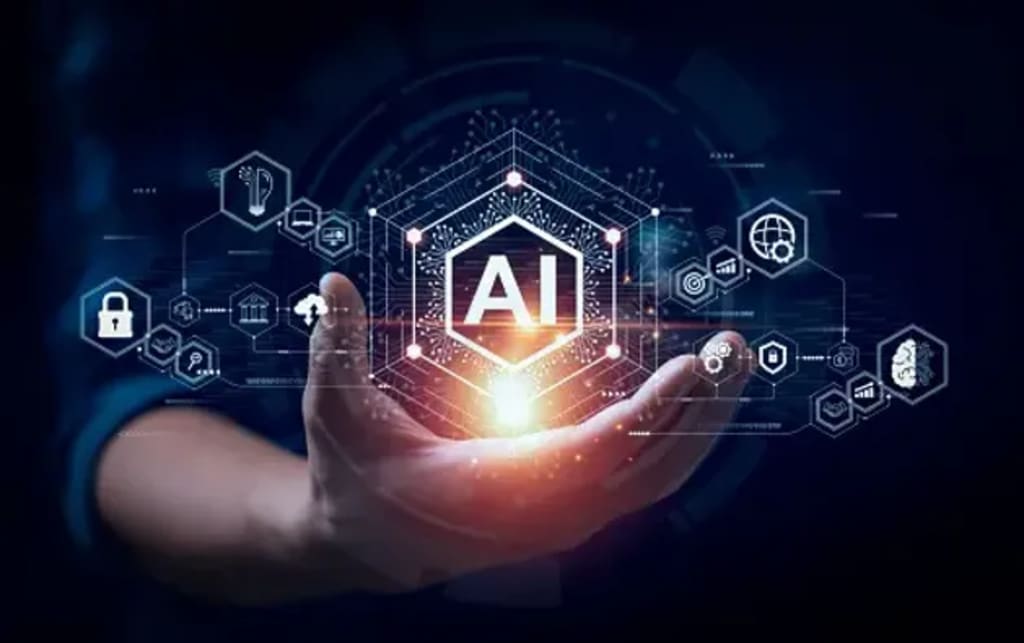
Artificial Intelligence (AI) has undergone a remarkable transformation since its inception, evolving from a concept of science fiction to a cornerstone of modern technological innovation. The term "artificial intelligence" was first introduced in 1956 by John McCarthy, a computer scientist who is often hailed as one of the fathers of AI. During a historic conference at Dartmouth College, McCarthy defined AI as "the science and engineering of making intelligent machines." This conference marked the birth of AI as a distinct field of study, setting the stage for decades of research and development that would eventually lead to the technology's widespread application across various industries.
In its early years, AI research focused on creating systems that could mimic specific human tasks, such as playing chess, solving mathematical problems, or recognizing patterns. These systems were predominantly rule-based, relying on a predefined set of instructions, or algorithms, to process information and arrive at conclusions. One of the earliest successes in AI was the creation of the Logic Theorist by Allen Newell and Herbert A. Simon in 1955, a program capable of proving mathematical theorems. The Logic Theorist was a groundbreaking achievement, demonstrating that machines could perform tasks traditionally thought to require human intelligence. Despite these achievements, early AI systems were limited in scope and lacked the ability to learn or adapt beyond the rules they were programmed to follow. These limitations became increasingly apparent as researchers attempted to tackle more complex problems, such as understanding natural language or recognizing objects in images.
As AI research progressed, it became clear that rule-based systems, while useful for specific tasks, were not sufficient to achieve the broader goal of creating machines that could truly think and learn like humans. This realization led to the development of machine learning, a subset of AI that allows computers to learn from data and improve their performance over time without being explicitly programmed for each specific task. The concept of machine learning represented a paradigm shift in AI, enabling systems to adapt to new information, recognize patterns, and make decisions based on empirical data rather than fixed rules.
One of the most significant milestones in machine learning was the development of neural networks, which were inspired by the structure and function of the human brain. Neural networks are composed of layers of interconnected nodes, or neurons, that process information and learn from data in a manner similar to the human brain. In the early days, neural networks were limited by the computational power available and the amount of data that could be processed. However, with the advent of more powerful computers and the explosion of big data, neural networks have become the foundation of many modern AI applications.
The introduction of deep learning, a type of machine learning that utilizes large neural networks with many layers, has further propelled AI into new frontiers. Deep learning models have been instrumental in advancing AI's capabilities in areas such as image and speech recognition, natural language processing, and autonomous systems. These models can analyze vast amounts of data, identify intricate patterns, and make predictions with unprecedented accuracy. For instance, deep learning algorithms have enabled AI systems to recognize objects in images with near-human accuracy, understand and generate human language, and even drive cars autonomously.
Today, AI has become an integral part of many industries, from healthcare and finance to manufacturing and transportation. In healthcare, AI is revolutionizing diagnostics, drug discovery, and personalized medicine. Machine learning algorithms are being used to analyze medical images, predict patient outcomes, and identify potential drug candidates. In finance, AI is transforming the way financial institutions operate, from fraud detection to algorithmic trading. AI-powered systems can analyze vast amounts of financial data in real-time, identify patterns and anomalies, and make trading decisions faster and more accurately than human traders.
In manufacturing, AI is driving efficiency and innovation through the use of robotics, predictive maintenance, and supply chain optimization. AI-powered robots are being used to automate repetitive tasks, while machine learning algorithms are being used to predict equipment failures and optimize production processes. In transportation, AI is playing a crucial role in the development of autonomous vehicles, traffic management systems, and logistics optimization. Self-driving cars, powered by AI, are being tested on roads around the world, with the potential to revolutionize the way we travel and reduce traffic accidents.
The proliferation of AI technologies has been fueled by the exponential growth of data, advances in computational power, and the development of sophisticated algorithms. These innovations have enabled AI to move beyond niche applications and into mainstream use, where it is now driving innovation, improving efficiency, and creating new opportunities across various sectors. As AI continues to evolve, it is expected to play an even more significant role in shaping the future of industries, transforming the way we live and work.
The rise of AI also raises important ethical and societal questions. As AI systems become more powerful and autonomous, there are concerns about their impact on jobs, privacy, and security. The potential for AI to be used in harmful ways, such as in autonomous weapons or surveillance systems, has led to calls for greater regulation and oversight. Additionally, the increasing reliance on AI raises questions about accountability and transparency, as AI systems can be difficult to understand and explain.
Despite these challenges, the potential benefits of AI are immense. AI has the potential to solve some of the world's most pressing problems, from climate change to disease eradication. By harnessing the power of AI, we can create a future where machines augment human capabilities, enabling us to achieve things that were once thought impossible. The key to realizing this potential lies in ensuring that AI is developed and deployed in a way that is ethical, transparent, and aligned with the values of society.
In conclusion, the rise of artificial intelligence marks one of the most significant technological advancements of our time. From its early beginnings as a concept of science fiction to its current role as a driving force behind innovation across industries, AI has come a long way. As we look to the future, it is clear that AI will continue to shape the world in ways we can only begin to imagine. The challenge and opportunity lie in ensuring that this powerful technology is used to benefit all of humanity, creating a future that is not only more efficient and innovative but also more just and equitable.
About the Creator
mokaca
ok
Learn Golf the Smart Way: A Clear Path for New Players
Golf is often seen as a demanding sport, but it does not have to be confusing or intimidating. Many people want to learn golf for fun, fitness, or social reasons, yet they feel unsure about where to start. The truth is that golf becomes enjoyable when you focus on the fundamentals and take steady steps forward. This article is designed to help new players understand the game in a practical, straightforward way, especially those seeking golf basics for beginners that are easy to follow and apply on the course.
By Dr. Shawn Keller2 days ago in Education




Comments
There are no comments for this story
Be the first to respond and start the conversation.