
The Role of Artificial Intelligence in Medical Diagnosis
"Transforming Healthcare with Intelligence, Speed, and Precision"

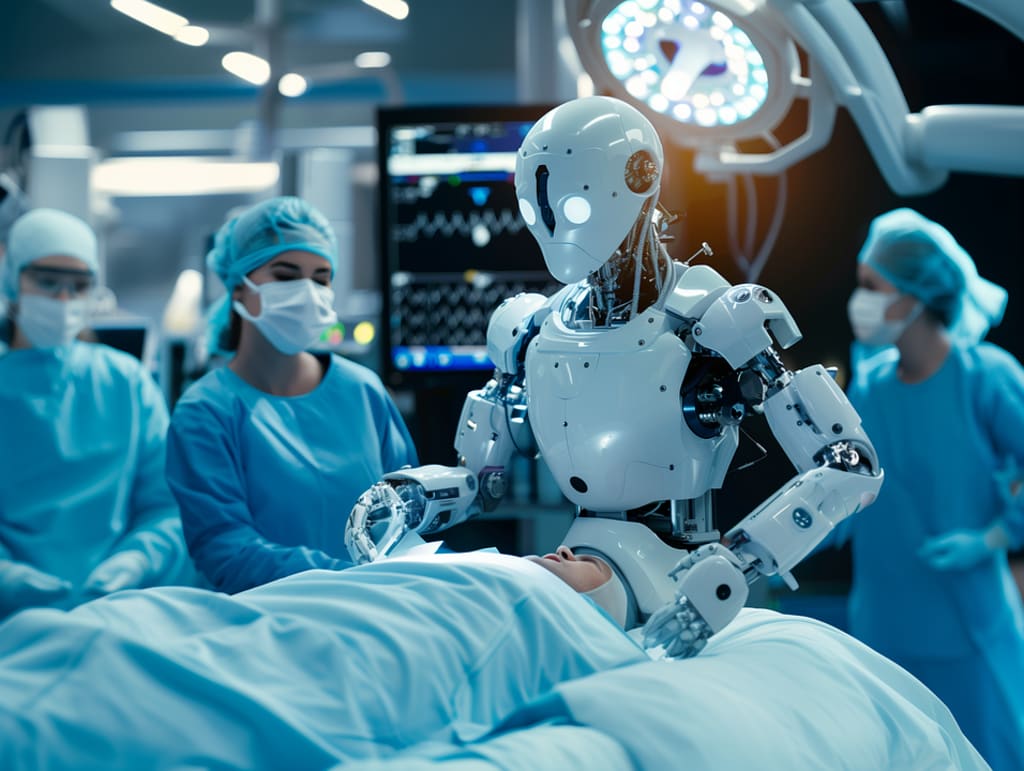
By utilizing large amounts of medical data, artificial intelligence (AI) is transforming medical diagnostics by increasing accessibility, accuracy, and efficiency. This helps physicians identify diseases, forecast patients, and provide individualized care. Medical diagnosis depended on manual analysis, human skill, and conventional methods prior to the incorporation of AI. Physicians employed imaging investigations, laboratory testing, physical exams, patient interviews, and medical expertise. Clinician experience, cognitive biases, and patient information frequently affected the accuracy of the diagnosis. Time-consuming procedures, subjectivity and human mistake, restricted access to specialists, and data overload were some of the drawbacks of pre-AI diagnosis techniques. Diagnoses were frequently delayed by the manual interpretation of complicated data, including lab results and medical imaging. Furthermore, a lack of access to specialists sometimes resulted in misdiagnosis or underdiagnosed.
What AI Can Do Easily Now With recent advances
AI has drastically simplified and accelerated many diagnostic processes that were previously time-consuming and complex for human doctors. Here are some of the things AI can now accomplish effortlessly:
Analyze medical images: AI can quickly evaluate X-rays, MRIs, and CT scans to detect cancers, fractures, and infections with high accuracy, often outperforming human experts.
Detect early-stage diseases. AI can detect early indicators of diseases such as cancer, Alzheimer's, and diabetic retinopathy before symptoms appear, allowing for earlier intervention.
Process massive datasets. AI systems can quickly scan hundreds of medical records, lab reports, or genetic sequences to detect trends or anomalies.
Interpret and Condense Clinical Notes Key information may be extracted from unstructured text or handwritten notes by doctors using Natural Language Processing (NLP), which facilitates the usage and comprehension of patient data.
Track Patients in Real Time Wearables and remote monitoring tools with AI capabilities can continually watch vital signs and notify medical professionals of any problems, such as respiratory distress or arrhythmias.
Offer Assistance in Making Decisions Based on current best practices, AI may provide evidence-based suggestions, highlighting possible misdiagnoses or recommending more testing or treatment choices.
Enhance Telemedicine AI chatbots and virtual assistants are particularly helpful in remote or resource-constrained environments since they may assess symptoms, make appointments, or offer first health advice.
How AI works to diagnosis human diseases
Using computational algorithms to decipher complicated medical data, including photographs, lab findings, genetic profiles, and clinical notes, is known as artificial intelligence (AI) in medical diagnosis. These tools facilitate quicker and more precise decision-making by seeing trends that human practitioners might not notice right away.
Fundamental Technologies Machine Learning (ML): To identify anomalies or forecast the risk of illness, ML systems learn from past patient data.
Deep Learning (DL): Deep learning models are particularly helpful in imaging, since they can identify minute indications of illness in CT, MRI, and X-ray images.
Computers can comprehend and extract information from unstructured text, such as medical records and doctor's notes, thanks to natural language processing, or NLP.
Expert systems are rule-based programs created to simulate human experts' decision-making processes.
Remarkable AI Tools Use in Medical science
Google's DeepMind: Attained ophthalmology-level precision in identifying eye conditions.
Aidoc: Helps radiologists identify life-threatening situations instantly.
Smartphone software called Skin Vision evaluates skin blemishes for possible cancer risks.
In conclusion we can say AI is quickly emerging as a vital tool for medical diagnosis. It is a potent supplement to human judgment, enhancing results, lowering mistakes, and democratizing access to high-quality treatment, but it cannot completely replace it. Working together, regulators, physicians, and AI developers will be essential to maximize the technology's promise while guaranteeing its ethical and equitable application as it develops & society will get the ultimate advantage of it.
About the Creator
The Strength of Undervaluation: A Hidden Path to Success
Being undervalued is frequently viewed as a disadvantage in a society that depends heavily on visibility, acknowledgment, and validation. Most people want to be recognized for their abilities, potential, and intelligence. History and experience, however, point to a paradoxical reality: undervaluation can be a significant advantage when pursuing success. It is frequently the underappreciated person who subtly changes the rules, catches everyone off guard, and achieves unanticipated success.
By Md Sharif10 months ago in Motivation
Free Laptop with GED Classes 2026: How Low-Income Adults & Students Can Get One
Earning your GED is a powerful step toward better jobs, higher pay, and long-term stability — but trying to study without a reliable laptop makes everything harder. The good news? In 2026, several legitimate programs and nonprofits are still giving free laptops specifically to people working on their GED or HiSET.
By Free Laptops From Governmentabout 8 hours ago in Education
The Value of Respect
On a cold winter morning, the school hallways were still quiet when Bashir arrived, as he always did before sunrise. He unlocked the gates, swept the corridors, wiped the classroom windows, and cleaned the floors before the students came rushing in.
By Waleed khana day ago in Education



Comments
There are no comments for this story
Be the first to respond and start the conversation.