
"The Ripple Effect of Trump’s Tariffs"
How One Nation’s Policy Reshaped Global Trade and Strained Economic Ties

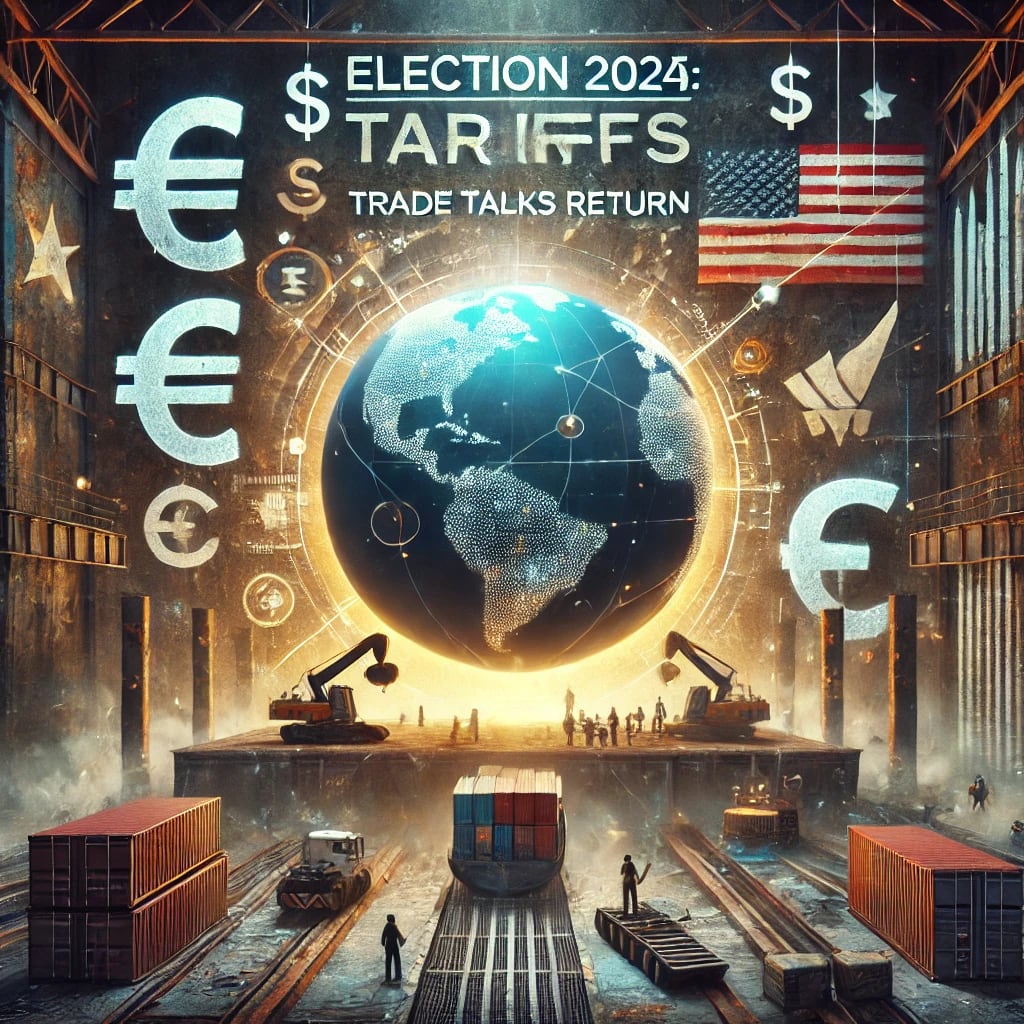
In 2025, long after the clang of the first tariffs was heard, the world is still feeling the aftershocks.
It began in 2018 with then-President Donald Trump’s “America First” policy and aggressive tariff strategy—targeting steel, aluminum, and hundreds of billions in Chinese goods. But what was meant to pressure rivals has proven to be a slow-burning economic wildfire that still smolders, especially in small to mid-sized economies.
To understand how the impact persists, we follow the story of Terravita, a developing country that found itself on the frontlines of global trade disruption despite having no part in the original dispute.
Chapter 1: The Origin of the Ripple
When Trump launched the tariff barrage, the world reacted swiftly. China hit back with its own levies, and trade relationships across Asia, Europe, and the Americas began to fray. For Terravita, a rising electronics and agriculture exporter, the 2018–2020 period brought whiplash.
While it briefly benefited from a U.S. demand shift—especially in sectors like rare earth metals and textiles—global uncertainty and a breakdown in traditional supply chains caused more harm than good. Small manufacturers closed as input costs surged and buyers became hesitant to commit.
Chapter 2: The Pandemic Pile-Up
As if the trade war weren’t enough, 2020 brought COVID-19, throwing global logistics into chaos. For Terravita, the pandemic multiplied the tariff-era pressure: prices skyrocketed, container ships were stuck offshore, and the government had to nationalize parts of its food and energy supply to maintain stability.
By 2022, the country had seen a 1.2% reduction in GDP growth across four years directly linked to trade disruption.
Chapter 3: A Fragile Recovery and a Political Flashback
The Biden administration, elected in 2020, chose not to reverse many of Trump’s tariffs outright. Instead, it refined them—maintaining pressure on China while offering targeted relief to allies. But even as some stability returned, the scars on Terravita’s economy remained.
Then came 2024.
With Donald Trump re-entering the political arena and winning the Republican nomination again, tariff talk returned to headlines. His platform promised a universal baseline tariff on all imports—25% across the board.
Markets in Terravita and beyond flinched. Local businesses, still recovering from the previous round, began halting expansion plans. Investors pulled back. Trade ministers scrambled to strengthen bilateral ties with the EU and ASEAN, bracing for a second potential shockwave.
Chapter 4: Reinvention Through Necessity
By early 2025, Terravita had taken bold steps to reduce its dependency on U.S.-China trade flows. It launched a regional trade pact with neighbors, diversified its exports to African and Middle Eastern markets, and started investing in domestic semiconductor manufacturing with support from South Korea and Japan.
A major breakthrough came in January 2025 when the nation signed a free trade agreement with the EU, slashing tariffs and opening access to green technology and EV markets.
Chapter 5: Looking Back, Thinking Forward
Despite the forward momentum, Terravita remains cautious.
Finance Minister Carla Mendes recently addressed Parliament, saying:
“We cannot base our future on the policy stability of a foreign superpower. What happened in 2018 still shapes our economy in 2025. Let it be a lesson and a motivator.”
For many nations like Terravita, the Trump-era tariffs served as a wake-up call. The assumption that global trade would remain smooth and predictable has been permanently shattered. With another possible Trump presidency looming and protectionist rhetoric gaining traction in Europe too, trade resilience has become not just an economic strategy, but a national security priority.
Final Thought:
The tariffs may have started as a political tool, but in 2025, their legacy is deeply economic. They altered trade routes, reshaped alliances, and forced countries like Terravita to rethink their place in a volatile world.
The gears of global trade may spin again—but never quite the same way.
About the Creator
Aima Charle
I am:
🙋🏽♀️ Aima Charle
📚 love Reader
📝 Reviewer and Commentator
🎓 Post-Grad Millennial (M.A)
***
I have:
📖 reads on Vocal
🫶🏼 Love for reading & research
***
🏡 Birmingham, UK
📍 Nottingham, UK
Status : Single
Keep reading
More stories from Aima Charle and writers in Education and other communities.
The King of the Jungle
**The King of the Jungle** Deep in the heart of the jungle, where sunlight only dared to filter through thick layers of green, the mighty lion prowled. His mane, a golden crown of untamed glory, swayed gently in the wind. His eyes, fierce and focused, scanned the dense underbrush for movement. He was a creature of legend, a predator unmatched in skill and strength. The jungle was his kingdom, and he ruled with an unseen but undeniable force.
By Aima Charle11 months ago in Education
Atlas Aluminum Corp Parts Catalog: Aerospace Manufacturing, Aviation Hardware, and Industrial Aluminum Components
Introduction: My Research Into Atlas Aluminum Corp Parts Catalog While exploring aerospace hardware suppliers and industrial component manufacturers, I came across the Atlas Aluminum Corp Parts Catalog listed on the NSN platform. What fascinated me most was how manufacturers like Atlas contribute to the broader ecosystem of aerospace engineering, aviation structures, and industrial aluminum components.
By Beckett Dowhan4 days ago in Education
AI-Driven Drug Discovery: Transforming the Future of Medical Innovation
Developing new medicines has long been one of the most challenging and resource-intensive processes in the healthcare industry. The traditional drug discovery pipeline often involves years of laboratory experiments, extensive data analysis, and multiple stages of clinical trials. Despite these efforts, the majority of potential drug candidates fail before reaching the market. This high rate of failure makes drug development both costly and time-consuming, limiting the speed at which new treatments become available to patients.
By Abba Leffler4 days ago in Education
Silken Chains
Silhouettes of the female form were given flesh and bone. Silken skin glistened under the spotlight. Dry ice rose around our Icons as they danced atop their podiums in the Square. Heralded for their beauty, their movements were slight, powerful, and sensual.
By Paul Stewart7 days ago in Fiction


Comments
There are no comments for this story
Be the first to respond and start the conversation.