
The race for atomic weapons and the modern world.
"How Nuclear Ambitions Redefined Global Power and Shape our Future "

"The Race for Atomic Weapons and the Modern World — A 2025 Perspective
It’s the year 2025, and the threat of nuclear war, once considered a Cold War relic, has re-emerged in sharper focus. The old race for atomic dominance has evolved—not vanished. While mushroom clouds have not darkened skies since 1945, the quiet hum of uranium enrichment, missile testing, and geopolitical threats continues to echo around the world.
In the early morning hours of February 12, 2025, a missile test by North Korea shook the international community. The missile was believed to be capable of carrying a miniature nuclear warhead and reaching targets as far as the U.S. West Coast. The test was not just an act of defiance—it was a message: the race for nuclear power is alive and accelerating.
Unlike the 20th-century arms race between two superpowers, today’s nuclear landscape is fragmented and multipolar. The United States, Russia, and China still hold vast arsenals, but new players—India, Pakistan, North Korea, and potentially Iran—are shaping modern deterrence strategies. The weapons may be old, but the political context has changed dramatically.
At the United Nations Security Council emergency meeting that followed the North Korean test, world leaders didn’t just worry about ballistic missiles. They worried about AI-powered launch systems, cyberattacks on nuclear infrastructure, and rogue scientists selling knowledge on the black market. Technology, while advancing security, has also created terrifying vulnerabilities.
The 2020s were supposed to be a decade of disarmament and climate cooperation. Instead, they’ve become a decade of military posturing, proxy conflicts, and renewed interest in atomic deterrence. In response to the invasion of Ukraine in 2022 and rising tensions in the South China Sea, several countries accelerated their nuclear modernization programs. Hypersonic missiles, satellite-guided warheads, and AI-assisted decision-making tools are now part of the nuclear strategy of major powers.
Public concern, once dulled by decades of relative peace, is growing again. In 2025, polls across Europe and Asia show increasing anxiety about the possibility of nuclear war. Many young people—too young to remember the Cold War—are learning terms like "fallout radius," "nuclear triad," and "second-strike capability" for the first time.
In Iran, the revival of its nuclear program after the collapse of the 2015 Joint Comprehensive Plan of Action (JCPOA) has sparked fears of a regional arms race. Saudi Arabia has signaled that it may pursue its own program if Iran succeeds. The Middle East, already unstable, teeters on the edge of nuclear escalation.
Meanwhile, disinformation and cyber threats have entered the nuclear sphere. In 2024, a false alert about a missile launch, generated by a hacked early-warning system in South Korea, nearly caused a retaliatory strike. The crisis was resolved in minutes, but it proved how close the world is to disaster—not because of bombs falling, but because of digital errors and human misjudgment.
Yet, amid the chaos, there are voices calling for sanity. Disarmament advocates, scientists, and former military leaders are urging countries to re-engage in diplomacy. In March 2025, a new treaty proposal emerged—tentatively titled the Global Nuclear Stability Pact. It seeks to ban autonomous nuclear launch systems, mandate real-time communication links between nuclear states, and reinforce global non-proliferation norms. But trust is scarce, and progress is slow.
Paradoxically, while the threat of nuclear war grows, the public remains distracted—by economic struggles, climate disasters, and political polarization. Few realize how thin the thread of global peace truly is.
In a quiet laboratory outside Geneva, Dr. Layla Hassan, a nuclear physicist turned peace activist, leads a team developing blockchain-based nuclear material tracking systems. “We can’t uninvent the bomb,” she says. “But we can outthink it. The real race in 2025 is not about who builds the biggest weapon—it’s about who builds the smartest system to prevent its use.”
Her words reflect a critical shift in thinking. The arms race of the 20th century was about stockpiles and megatons. The atomic race of 2025 is about control, accountability, and ethics in an era where machines can trigger war, and misinformation can light the fuse.
As we move deeper into the 21st century, the question isn't whether nuclear weapons will disappear. It's whether humanity will evolve faster than its weapons. The future will not be determined by bombs, but by the wisdom and restraint of those who command them.
We stand, once again, at the edge of power and peril. The choice—just like in 1945—is still ours.
About the Creator
Keep reading
More stories from Muhammad Waqas and writers in Education and other communities.
"Lifeline of Global Energy: The Strategic Significance of the Strait of Hormuz"
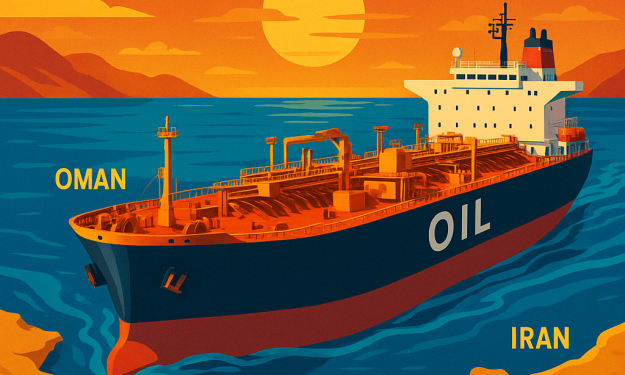
"Lifeline of Global Energy: The Strategic Significance of the Strait of Hormuz" In the early morning haze, as the sun rose over the Persian Gulf, a massive oil tanker slowly crept through the narrow waters of the Strait of Hormuz. From a distance, it looked like a floating city—towering steel, miles of piping, and a deck bustling with activity. But this ship wasn’t just carrying oil. It was carrying the fuel for the global economy.
By Muhammad Waqas 7 months ago in Education
Striking the Right Balance: Modern Tech and the Human Touch in Harmony
As technology continues to reshape every corner of business and daily life, the balance between innovation and personal interaction becomes increasingly important. Automation, artificial intelligence, and digital communication have allowed companies to operate faster, smarter, and more efficiently. These tools improve productivity and offer consumers greater convenience, transforming how services are delivered and experiences are shaped.
By Ian Schenkel Haliburtona day ago in Education
Rage
Content Warning: Domestic Violence, Assault Rage D. A. Ratliff “Who did this?” My voice echoed through the house. All I wanted was a cup of tea, but one of the twins, running through the house like maniacs, knocked it over. My nerves tingled, and every muscle in my body felt coiled like a spring. Survival seemed out of reach.
By D. A. Ratliff5 days ago in Fiction



Comments
There are no comments for this story
Be the first to respond and start the conversation.