
The Quran – A Bridge, Not a Barrier
A Universal Message of Guidance and Mercy for All Humanity

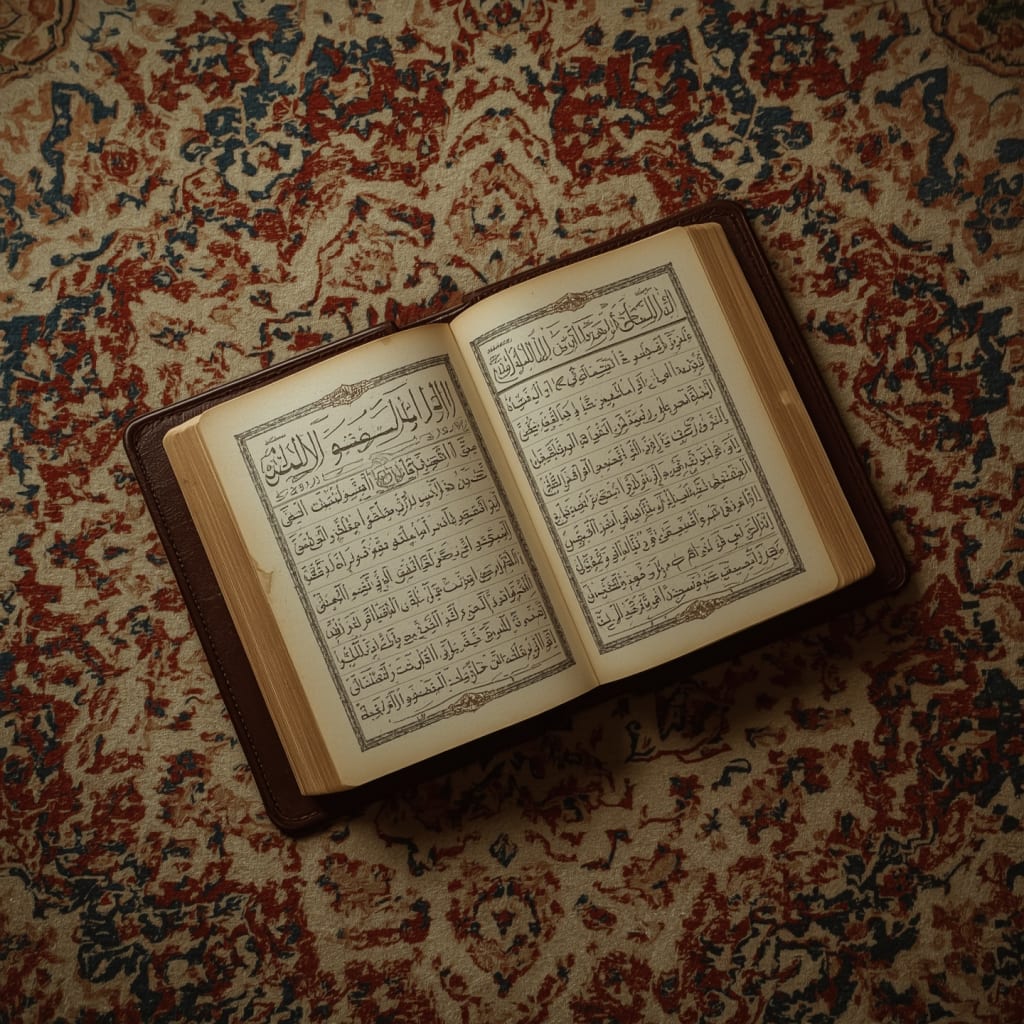
What if there was a book—not just ancient, not just religious—but alive, relevant, and powerful enough to speak to every soul, no matter where they come from?
Let me tell you about David.
David is a university professor in the United Kingdom. He teaches comparative religion and identifies as an agnostic. He respects faith but never saw himself following any. One day, while preparing a lecture on world scriptures, he picked up a copy of the Quran. With no intention to believe, just to understand, he began reading.
He expected a rigid set of rules, perhaps outdated laws from the 7th century. But what he found were questions:
“Do they not reflect?”
“Were they created from nothing?”
“Is there any doubt about God, Creator of the heavens and earth?”
He paused.
“This book is not just preaching,” he thought. “It’s asking. It’s reasoning. It’s… speaking to me.”
David's story is not unique. Around the world, people of all backgrounds—Muslims and non-Muslims—are discovering that the Quran is more than a book for rituals. It’s a bridge. A bridge between heart and mind. Between believer and seeker. Between different worlds.
What Makes the Quran Unique?
Muslims believe the Quran is the final word of God, revealed to Prophet Muhammad (peace be upon him) over 23 years. It is not just a spiritual text but a complete way of life.
But the Quran never claims to be a book just for Muslims. It begins with a powerful statement:
“This is the Book about which there is no doubt, a guidance for those conscious of God.” (Surah Al-Baqarah 2:2)
It doesn't say "for Arabs" or "for Muslims" — it says "for those who are conscious, reflective, seeking truth."
That could be anyone.
An Invitation to Think – For All People
One of the Quran’s most unique features is its constant appeal to the mind.
It asks:
“Do they not look at the sky above them—how We built it?” (50:6)
“Do they not reflect upon their own creation?” (30:8)
“Will they not then reason?” (2:44)
This isn't blind belief. It’s deep engagement. The Quran doesn’t cancel questions—it welcomes them. It doesn't only command—it converses.
The Quran even addresses non-Muslims directly, inviting peaceful dialogue:
“Say: O People of the Book! Come to a word that is common between us and you: that we worship none but God…” (3:64)
The Story of Salman the Seeker
Long before David, there was Salman—the Persian.
Born into a noble Zoroastrian family in Persia (modern-day Iran), Salman had everything: wealth, status, comfort. But his heart wasn’t at peace. He left his home and traveled far and wide, studying under Christian monks, learning scriptures, and serving spiritual masters.
He eventually heard about a prophet in Arabia and crossed deserts just to meet him. That prophet was Muhammad ﷺ. When Salman heard the Quran, he said:
"This is what I’ve been searching for my whole life."
Salman became one of the closest companions of the Prophet. His story teaches us:
The Quran is not limited by language, ethnicity, or history. It belongs to all seekers of truth.
The Quran’s Universal Values
The Quran teaches values that resonate with all human beings:
Justice: “Stand out firmly for justice, even against yourselves…” (4:135)
Human dignity: “We have certainly honored the children of Adam…” (17:70)
Mercy: “My mercy encompasses all things…” (7:156)
Respect for diversity: “We made you into nations and tribes so that you may know one another…” (49:13)
This is not a book of division—it’s a book of unity and compassion.
A Message for Muslims and Non-Muslims
To my Muslim brothers and sisters:
We must present the Quran as it is—a message of wisdom and mercy. The Prophet ﷺ shared the Quran with patience, love, and gentleness. The Quran says:
“Invite to the way of your Lord with wisdom and beautiful preaching.” (16:125)
We must be bridges, not barriers.
To my non-Muslim readers:
You don’t have to accept everything at once. You don’t have to “convert.” Just read. Open the Quran with a sincere heart. You may be surprised how directly it speaks to you.
Conclusion: Let the Quran Speak to You
The Quran is not a history book. It’s not only for rituals.
It is a living message, a mirror for your soul, a map for your mind, and a light for your path.
Whether you’re like David the professor, or Salman the seeker—when you open the Quran, you may find that it's not just speaking to Muslims…
It’s speaking to you.

About the Creator
Waqas khan
Storyteller | Explorer of ideas | Writing to inspire and connect hearts. Join me on a journey of words and wisdom. 🖊️🌍
Keep reading
More stories from Waqas khan and writers in Education and other communities.
The Book That Changed My Lens: A Scholar's Encounter with Prophet Muhammad (PBUH)"
A Curious Mind Meets a Surprising Name James Thompson was a historian and a lecturer at a British university, known for his sharp memory and deep love for historical figures. His students admired his objectivity; he admired facts and impact—not emotions or ideologies.
By Waqas khan9 months ago in Education
Empowering Your Financial Journey: The Role of Wellness and Coaching
Financial success is not only about numbers, budgets, and investment strategies. It is also deeply connected to mindset, habits, and overall well-being. Many people work hard to improve their financial situation, yet they often overlook the emotional and behavioral aspects that influence financial decisions. Empowering your financial journey means recognizing that financial wellness and coaching can play a powerful role in building lasting stability and confidence.
By Mario Payne7 days ago in Education
How Problem-Solving Shapes the Success of Modern Entrepreneurs
Entrepreneurship today is defined by constant change and relentless challenges. Business leaders are no longer operating in stable, predictable environments; instead, they face shifting markets, evolving customer expectations, and rapid technological advancements. In this environment, problem-solving has become the cornerstone of entrepreneurial success. The ability to identify issues, analyze them critically, and create practical solutions separates thriving ventures from those that struggle to survive. Entrepreneurs who develop strong problem-solving skills are better equipped to innovate, make strategic decisions, and guide their businesses toward sustainable growth.
By Greg Warnocka day ago in Education
Why Didn't Anyone Tell Us
Men, move along. This is not for you. This is for the women. I was forty-five when I began menopause. It is pretty young for that to be going on in a woman’s life, but I had undiagnosed PCOS, my entire life. Thank you to all the gynecologists I had seen my entire life. That in itself should encourage women to keep seeking second opinions, especially when you are not getting correct answers or any at all.
By Alexandra Grant3 days ago in Humans



Comments
There are no comments for this story
Be the first to respond and start the conversation.