
The Purpose of Creation: Insights from Surah Al-Mulk
The Foundation: A Test from Allah

In a world brimming with complexity and wonder, one of the most profound questions humanity has asked throughout history is: "Why were we created?" This question touches upon the deepest existential inquiries about our purpose, our reason for existence, and the ultimate goal of life itself. The Qur’an, as a guide for all aspects of human life, provides clarity on this matter. Surah Al-Mulk, the 67th chapter of the Qur’an, offers significant insight into the purpose of creation, helping believers understand their role within the larger context of Allah’s magnificent design.
The Foundation: A Test from Allah
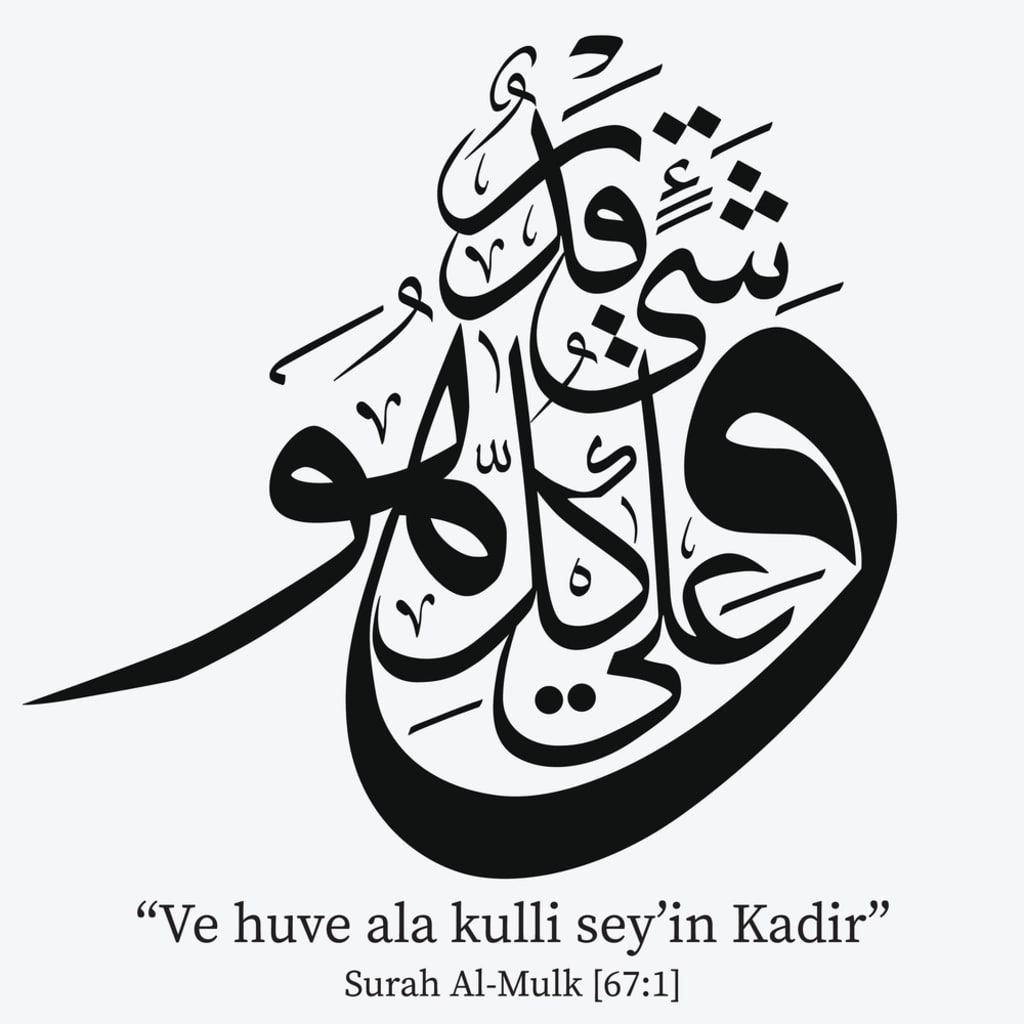
Surah Al-Mulk begins with a declaration of Allah’s supreme power and sovereignty: “Blessed is He in Whose hand is the dominion, and He is over all things competent” (67:1). This opening verse sets the tone for the entire surah, highlighting that Allah, the Creator, holds complete control over the universe. The Surah then continues with a pivotal verse that encapsulates the core reason for creation:
“He who created death and life that He may test you [as to] which of you is best in deed — and He is the Exalted in Might, the Forgiving.” (67:2)
This verse provides a clear understanding of the fundamental purpose behind creation: it is a test. Allah created both life and death as part of this divine examination. This life is not a mere accident or a purposeless existence but a temporary stage where human beings are tested on their actions, choices, and faith.
The Nature of the Test
The test mentioned in Surah Al-Mulk is not arbitrary; it is aimed at evaluating “which of you is best in deed.” The term “best” (أحسن) indicates that the test is not just about quantity or external actions but about the quality and sincerity of those actions. Allah’s evaluation is based on the inner intentions behind the deeds, not merely on the outward appearance.
This perspective shifts the focus of life from a pursuit of worldly pleasure or success to one that is centered around striving for excellence in conduct, character, and worship. The Surah teaches that human life is an opportunity to demonstrate faith in action — to live righteously, uphold justice, be kind, and strive to fulfill the commands of Allah.
Life as a Temporary Realm
Surah Al-Mulk emphasizes the transient nature of this world. By mentioning the creation of both life and death, it reminds us that our time in this life is limited. The verse that follows (67:3) speaks about the perfection of creation, stating:
“[He] who created seven heavens in layers. You do not see any in the creation of the Most Merciful any inconsistency. So return your vision to the sky, do you see any breaks?” (67:3)
Here, the Qur'an contrasts the eternal and flawless design of the universe with the temporal nature of human life. The heavens and the earth, which remain constant and perfect, serve as a reminder that life on Earth is a brief moment, and death is inevitable. The earth itself, with all its bounty and beauty, is merely a temporary dwelling for human beings to experience this test.
By recognizing the fleeting nature of life, Surah Al-Mulk teaches that our actions and decisions here will determine our eternal outcomes. Our deeds are what remain after our time on Earth ends, and that is why the test of life must be approached with seriousness and devotion.
The Role of Reflection and Gratitude
Another central lesson from Surah Al-Mulk is the importance of reflection. Allah invites humanity to ponder the signs of creation as evidence of His existence, power, and wisdom. In verses 67:15-17, Allah calls on people to reflect on the natural world and how it functions as a system created by Him:
“He it is who made the earth subservient to you, so traverse in its tracks and partake of the sustenance which He has provided for you.” (67:15)
Reflection upon the natural world encourages us to be grateful for the many blessings we often take for granted, such as the air we breathe, the food we eat, the water we drink, and the environment that sustains us. Our lives, along with the entire universe, are interconnected and contingent upon Allah’s mercy. This understanding should lead to a greater sense of gratitude and a recognition that our purpose is not just to live for ourselves but to serve and acknowledge our Creator.
The Consequence of Choices
One of the most significant elements of Surah Al-Mulk is the reminder of the consequences that await those who fail to recognize their purpose in life. The Surah contrasts the fate of the believers with that of the disbelievers. While the righteous, who live according to Allah’s guidance, will be rewarded with eternal bliss in Paradise, those who reject the truth face a grim punishment.
“But those who disbelieve will be in Hell, and wretched is the destination.” (67:6)
This depiction of the afterlife reinforces the notion that the test of life has real consequences. It is not a test without stakes, but a profound and significant trial that shapes one's eternal fate. The Qur'an urges believers to reflect on the reality of the afterlife, making it clear that the choices made in this life directly affect the outcome of the next.
Conclusion: Embracing Our Purpose
Surah Al-Mulk teaches us that the purpose of creation is deeply intertwined with the idea of being tested in this world. Life and death are not merely natural occurrences but are part of a greater plan designed by Allah to assess the quality of our deeds and our commitment to fulfilling His commands. The Surah encourages believers to reflect on the greatness of creation, recognize the transient nature of life, be grateful for Allah’s mercy, and act righteously.
Ultimately, the purpose of life is not to seek fleeting pleasures or material success, but to live with a consciousness of our Creator, striving to fulfill the test set before us with sincerity, humility, and devotion. This understanding provides clarity and direction in a world that often seems overwhelming or confusing. In the light of Surah Al-Mulk, we are reminded that our lives have purpose, and our actions have eternal significance.
About the Creator
Image-to-text technology, also known as Optical Character
Image-to-text technology, also known as Optical Character Recognition (OCR), has transformed the way we interact with visual information. It allows machines to extract text from images, enabling various applications across multiple industries. From digitizing printed documents to reading text from scanned images, OCR plays a vital role in making printed content accessible, editable, and searchable. The need for such technology has grown exponentially with the increasing reliance on digital data and the rapid shift from physical to digital content in nearly all sectors of life. As the digital world continues to expand, image-to-text technology has paved the way for more seamless workflows, enabling businesses and individuals alike to save time, effort, and resources.
By Alexander Jackson5 days ago in Education


Comments
There are no comments for this story
Be the first to respond and start the conversation.