
"The Orinoco Crocodile"
"One of the largest Crocodile in the world"

The Orinoco crocodile is one of the largest crocodile species in the world. But due to human cruelty, its population has dropped to fewer than 100. Their natural habitat is the Orinoco River in Venezuela and its surrounding regions. While these crocodiles once roamed freely in the river, now they struggle to survive out of sight of humans.**
**life history of the Orinoco crocodile**:
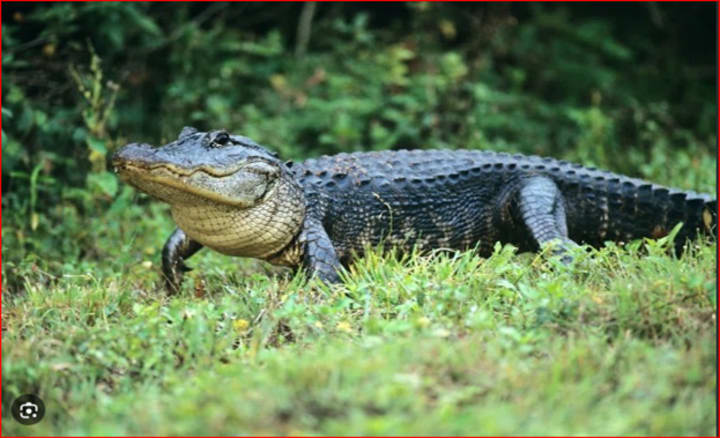
### **Life History of the Orinoco Crocodile (Crocodylus intermedius)**
The **Orinoco crocodile** (*Crocodylus intermedius*) is a critically endangered reptile native to the **Orinoco River Basin**, primarily in **Venezuela** and parts of **Colombia**. It is one of the **largest crocodilian species in the world**, with males reaching lengths of up to **6 to 7 meters (20–23 feet)**, though most are somewhat smaller in the wild today.
#### **Habitat and Range**
The Orinoco crocodile inhabits freshwater ecosystems such as **rivers, seasonal floodplains, lagoons, and swamps** within the Orinoco River drainage system. These environments provide basking areas, nesting sites, and access to prey. However, habitat destruction and human encroachment have severely reduced their natural range.
#### **Diet and Hunting**
A top predator in its ecosystem, the Orinoco crocodile primarily feeds on **fish**, but also preys on **birds, reptiles, and small mammals**. Juveniles consume insects and small aquatic organisms. As ambush predators, they rely on stealth and sudden bursts of speed to catch prey, using their powerful jaws and sharp teeth.
#### **Reproduction and Lifecycle**
Orinoco crocodiles are **seasonal breeders**, with mating occurring during the **dry season** (typically between January and March). After mating, females build nests on riverbanks and lay **40–70 eggs**, depending on their size and health. The eggs incubate for around **70–90 days**.
Temperature determines the sex of the hatchlings, with warmer temperatures producing more males. After hatching, the mother often helps the young reach the water and may guard them for a short period, although juvenile survival rates in the wild are low due to predators and environmental challenges.
In the wild, Orinoco crocodiles may live **40 to 60 years**, but in captivity, they can live even longer with proper care.
#### **Threats and Conservation Status**
The Orinoco crocodile has been pushed to the **brink of extinction**, with **fewer than 100 individuals** estimated in the wild today. Major threats include:
* **Historical overhunting** for their valuable skin, particularly in the 20th century.
* **Illegal poaching** for meat and eggs.
* **Habitat loss** due to agriculture, deforestation, and human development.
* **Pollution** of river systems.
Due to these threats, the species is listed as **Critically Endangered** on the IUCN Red List.
#### **Conservation Efforts**
Since the 1980s, conservationists and biologists have launched programs to save the Orinoco crocodile. Key efforts include:
* **Captive breeding and head-starting programs**, where eggs are collected, hatched, and raised in controlled environments before being released into the wild once they reach a survivable size.
* **Reintroduction programs**, releasing hundreds of juveniles annually into protected areas with fewer human settlements and lower risk of poaching.
* **Public education and awareness campaigns** to shift local perceptions and reduce hunting.
* **Habitat protection and monitoring** by local and international conservation organizations.
Despite these efforts, challenges remain due to limited resources, political and economic instability, and a lack of widespread support. However, dedicated individuals and institutions continue to fight for the species' survival.
#### **Cultural and Scientific Significance**
The Orinoco crocodile is not only a keystone species in its ecosystem but also a **symbol of resilience and the urgent need for conservation**. Its story highlights the impact of human activity on biodiversity and the importance of coordinated efforts to preserve endangered wildlife.
**For several decades, these crocodiles were extensively hunted for their skin, leading to a drastic decline in their numbers. Venezuela’s ongoing economic crisis has further worsened the situation, as people have begun collecting their meat and eggs for food, pushing the species closer to extinction.**
**However, some scientists are making last-ditch efforts to save them. They are raising crocodile hatchlings in captivity. Each year, about 200 crocodiles are raised this way and then released back into the wild. The problem is, only a handful of people are doing this work. Most of them are older, and younger generations of scientists are leaving Venezuela in search of a better life.**
**Alvarado, a 34-year-old biologist, says this work is not just his profession—it’s his responsibility. He is also trying to involve university students so that someone can continue the work in the future.**
**Lesly Pantin Zoo director Federico Pantin says, "We are only delaying extinction, not stopping it." According to him, without large-scale efforts, it will not be possible to fully protect this species.**
**Still, these limited efforts haven’t stopped entirely. Scientists identify crocodile nests, collect eggs, and take them to zoos or conservation centers to hatch and raise the young. When the juveniles reach around 6 kilograms in weight, they are released into the wild. In April, a group of crocodiles was released into a river in Venezuela where human settlement is sparse and the risk of being hunted is relatively low. The young crocodiles are placed in wooden boxes with their jaws tied, and volunteers take them near the river. There, the volunteers touch them to the water, and the crocodiles slowly swim into the depths of the river.**
**Alvaro Velasco, a 66-year-old crocodile expert, says, “Many people fear crocodiles or call them ugly. But I see something extraordinary in their eyes. When we release them, they look around for a while—as if wondering, ‘What should I do now in this vast river?’ Then slowly, they swim away.”**
**FUDECI biologist Omar Hernandez says, “We know that maybe someone will hunt these crocodiles again tomorrow. But we’re not giving up the fight. We’re doing whatever we can. If we waited for perfect conditions, nothing would ever get done.”**
About the Creator
Keep reading
More stories from Md. Ashraful Azad and writers in Education and other communities.
"SpaceX Marks 470th Falcon 9 Launch"
Cape Canaveral, FL – In the early hours of May 7, 2025, SpaceX achieved another historic milestone as it successfully launched 28 Starlink V2 Mini satellites aboard a Falcon 9 rocket, marking the company's 470th launch of its workhorse vehicle. The mission further solidifies SpaceX’s role as a leader in commercial spaceflight and internet connectivity from space, as the Starlink constellation continues to grow.
By Md. Ashraful Azad10 months ago in Education
Rising Graduation Rates Mark a Turning Point in Education Success
A New Chapter in Rising Graduation Rates Rising graduation rates across the United States show a hopeful change in the education system. Over the past several years, more students have completed high school and received their diplomas. This improvement reflects stronger teaching strategies, better student support, and increased involvement from families and communities.
By Tom Walter Wake Forest5 days ago in Education
The Power of Reading 15 Minutes a Day: How Small Habits Create Big Mental Change
Many people want to improve their minds. They search for complex plans and long courses. Yet the answer can be simple. The habit of reading for 15 minutes a day can shape your thinking in powerful ways. You do not need hours of study. You do not need a large library. You only need a short, steady commitment. Fifteen minutes may feel small, but it builds strong results over time. One short session each day equals over ninety hours in a year. That is enough time to finish many books. Each page adds new ideas. Each paragraph trains your brain. How Reading Just 15 Minutes a Day Can Transform Your Mind becomes clear when you see how small effort turns into lasting growth. Consistency matters more than speed.
By Paul Wiedmaier6 days ago in Education
A More Human Vocal
When we launched Vocal nearly a decade ago, the world was a very different place. LLMs did not exist, and stories were created one at a time by people sitting down to write, revise, and share something personal. Many of our assumptions about publishing, trust, and participation were built for a world where effort and output were inseparable.
By Justin @ Vocal4 days ago in Resources



Comments (1)
Good work