
The Origins of Glue May Shock You
Adhering to the Past


I remember being a kid, gluing together a construction paper project while watching Elmer Fudd shooting Donald Duck in the face and his bill spinning around. Next thing I know, I hear that glue was made from horses.
Was Elmer’s glue made by Elmer Fudd? Was that wascawy devil killing horses off screen? Well, no. That’s more ridiculous than drag Buggs Bunny.

It was a bit jarring to think I was playing with dead horses, but who came up with the idea of churning horses to make glue? What lunatic in is his derangement looked upon the hoofed beast too old and tired to pull a carriage, and thought, “Hmm, I’ll bet I could glue a broken vase back together with that.”
Buckle up. You’re going to come unglued before this is over.
Humans humaning....
According to a Google search answered by AI Overview, making glue from animal parts has been practiced for thousands of years. Thousands! No one person accidentally boiled some horse teeth for witchcraft and discovered a bonding agent. No, humans have been doing this all over the world for millenia, but not simply from horses, all animals that were hunted. Nothing went to waste.
This is very much different from the “consume and waste everything you buy world” we inhabit today. Back to beating a dead horse.
In the 18th and 19th centuries, ranchers sold old horses to glue factories, where the employees killed the poor beasts and ground their hooves, hides, and other parts into glue materials. Evidently, that’s where the saying, “sending the horse to the glue factory” came from. (Pretty sure they made dog food, too). Slaughterhouses also used bone, teeth, hide, and hooves for glue.
Abbatoir is another fun word for slaughterhouse, and so is shambles! Sorry, we’re talking glue.
I fell into a bit of a rabbit hole here. I wonder if they can make glue from rabbits. I’m sure they can.
I did tell you to buckle up.
At any rate, the first known glue factory was established in Holland around 1700. They probably cut horse steak there, too, and why not? Horse meatballs are delicious. That’s the only reason to go to IKEA, but that’s Sweden. Okay, let’s adhere to the topic.
Elmer’s!

Borden Dairy and Elmer’s Glue are kind of the same company, at least according to America Comes Alive. Elmer’s was introduced by Borden in 1947. Because casein can also be used for glue--a protein found in milk--it made sense to sell milk and glue. However, I also read that Borden routed their dead cows to Elmer’s for collagen, but I also read that Elmer’s Glue no longer uses animal products, but I also read that Elmer’s is owned by Newell Brands and Borden Dairy by KKR and Co. Inc, and how can glue be made from casein? We were talking collagen.
What the heck is going on with Borden and Elmer’s? Who knows?
I can’t stop milking it....

Casein can be separated from milk and mixed with borax. I watched a YouTube video on making glue from milk at this point. An old dude with glasses took a cup and a half of milk, one tablespoon of water, one tablespoon of white vinegar, and one table spoon of baking soda. No borax….
At least he wasn’t baking cocaine with baking powder. That makes something else. He got the milk heated before boiling, and then added vinegar until curdling. The milk fat was sifted out, and went back into the pan. That’s when the baking soda and water were added. Once it all bubbled, it was thoroughly stirred and cooled.
Blammo! You’ve got glue. Take that, Elmer’s!
By the way, you can buy rabbit glue! Get it from naturalpigments.com. I’m not endorsing them, but there you go.
Fortunately, this episode is not about Borden, or Elmer’s, or Elmer Fudd, or making glue out of Buggs Bunny, but glue in general, and why people said glue comes from horses.
Sadly, I wasn’t able to find the name of that first glue factory in Holland, but in the US, Milwaukee Tanning Industry opened in 1899, and they used all kinds of animal collagen to make glue. Today, Gluefast Co. Inc. in Neptune, New Jersey definitely makes glue from collagen, but I can’t find any evidence that horses are used. This is most likely because horses aren’t slaughtered in the US anymore.
They should be. Considering that there are starving people in a first world country, America. You’d think feeding people is more important than blue haired goons whining about horse rights.
The actual process simplified....
How does Silver’s hide turn into glue? The hide is dried and cut into slivers or small pieces and boiled. In some cases, Hydrochloric acid is also employed. The result is a collagen paste of sorts. The collagen can be sifted and boiled again. The fibrous protein then acts as a bonding agent.
There are many people today who still use hide, bone, teeth, or hooves of animals to make their own glue. Videos all over YouTube detail the process using the various parts of different animals, but the process is basically the same across the board, and so is the end product. Fortunately, you don’t see them shooting Bessie in the face.
Resin-ating with the past....
According to the National Library of Medicine, (Why them? Why is medicine involved in this?) people have been making glue from animals since circa 8200-7300 BC. That’s quite a long time ago. Growing ever more curious, I went to YouTube for more.
Modern factories aside for the moment, it’s crazy to think that people have been manufacturing and using glue for over 10,000 years. What were the natives of the fertile crescent gluing together? I mean, Gobekli Tepe was supposedly erected around that time. This is back, allegedly, when humans used rocks on other rocks to make more rocks, but they were making glue from animals? Maybe, they glued hide huts together or something.
But wait! There’s more!
Even before using animals to make glue, there is evidence of people using birch bark tar to bind wood to stone 50,000 thousand years ago. That’s nuts! Some YouTube videos show this process, and it is remarkably simple.
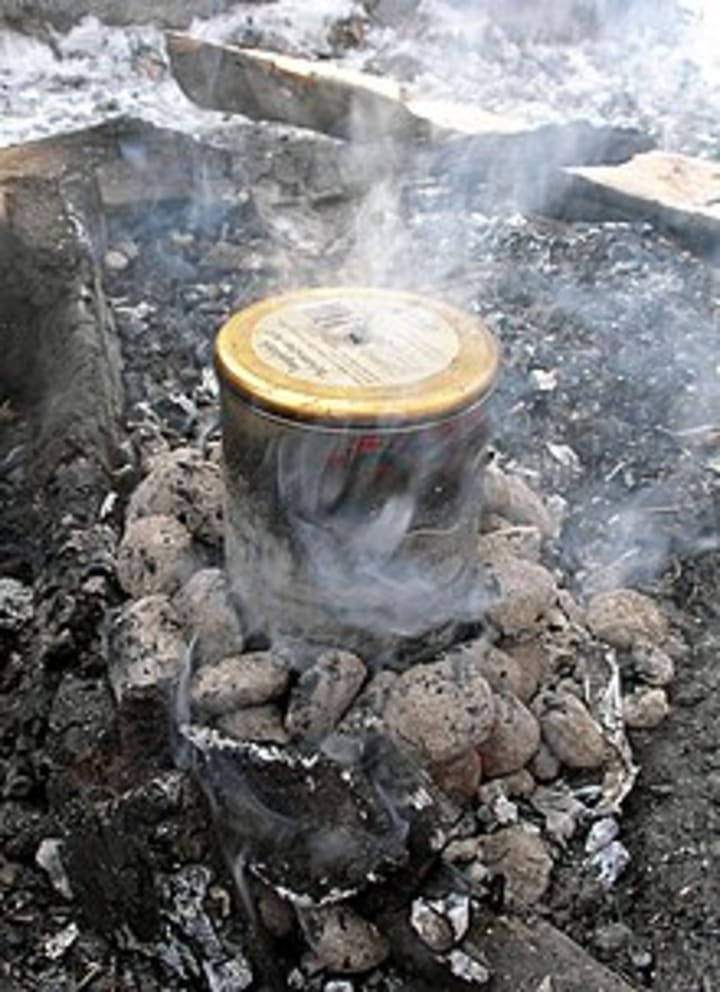
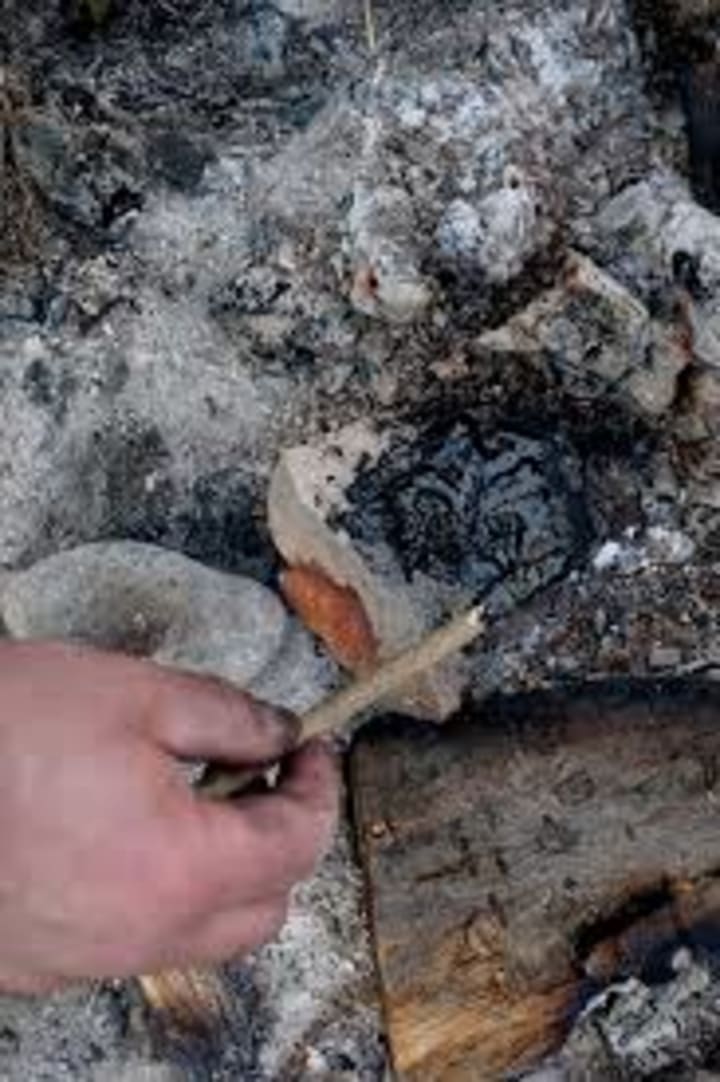
The videos show people removing bark from birch trees. They allow it to dry, then build little stone stoves of sorts. They’re just some rocks piled up in a way that the burning birch bark can be placed underneath the stones. As the bark burns, it leaves a residue on the stones, which can be scraped off and used as tar or glue. It’s quite amazing.
Imagine living in caves, under trees, or out in the open fields, and your husband comes home with his hand stuck to his face.
“Grok, you make trouble again?” the wife asks.
“No!” he answers dejected.
“What you bring for dinner? And why your hand stuck to face?”
“Uh, no reason...you go get berries now! I figure this out….”
But seriously, the ingenuity of man is something to admire; burning bark to extract a resin, which can be used to bind wood to stone to build or craft weapons and tools is bloody brilliant!
Modern glue....
Even today, animal parts from slaughterhouses that aren’t shipped out for human consumption, are shipped as either ingredients for pet food, or ingredients for glue, but not all glue is made from animal collagen. Some glues are made from plants—dextrin, vegetable starches, or natural gums. Some glue is made from cyanoacrylate.
Environmental impacts....
What impact does manufacturing glue have on the environment?
Depending on the kind of adhesive, there may be negative impacts on the air quality, water quality, soil quality, and then there’s waste, which sounds weird, since nothing from the animal is wasted, but remember, not all glue comes from horses. Not all glue comes from plants. Not all glue is glue! I’ll explain that in a moment.
According to AI Overview, breathing fumes from solvents can be dangerous, like those old white phosporous matches. Remember Phossy Jaw? Likewise, fumes from glue can be harmful if inhaled (or really fun if a paper bag is involved). But seriously, run off from adhesive factories can contaminate water and kill plants. Disposing of adhesives can be challenging as many glues don’t degrade, but it doesn’t seem as if any of this applies to collagen or plant based glues.
Furthermore, I read conflicting opinions on epoxies. One opinion states that epoxy, polyurethane, and silicone are completely inert when catalysed, which makes them safe. Another opinion is that since epoxy resin is made from petroleum products, it is toxic to the environment.
This isn’t going to be an expose` on environmental safety; though, I was curious about the effects of making, using, and disposing of glue on the environment. I didn’t learn much, and neither did the audience.
Remember I said not all glue is glue? Curious about the difference between epoxy and glue, I Googled as much. Again, AI Overview gave the following results; epoxy is made from chemicals while glue is made from natural ingredients.
Yeah, but aren’t chemicals made from natural ingredients?
Epoxy is stronger than glue. Epoxy is less eco-friendly. Epoxy is less likely to be affected by temperature changes. Glue sets more quickly. Glue is more flexible, and finally, epoxy is more versatile, used in more various ways.
Coming unglued yet? If epoxy is made from chemicals and glue is made from resin, then what is epoxy resin? I had to look that up, too.
Epoxy resin and epoxy glue are NOT the same thing. Epoxy resin is used for coating and casting. Epoxy adhesive is a bonding agent. Okay….
Moar!

I Googled “largest glue factory”, and I got a series of poems. What the fuck? I’m not even kidding.
You’d think that something as ubiquitous as glue is, my search would have provided germane results, but no. I had to do so much more research on this than I expected. Digging deeper I learned from cumulus.epa.gov that German immigrant, Peter Cooper, who made poisonous glue in Gowanda, NY, owned one of the larger factories in America in 1904.
I then refined my search to “largest glue factory in America today” and got a result from Industry Select, and 3M Co., in Hutchinson, Minnesota is the largest producer of glue, or at least at the top of the ten based on whatever parameters they employ in what constitutes “largest”. I wanted some more information on factories around the world, since the first factory was built in Holland in the 1700’s, but I guess glue factories just aren’t that important to Google search results. Didn’t really find much more.
On the other hand, I learned that glue revenue in America is around 25 million dollars a year. Guess that kid in grade school eating paste is helping the economy.
There are also almost 30,000 Americans employed in the glue industry, but I believe that this applies to more than simple household glue. It most certainly includes people who work for industrial adhesive companies.
Delo, a German company, currently creates the most powerful industrial adhesive. They have a compound called Delo Monopox. Monopox, not monkey pox. That’s something else.
Delo once used 3 grams of their Monopox to lift a 17.5 ton truck off the ground.
Finally, the most commonly used glue is either Gorilla or Loctite. Gorilla glue is a polyurethane adhesive, not a cyanoacrylate like super glue. Loctite is an ethyl cyanoacrylate; it’s basically super glue.
Now, that I’ve gone on and on about the evolution of glue, I’m going to the hospital to have this piece of vase removed from my fingers.
For moar crap, visit storiesbydennis.com and thanks for reading.
About the Creator
Aaron Dennis
Creator of the Lokians SciFi series, The Adventures of Larson and Garrett, The Dragon of Time series, and more.
Keep reading
More stories from Aaron Dennis and writers in Education and other communities.
Leveraging Prediction Markets to Enhance Strategic Planning
In today’s competitive business environment, making informed strategic decisions is crucial for long-term success. Prediction markets have emerged as a valuable tool for improving strategic planning by aggregating insights from diverse participants. These markets enable organizations to forecast outcomes through collective intelligence, providing a more accurate understanding of potential scenarios. By integrating prediction market data into planning processes, companies can anticipate risks, identify opportunities, and make better-informed decisions that support sustainable growth.
By Anthony Qi6 days ago in Education
Srimad Bhagavatam
Srimad Bhagavatam: A Complete Guide to Bhakti, Dharma, and Divine Love Among the sacred texts of the Vedic tradition, few scriptures hold as much spiritual depth and devotional beauty as the Srimad Bhagavatam. For centuries, this revered text has guided seekers toward understanding the true purpose of life, the nature of divine love, and the path of pure devotion. Devotees and spiritual scholars across the world regard Srimad Bhagavatam as a treasure house of spiritual wisdom that reveals the ultimate goal of human existence.
By sudeshna rarhi2 days ago in Education
Author’s Advice
If you would’ve asked me 20 years ago did I know I’d become a writer and an author, I would’ve said “nope, ain’t happening”. As fate would have it I did become an author and I can honestly say I’m loving it so far. It really does feel good to be a writer. I’ve learned a lot on this journey and I feel like with even me being as new to this world as I am, there’s some wisdom I need to share with every other aspiring author.
By Joe Patterson4 days ago in Journal



Comments
There are no comments for this story
Be the first to respond and start the conversation.