
The Mysterious Potoo: Nature’s Master of Disguise
With haunting eyes, ghostly camouflage, and a call that echoes through the night, the potoo bird stands out as one of nature’s most bizarre and fascinating creatures.


The Mysterious Potoo: Nature’s Master of Disguise
In the dense forests of Central and South America, a bird exists that many people have never heard of, let alone seen. With a bizarre appearance that has sparked internet fascination and folklore alike, the potoo is a living testament to how truly strange and ingenious evolution can be. Whether it’s mistaken for a tree branch or drawing comparisons to wide-eyed cartoon characters, this elusive nocturnal bird is one of nature’s most skilled illusionists — and one of its most misunderstood.
---
Meet the Potoo
Potoos belong to the family Nyctibiidae, and there are seven known species, including the common potoo (Nyctibius griseus), great potoo (Nyctibius grandis), and long-tailed potoo (Nyctibius aethereus). These birds inhabit tropical and subtropical forests from Mexico down through Brazil, Bolivia, and even into northern Argentina. Despite their relatively wide distribution, potoos are rarely seen due to their expert camouflage and quiet behavior.
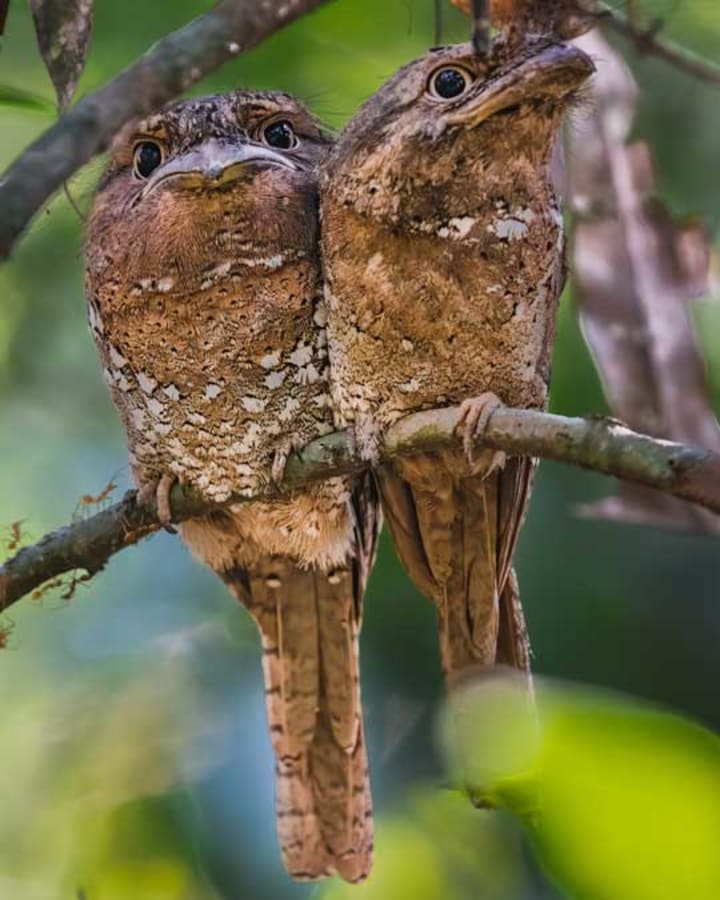
At first glance, the potoo looks like a cross between an owl and a muppet. It has large, bulging black eyes, a beak that almost disappears into its face, and a comically wide mouth. Its cryptic plumage, mottled in browns, grays, and whites, looks exactly like the bark of the trees it rests on. But despite their unusual appearance, potoos are not closely related to owls. Instead, they are more closely allied with nightjars and frogmouths, forming a unique branch on the avian family tree.
---
Nocturnal Hunter with a Wide Gape
Potoos are entirely nocturnal, emerging at dusk to hunt flying insects such as moths, beetles, and other night-flying invertebrates. Their wide, gaping mouths, which appear oversized relative to their heads, serve a practical purpose — acting like a scoop or net that makes it easier to catch insects mid-flight. Often, potoos will sit on a low perch and sally out into the air to snatch prey before returning to their post.
Although their mouths are large, their beaks are small and weak. Unlike birds of prey, potoos are not hunters in the traditional sense. They lack talons and have no strong beak for tearing flesh. Instead, they specialize in an aerial ambush tactic, relying on agility and precision rather than brute force.

---
Eyes of the Night
One of the most arresting features of the potoo is its enormous eyes, which are not just for show. These eyes are highly adapted to their nocturnal lifestyle, providing excellent night vision to aid in spotting prey in low light. Interestingly, potoos do not have true eyelids. Instead, they have a unique adaptation: a slit in the eyelid that allows them to sense movement even while their eyes are closed. This allows them to stay virtually undetectable during the day, blending into their surroundings while remaining alert to potential threats.
---
Camouflage Like No Other
During the daytime, potoos rest on tree branches or broken stumps and rely almost entirely on camouflage for protection. They adopt a posture that aligns their body with the branch, close their eyes, and remain motionless — often for hours. Their feather pattern mimics the appearance of dead wood, complete with what looks like bark grain and lichen. This incredible mimicry is so effective that even experienced birdwatchers can struggle to spot a potoo just a few feet away.
This strategy, known as “cryptic plumage,” is their primary defense mechanism. Unlike many birds, potoos don’t build traditional nests or seek out thick cover. Instead, they nest openly on horizontal tree branches, where the adult’s disguise continues to protect both itself and its single chick.
---
A Haunting Voice in the Forest
If you’ve never seen a potoo, you might still have heard one — and not even realized it. Potoos are known for their eerie, mournful calls that echo through the forests at night. Each species has its own distinctive vocalization, but they all share a haunting, flute-like quality that often leads people to mistake the sound for something supernatural.
In fact, local legends and myths often surround these calls. In some South American cultures, potoo calls are believed to be spirits of the forest or omens of mystery. The name "potoo" itself is said to be onomatopoeic, mimicking the sound of the bird's call.

---
Parenting in the Canopy
The reproductive habits of the potoo are as strange as the bird itself. They do not construct nests but instead lay a single egg on a natural depression atop a tree stump or branch. The egg is white and unmarked, and both parents help incubate it, although very little detailed observation of potoo nesting behavior exists due to their reclusive nature.
Once the chick hatches, it too is camouflaged, with downy plumage that helps it blend in just as effectively as the adults. The chick remains mostly still during the day, mimicking its parent's upright posture. After a few weeks, it fledges and begins life as another ghost of the forest.
---
Why We Rarely See Them
One reason potoos remain so mysterious is their incredible camouflage, but their nocturnal habits and preference for high perches in tall forests also keep them hidden. They are not commonly kept in captivity, and scientific observation in the wild is limited. Most information we have about potoos comes from field studies and occasional sightings by lucky birdwatchers.
Their elusiveness has contributed to their online fame. In recent years, photos of wide-eyed potoos have gone viral on social media, sparking interest in their odd appearance and quirky expressions. While often portrayed as goofy or cartoonish in memes, these birds are anything but simple. They are highly adapted specialists — and some of nature's most fascinating mimics.
---
Conservation and the Future of the Potoo
Currently, potoos are not considered endangered, although habitat destruction is a growing concern. As forests across Latin America are cleared for agriculture and development, the trees that potoos rely on for nesting and camouflage are disappearing. Because potoos are so reliant on specific types of tree cover and have such low reproductive rates (just one chick at a time), they may be more vulnerable to habitat loss than their elusive nature suggests.
Protecting tropical forests and preserving natural habitats is critical to ensuring the survival of not only potoos but thousands of other species that call these ecosystems home.
---
Conclusion
The potoo bird may look like a creature from another world, but it’s a real and remarkable example of evolution at work. From its uncanny camouflage to its ghostly nighttime calls, the potoo reminds us that there is still so much to learn and discover about the natural world.
In an age of digital saturation and environmental change, creatures like the potoo — strange, silent, and unseen — serve as a powerful symbol of nature’s hidden wonders. And for those lucky enough to encounter one, the experience is unforgettable.
About the Creator
Fazal Malik
"Welcome ! We're dedicated to making learning fun and accessible. Subscribe for educational videos, tutorials, and resources to ignite your curiosity."
Keep reading
More stories from Fazal Malik and writers in Education and other communities.
The Spirit of the Pashtuns
The Pashtuns, also known as Pakhtuns or Pathans, are one of the most ancient and culturally rich ethnic groups in South and Central Asia. With a population numbering over 50 million, primarily in Pakistan and Afghanistan, they have maintained a distinct identity for centuries rooted in honor, hospitality, and resilience. The culture of the Pashtuns is a living heritage passed down through oral traditions, poetry, code of conduct (Pashtunwali), and strong tribal affiliations. This article explores their unique cultural fabric in detail, revealing the traditions, customs, values, and lifestyle that define Pashtun identity.
By Fazal Malik8 months ago in Education
Rockwell International Corp: A Legacy of Innovation in Aviation and Aerospace
The aviation and aerospace industries have evolved through the work of several pioneering manufacturers that introduced groundbreaking engineering technologies. One of the most influential companies in this field was Rockwell International, an American industrial giant that contributed significantly to aircraft manufacturing, defense systems, and space exploration.
By Beckett Dowhan4 days ago in Education


Comments
There are no comments for this story
Be the first to respond and start the conversation.