
The Most Peaceful Religion: Islam
Unveiling the Truth Through Teachings, History, and Practice

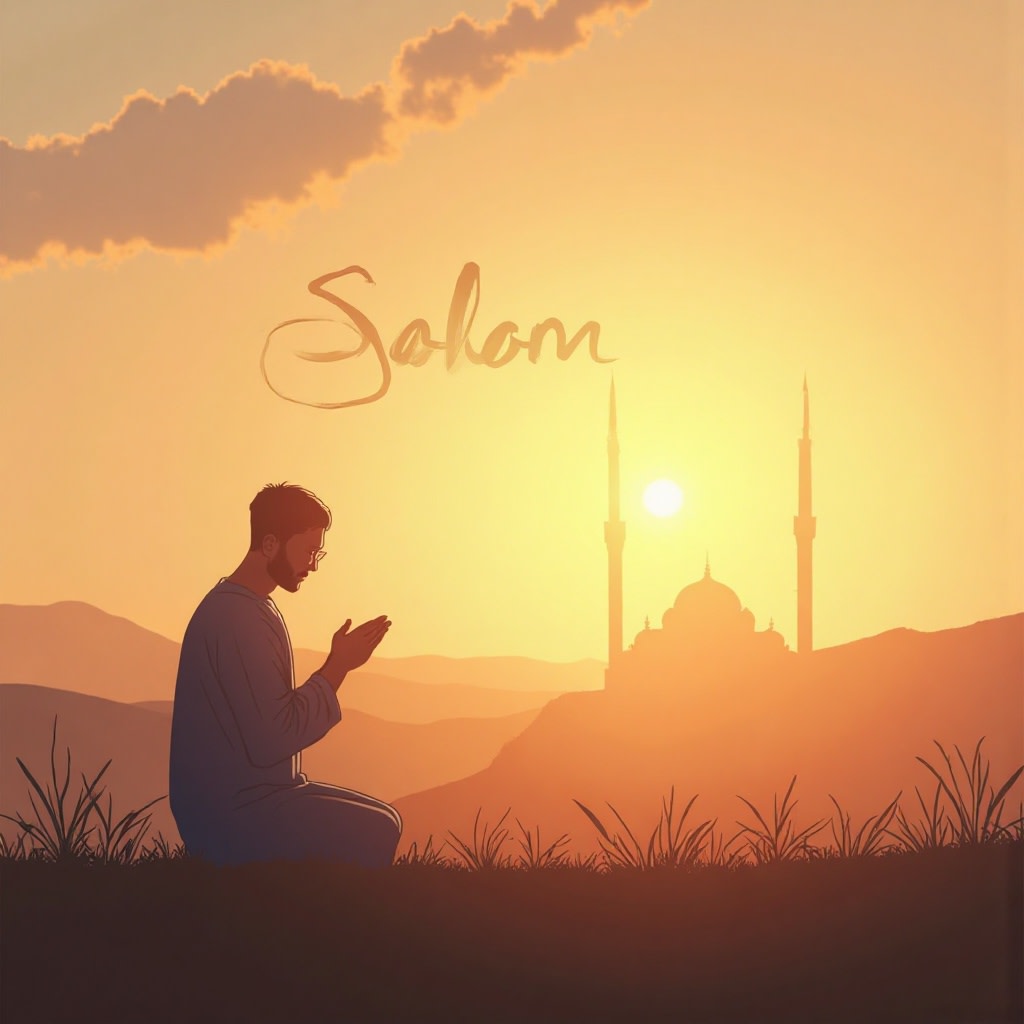
In a world where religion is often used as a lens to judge people, Islam—despite its core values of peace, compassion, and justice—is too frequently misunderstood. While media headlines and global politics have shaped a narrative associating Islam with violence or extremism, the truth lies far from such distortions.
Islam is not only one of the world’s largest religions—with over 1.9 billion followers—but it is, at its core, a religion of peace, both in linguistic meaning and in practical teachings. This article aims to present factual, scripture-based, and historical evidence to show why Islam deserves to be known as the most peaceful religion.
The Meaning of “Islam”: A Foundation of Peace
The word "Islam" comes from the Arabic root word "S-L-M", the same root as "Salam", which means peace.
Islam literally means “submission to the will of God”, and it is through this submission that one attains peace—internally and externally.
This linguistic origin already hints at the core goal of the religion: a peaceful life guided by divine balance, justice, and mercy.
Peace as a Central Concept in the Qur’an
The Qur’an, the holy book of Islam, contains over 140 verses related to peace, mercy, and compassion.
Here are some clear examples:
Peace is the ultimate aim:
“And if they incline toward peace, then incline toward it [also]…”
(Qur’an 8:61)
Value of a single life:
“…Whoever kills a person… it is as though he has killed all mankind. And whoever saves one – it is as though he has saved all mankind.”
(Qur’an 5:32)
Even during war, Islam urges restraint:
“Fight in the way of Allah those who fight you but do not transgress. Indeed, Allah does not like transgressors.”
(Qur’an 2:190)
These verses demonstrate that violence is only allowed in defense, and peace is always preferred.
The Prophet Muhammad ﷺ: A Life of Mercy
The Prophet Muhammad ﷺ is described in the Qur’an as:
“A mercy to the worlds.” (Qur’an 21:107)
His life was a practical example of how to live peacefully with others—even with enemies.
When the Prophet conquered Makkah, he forgave his enemies, despite being exiled, tortured, and fought by them for years.
He strictly prohibited harm to civilians, women, children, priests, animals, and even trees during conflict.
He entered into peace treaties like the Treaty of Hudaybiyyah and upheld them even when others violated them first.
The Prophet taught his followers that mercy is greater than revenge, and forgiveness is stronger than hatred.
Daily Practice of Peace in a Muslim’s Life
Islam promotes peace not just in theory, but in daily actions:
Salam (peace) is the greeting Muslims give each other:
“As-Salamu Alaikum” – “Peace be upon you”
Prayer (Salah), performed five times a day, brings inner calm and mental discipline.
Zakat (charity) purifies wealth and supports the poor, reducing social tension.
Fasting (Ramadan) teaches self-control, empathy, and forgiveness.
Hajj (pilgrimage) unites people of all races in a peaceful gathering that emphasizes brotherhood.
Every part of Islamic practice is designed to promote peace with self, peace with God, and peace with others.
Historical Legacy of Peaceful Coexistence
Despite wars often fought in the name of religion or nationalism, Islam has a rich history of peaceful governance and religious tolerance:
In Muslim Spain (Al-Andalus), Muslims, Christians, and Jews lived together in a society that led Europe in science, philosophy, and medicine.
The Ottoman Empire protected religious minorities and gave them autonomy under Islamic law.
Under Caliph Umar, non-Muslims in Jerusalem were guaranteed safety and freedom of worship—setting an example of religious tolerance.
Islamic civilizations contributed to world peace through intellectual, cultural, and moral leadership—not conquest.
Misconceptions and Misuse
So why the confusion? Why is Islam sometimes portrayed as violent?
Media Bias: A crime by a Muslim is called “Islamic terrorism,” while crimes by others are not associated with their religions.
Political Manipulation: Some groups twist Islamic teachings for power, but their actions contradict Islamic law.
Lack of Knowledge: Many have never read the Qur’an or learned about Islamic history firsthand.
This is not unique to Islam. Every religion has had followers who misused its name. But that does not reflect the truth of the faith itself.
Islam’s Peaceful Message Today
Despite being misunderstood, Muslims across the world are engaged in charity, education, healthcare, and humanitarian efforts. From Syrian doctors saving lives in refugee camps, to Muslim volunteers feeding the homeless in Western cities, the message is clear:
Islam teaches peace. Islam teaches mercy. Islam teaches justice.
Conclusion: A Religion of Peace in Its Truest Form
At its core, Islam is a religion of peace—with teachings, examples, and history that consistently support this truth. While the actions of a few have cast shadows, the light of Islam’s message remains strong.
To understand Islam is to understand peace—not just the absence of conflict, but a deep, spiritual, and social harmony that brings people closer to God and to one another.
“Indeed, Allah is the Source of Peace.” (Qur’an 59:23)
About the Creator
Mehtab Ahmad
“Legally curious, I find purpose in untangling complex problems with clarity and conviction .My stories are inspired by real people and their experiences.I aim to spread love, kindness and positivity through my words."
Keep reading
More stories from Mehtab Ahmad and writers in Education and other communities.
Capitalism, Communism, Socialism , Islamic Economic System
In a world where wealth is unevenly distributed, poverty persists, and greed often overshadows compassion, the question of which economic system is best is not just academic—it is deeply human. It’s a question that affects how people eat, live, grow, and dream. So let’s strip away the complex jargon and dive deep into the soul of each system: Capitalism, Communism, Socialism, and the Islamic Economic System. And let’s try to discover not just which one works, but which one works with dignity.
By Mehtab Ahmad8 months ago in Education
AI in eLearning Market to Reach USD 12.2 Billion by 2033: Driving Personalized Learning
Market Overview Artificial Intelligence in eLearning represents the integration of machine learning, natural language processing, and advanced analytics into digital learning systems. These technologies allow educational platforms to analyze learner behavior, automate assessments, and provide adaptive learning experiences. AI driven tools can identify learning gaps, recommend personalized study paths, and improve student engagement through interactive digital environments. As education increasingly shifts toward digital platforms, the role of AI technologies in improving learning efficiency continues to expand.
By Roberto Crum2 days ago in Education
Where Energy, Finance, and Technology Converge: Shaping the Future of Modern Infrastructure
In today’s global economy, the boundaries between industries are becoming less distinct. Energy, finance, and technology are no longer separate sectors operating independently. Instead, they are increasingly connected, forming a dynamic ecosystem that supports modern infrastructure and economic development. Navigating the intersection of these three fields requires a deep understanding of how innovation, capital, and energy systems interact.
By Matthew J Smithabout 7 hours ago in Education
Two Grumpy Old Men Solve the Problem
Marty and Steve were two grumpy old men who lived together. They had known each other for years. Marty had been a bachelor all his life. Steve said it was because no one could stand to ever live with. Marty’s standard reply was “Well, you are, so what sort of a moron does that make you!”
By Calvin London2 days ago in Humor




Comments (2)
❤️❤️❤️Wow❤️❤️❤️❤️❤️Amazing❤️❤️❤️❤️❤️❤️❤️❤️❤️❤️❤️❤️❤️❤️❤️❤️❤️❤️❤️❤️❤️❤️❤️❤️❤️❤️❤️❤️Beautiful❤️❤️❤️❤️❤️❤️❤️❤️❤️❤️❤️❤️❤️❤️❤️❤️❤️❤️❤️❤️❤️❤️❤️❤️❤️❤️❤️❤️❤️❤️❤️❤️❤️❤️❤️❤️❤️❤️❤️❤️❤️❤️❤️❤️❤️❤️❤️❤️❤️❤️❤️❤️
I believe most Muslims want to live peaceful lives. Just like most people from other faiths. Unfortunately, the rise of radical Islam threatens the peace of so many.