
The Most Misunderstood Concept of Physics.
Entropy
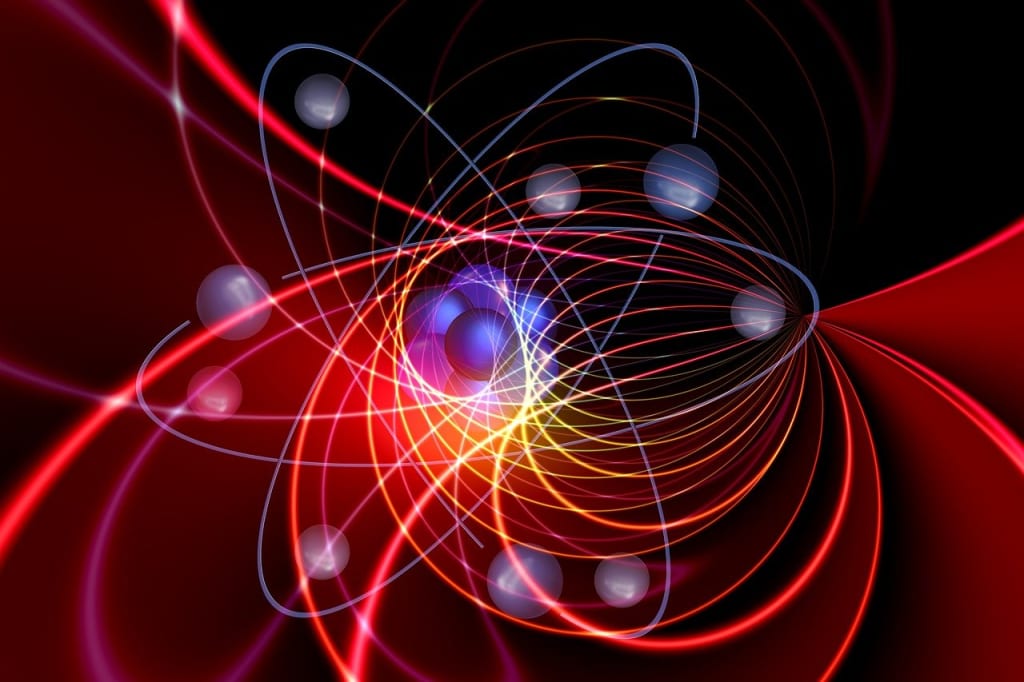
Entropy - a term that is often overlooked or misunderstood, yet it governs everything from molecular collisions to humongous storms. It plays a pivotal role from the beginning of the universe through its entire evolution, right up to its inevitable end. Furthermore, it may even hold the key to understanding the direction of time and the very existence of life itself.
To grasp the confusion surrounding this concept, we need only ask a seemingly simple question: What does the Earth get from the Sun? The responses range from light rays and warmth to energy and even vitamin D. While these answers are not incorrect, they merely scratch the surface of what the Sun truly provides.
Every day, the Earth receives a certain amount of energy from the Sun, which fuels various processes on our planet. However, a significant portion of this energy is radiated back into space. This leads us to ponder: does the Earth give back the same amount of energy it receives? The answer is, not quite.
If the Earth were to radiate back the same amount of energy as it receives, it would lead to a buildup of heat, causing temperatures to rise dramatically. Therefore, it is essential for the Earth to release less energy than it absorbs from the Sun to maintain a stable climate.
To understand this further, we must delve into the concept of heat engines. A heat engine is a device that converts heat into useful work. Sadi Carnot, a 17-year-old student and son of one of Napoleon's generals, made a significant breakthrough in understanding ideal heat engines. An ideal heat engine operates with no friction or losses to the environment, and its efficiency is determined solely by the temperatures of the hot and cold sides.
Carnot's engine is entirely reversible, meaning it can be run in reverse, and everything would return to its original state. However, despite being theoretically efficient, an ideal heat engine can never reach 100% efficiency in practice. This is due to the inevitable spread of energy, also known as entropy.
Entropy is the measure of energy's tendency to spread out or become less concentrated. The second law of thermodynamics states that the entropy of an isolated system always increases over time, leading to a decrease in the amount of usable energy available.
The concept of entropy becomes particularly intriguing when we consider the arrow of time. Events in the universe move from unlikely to more likely states, creating a clear distinction between past and future. The increase in entropy is irreversible, resulting in the emergence of complex structures and the evolution of the universe.
One of the most perplexing aspects of entropy lies in black holes. Initially considered impossible, it was later discovered that black holes indeed have entropy and emit radiation, known as Hawking radiation. Black holes contribute significantly to the overall entropy of the universe.
As time progresses, entropy increases, leading to the heat death of the universe, where energy becomes completely spread out, resulting in a state of maximum entropy and minimal complexity. In this distant future, more than 10 to the 100 years from now, after the last black hole has evaporated, the universe will be in its most probable state. Even on large scales, it will be impossible to tell the difference between time moving forwards or backwards, and the arrow of time itself would disappear.
While entropy is often associated with the inevitable demise of order and complexity, it is essential to recognize that both low and high entropy states are low in complexity. The true intricacy arises in the middle, where complex structures exist and flourish. Our current state, as complex beings in a universe undergoing entropy, is a unique opportunity to make the most of the low entropy available to us.
In conclusion, entropy is a fundamental concept in physics that underlies the evolution and fate of our universe. It determines the direction of time and shapes the complexity of the world around us. Understanding entropy offers us insights into the workings of the cosmos, reminding us to appreciate the energy and opportunities we have while we can.
It is through this understanding of entropy that we gain a deeper appreciation for the Sun, the ultimate source of energy that sustains life on Earth and sets in motion the intricate dance of order and chaos that defines our universe. The Sun provides us with a steady stream of low entropy energy, concentrated and bundled up, which allows life to flourish and complexity to arise. As plants capture this energy through photosynthesis and animals consume plants, each step along the food chain contributes to the irreversible increase in entropy, as energy is dispersed and complexity emerges.
The Sun not only provides us with warmth and light, but it fuels the very existence of life and the processes that shape our planet. It is a reminder that while entropy may lead to the eventual cooling of the universe, we can make the most of the low entropy available to us now. By harnessing the concentrated energy from the Sun, we have the opportunity to create and sustain complex systems and life forms.
The study of entropy has far-reaching implications beyond the realm of physics. It extends into biology, ecology, and even philosophy. Entropy offers a lens through which we can view the grand tapestry of the universe, from the formation of galaxies to the intricacies of living organisms.
The concept of entropy challenges us to consider the delicate balance between order and disorder, creation, and dissolution. It highlights the impermanence of all things, as energy dissipates and complexity fades away. And yet, it also emphasizes the beauty of existence, the marvel of life, and the wonders of the cosmos.
In our ever-changing universe, entropy serves as a reminder that nothing is permanent, that everything is in a constant state of transformation. As we gaze upon the stars and contemplate the mysteries of the cosmos, we are reminded of our place in the grand scheme of things and the fleeting nature of our existence.
So let us embrace the concept of entropy, not as a harbinger of doom, but as a profound insight into the workings of the universe. Let us appreciate the energy we receive from the Sun and use it wisely to nurture life, foster creativity, and unlock the mysteries of the cosmos. And as we journey through the arrow of time, may we find meaning in the dance between order and chaos, and marvel at the beauty that emerges from the interplay of entropy and complexity.
About the Creator
Alpha Macharia
I'm a Christian who loves the Lord. I'm also a technology enthusiast and an upcoming software developer. I enjoy studying and learning. I'm a great fan of science, music and nature.
Keep reading
More stories from Alpha Macharia and writers in Education and other communities.
Understanding God's Will
Seeking to discern God's will is a common pursuit for believers across different religious traditions. For Christians, understanding God's will is a crucial aspect of their faith journey. John Calvin, the prominent 16th-century theologian and one of the key figures of the Protestant Reformation, offered profound insights on this subject in his writings. In this article, we will explore John Calvin's teachings and perspectives on how to know God's will.
By Alpha Macharia3 years ago in Lifehack
CalWORKs California 2026: The Complete Guide to Cash Aid, Eligibility, Benefits & How to Apply
If you’re a low-income family in California struggling to pay rent, utilities, child care, groceries, or transportation, CalWORKs might be the most important program you’ve never fully understood.
By Free Laptops From Government4 days ago in Education
Why the Anti-Obesity Drugs Market Is Changing the Way Weight Management Is Approached?
Obesity is now one of the largest epidemic problems we are facing globally, for all ages and all lifestyles, and with the increased knowledge of the chronic sequelae associated with obesity, the focus is shifting away from diet and exercise. In this context, the anti-obesity drug market is gaining acceptance as a medical treatment for long-term weight loss maintenance.
By Akshay Kumar4 days ago in Education


Comments
There are no comments for this story
Be the first to respond and start the conversation.