
The Monarch Butterfly
"The Monarch Butterfly Migration: A Journey to El Rosario Sanctuary, Mexico"

The Monarch Butterfly
The monarch butterfly (Danaus plexippus) is one of the most iconic and well-studied butterfly species in the world. Known for its brilliant orange and black wings, the monarch is admired not only for its beauty but also for its extraordinary migratory behavior and complex life cycle. Found mainly in North America, it plays a vital ecological role as a pollinator and is a powerful symbol of nature’s resilience.
Life Cycle of the Monarch Butterfly
The life of a monarch butterfly follows a four-stage complete metamorphosis: egg, larva (caterpillar), pupa (chrysalis), and adult.
1. Egg
Monarch females lay their eggs exclusively on milkweed plants. Each egg is tiny—about the size of a pinhead—and is often laid singly on the underside of milkweed leaves. The egg stage lasts about 3 to 5 days.
2. Larva (Caterpillar)
Once hatched, the larva begins feeding immediately on the milkweed. Monarch caterpillars are distinctive, with black, white, and yellow stripes. This stage lasts 10 to 14 days, during which the caterpillar grows rapidly, shedding its skin several times.
3. Pupa (Chrysalis)
After reaching full size, the caterpillar forms a chrysalis—a jade-green cocoon with golden spots. Inside, a remarkable transformation occurs over 10 to 14 days as the caterpillar turns into an adult butterfly.
4. Adult
Emerging from the chrysalis, the adult monarch dries its wings and takes flight. Its primary goals are to feed, mate, and, in the case of the final generation, migrate.
Feeding Habits
• Larvae: Monarch caterpillars feed exclusively on milkweed, which provides them with toxic chemicals called cardenolides. These toxins make both the caterpillars and adult butterflies distasteful to predators.
• Adults: Adult monarchs feed on nectar from a variety of flowers, including milkweed, goldenrod, and thistles. Nectar provides them with the energy needed for flight and reproduction.
Migratory Behavior
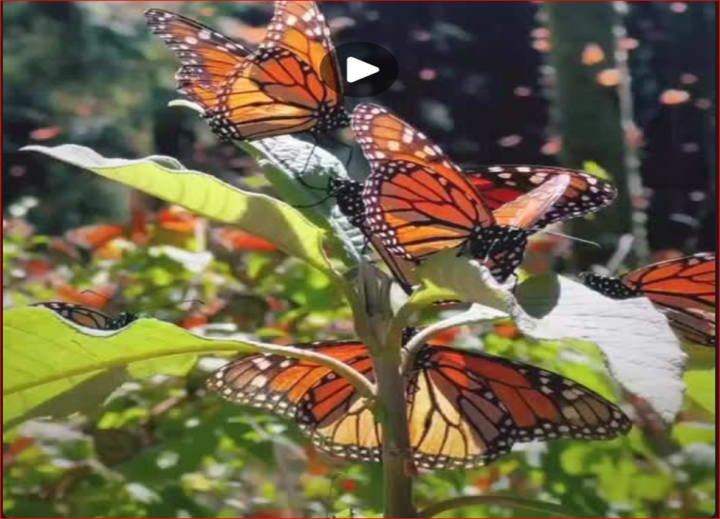
One of the most fascinating habits of the monarch is its annual migration. Monarchs in the United States and Canada migrate up to 2,800 miles to central Mexico, where they overwinter in the cool, high-altitude forests of the Sierra Madre Mountains. The El Rosario Sanctuary is one of the most famous overwintering sites.
• Fall Migration: The generation born in late summer, called the “Methuselah generation,” lives up to 8 months and makes the full journey south.
• Spring Migration: In spring, these butterflies begin the journey northward, mating and laying eggs along the way. Their offspring continue the migration over multiple generations until the butterflies repopulate northern regions.
Habitat
Monarchs thrive in open fields, meadows, grasslands, and prairies—anywhere milkweed grows. Milkweed is essential for reproduction, as no other plant serves as a host for their eggs and larvae. Adult monarchs also need access to nectar-producing flowers throughout their range.
In Mexico, they cluster in dense colonies in high-elevation Oyamel fir forests, where the climate is cool and stable. These habitats are critical to their survival during the winter.
Reproductive Habits
Monarchs typically mate during the spring migration. A single female can lay hundreds of eggs over her lifetime, choosing only milkweed plants for this purpose. The success of each generation depends heavily on the availability of milkweed and favorable weather conditions.
Predators and Defense Mechanisms
Despite their toxicity, monarchs are not free from predators. Birds such as black-headed grosbeaks and orioles have adapted to tolerate the toxins or eat only the parts of the butterfly with lower toxin levels. Ants, spiders, and wasps may also prey on monarch eggs and larvae.
To defend themselves:
• Coloration: Monarchs use aposematic coloration—bright warning colors—to signal their toxicity.
• Mimicry: The viceroy butterfly mimics the monarch’s appearance, gaining protection through Batesian mimicry, despite not being toxic itself.
Conservation Status
Monarch populations have declined sharply in recent years due to:
• Habitat loss from agriculture and urbanization.
• Widespread use of herbicides that kill milkweed.
• Deforestation in overwintering sites.
• Climate change affecting migration and breeding patterns.
Conservation efforts focus on protecting milkweed habitats, promoting pollinator-friendly gardening, and preserving the overwintering sanctuaries in Mexico. Citizen science programs and international cooperation play a vital role in monarch conservation.
Cultural and Symbolic Significance
In many cultures, monarch butterflies are symbols of transformation, hope, and rebirth. In Mexico, they hold a special place during the Día de los Muertos (Day of the Dead) celebrations, when monarchs arrive as if to honor the returning spirits of ancestors.
The Monarch Butterfly Migration: A Journey to El Rosario Sanctuary, Mexico
The monarch butterfly (Danaus plexippus) embarks on one of nature's most extraordinary migrations each year, traveling thousands of miles from North America to the highlands of central Mexico. Among the most significant overwintering sites is the El Rosario Monarch Butterfly Sanctuary in Michoacán, Mexico. This sanctuary not only serves as a vital habitat for millions of monarchs but also stands as a testament to the resilience of these delicate creatures and the ongoing efforts to preserve their environment.
The Magnitude of Monarch Migration
Each autumn, monarch butterflies originating from southern Canada and the northern United States begin their southward journey. This migration is not merely a seasonal movement but a remarkable feat of endurance and navigation. The butterflies travel approximately 2,800 miles (4,500 kilometers) to reach their overwintering sites in central Mexico, with El Rosario being one of the primary destinations.
What makes this migration particularly fascinating is that the butterflies undertaking this journey are not the same individuals that return north in the spring. Instead, it is the "Methuselah generation," a special cohort that lives several months longer than its predecessors, enabling it to complete the round trip.
Conclusion
The monarch butterfly is a small but powerful reminder of nature’s complexity and beauty. Its habits—from exclusive dependence on milkweed to an epic, multigenerational migration—highlight the interconnectedness of ecosystems across continents. Protecting monarchs means preserving not just a single species, but also the diverse web of life they represent. Through awareness and action, we can help ensure that the monarch’s extraordinary journey continues for generations to come.
About the Creator
Keep reading
More stories from Md. Ashraful Azad and writers in Education and other communities.
"The Journey of Cancer Recovery"
Recovering from cancer is a deeply personal and transformative journey that encompasses more than just physical healing. It involves emotional, mental, and psychological recovery, as well as lifestyle changes that support long-term health and well-being. While medical treatment is a vital part of recovery, taking a holistic approach—integrating medical advice with self-care, emotional support, and lifestyle adjustments—can greatly enhance the healing process. This article explores a well-rounded approach to cancer recovery, focusing on both medical strategies and holistic practices that contribute to overall wellness.
By Md. Ashraful Azad11 months ago in Education
How Long Does a Legal Transcription Course Take? (Timeline)
Legal transcription is a specialized area within the transcription field that focuses on converting legal audio recordings into accurate written documents. These recordings may include attorney dictations, court proceedings, depositions, hearings, and other legal communications.
By Mahesh Kumarabout 24 hours ago in Education
K-12 Education Technology Spend Market to Reach USD 253.9 Billion by 2033
K-12 Education Technology Spend Market Summary The K-12 Education Technology (EdTech) Spend market covers the budgets allocated by schools and districts for digital learning software, connected classroom tools, student devices, broadband, cybersecurity, and IT support services. This spend is increasingly treated as core education infrastructure, not an optional add-on, because teaching, assessment, and school operations are now tied to digital systems. The global market size is expected to reach USD 253.9 billion by 2033, up from USD 78.2 billion in 2023, reflecting a forecast CAGR of 12.5% from 2024 to 2033.
By Roberto Crum7 days ago in Education
Bomb Scare
It was 2027, and the world never thought it would happen. A missle hit the United States, but it wasn't where they had anticipated. A little town in the northeast was hit by a missile strike, they didn't know why, and they didn't know exactly where it hit, but they did know it was a coastal community, somewhere between Maine and Delaware.
By Gregory Payton4 days ago in Fiction




Comments (2)
Well written
Informative article, and well written.