
The Metaverse
The Metaverse: Bridging Realities, Unlocking Possibilities
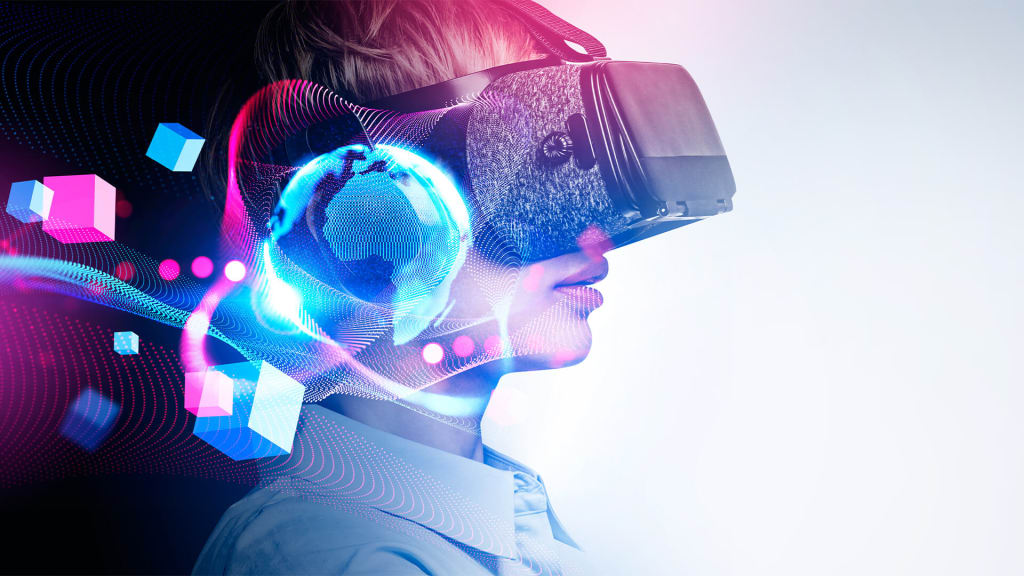
Introduction:
The concept of the metaverse has captured the imagination of people around the world, promising a virtual realm where individuals can explore, interact, and create in ways previously unimaginable. As technology continues to advance at an astonishing pace, the metaverse represents a potential next frontier, blurring the lines between the physical and digital worlds. This essay delves into the metaverse, its definition, potential applications, and the implications it holds for our future.
Defining the Metaverse:
The metaverse can be described as a collective virtual shared space, encompassing augmented reality (AR), virtual reality (VR), and mixed reality (MR), where users can engage with digital content and interact with others in real-time. Unlike traditional video games or virtual worlds, the metaverse aims to create a persistent, interconnected universe that mirrors the physical world's complexity, offering immersive experiences and infinite possibilities.
Applications and Experiences:
The metaverse holds tremendous potential in numerous fields, revolutionizing industries and transforming our everyday lives. In the field of entertainment, it offers immersive gaming experiences, where players can step into fully realized virtual worlds, socialize, compete, and create. Beyond gaming, the metaverse enables virtual concerts, art exhibitions, and theater performances, allowing individuals to enjoy cultural events from the comfort of their own homes.
Furthermore, the metaverse has implications for education and training. Imagine a virtual classroom where students can engage with interactive simulations, collaborate with peers worldwide, and explore historical events in a three-dimensional environment. This immersive learning experience has the potential to revolutionize education by making it more engaging, accessible, and inclusive.
Economy and Commerce:
The metaverse also presents a new frontier for the economy and commerce. With virtual currencies, decentralized platforms, and blockchain technology, users can create, own, and trade virtual assets within the metaverse. This opens up new avenues for entrepreneurship, enabling individuals to build and monetize their virtual creations, such as virtual real estate, art, fashion, and more. The metaverse blurs the lines between work and play, allowing individuals to earn a living by participating in virtual economies and leveraging their skills and creativity.
Social and Ethical Considerations:
As we venture deeper into the metaverse, it is crucial to address the social and ethical considerations it raises. Privacy and security concerns come to the forefront, as personal data becomes intertwined with virtual experiences. Additionally, the metaverse must strive for inclusivity and accessibility, ensuring that it doesn't perpetuate existing inequalities or create new digital divides. It is essential to establish guidelines and regulations to protect users' rights, prevent exploitation, and foster a healthy and ethical virtual environment.
Evolution of the Metaverse
The concept of the metaverse has evolved significantly over the years. Early virtual worlds like Second Life and Habbo Hotel offered glimpses of what a metaverse could be, but they lacked the scale, interconnectivity, and immersive qualities that define the metaverse today. With the rise of virtual reality (VR) and augmented reality (AR) technologies, the potential for a fully realized metaverse has become more tangible.
Technological Foundations of the Metaverse
To create a functioning metaverse, several key technologies must work together harmoniously. These include VR and AR devices, haptic feedback systems, artificial intelligence, blockchain, and cloud computing. VR headsets, such as the Oculus Rift and HTC Vive, enable users to immerse themselves in virtual environments, while AR technologies like Microsoft's HoloLens overlay digital information onto the real world. Haptic feedback systems simulate touch and tactile sensations, enhancing the sense of presence within the metaverse. Artificial intelligence algorithms enable realistic interactions and dynamic environments, while blockchain technology provides secure and decentralized frameworks for transactions and ownership within the metaverse.
Implications for Society
The metaverse has the potential to transform various aspects of our lives, including social interactions, entertainment, education, commerce, and even work. Socially, the metaverse can offer new ways for people to connect and collaborate, regardless of physical distance. Virtual gatherings and events can become commonplace, transcending geographical limitations. Entertainment experiences will become more immersive and interactive, blurring the line between audience and creator. In education, the metaverse can provide engaging and personalized learning environments, enabling students to explore concepts and interact with educational content in novel ways. In commerce, the metaverse opens up new possibilities for virtual marketplaces, digital goods, and virtual currencies. Additionally, remote work can be revolutionized as individuals can collaborate seamlessly within the metaverse, enhancing productivity and work-life balance.
Challenges and Considerations
As with any transformative technology, the metaverse also presents certain challenges and considerations. Privacy and security concerns are paramount, as the metaverse collects vast amounts of personal data and blurs the line between real and virtual identities. Ensuring user safety and protection from cyber threats must be a top priority. Accessibility and inclusivity are also critical, as the metaverse should be designed to accommodate users of all abilities and backgrounds. Furthermore, addressing potential addiction, mental health, and ethical concerns associated with prolonged immersion in virtual environments is essential.
The Road Ahead
While the concept of the metaverse is promising, its full realization is still a work in progress. Collaboration among various stakeholders, including technology companies, policymakers, and user communities, is crucial to shape the metaverse in a way that benefits society as a whole. Standards, regulations, and ethical frameworks must be established to ensure the metaverse operates in a fair and responsible manner. Openness, interoperability, and decentralization will be key principles to foster innovation and prevent the concentration of power within the metaverse.
Applications and Experiences:
The metaverse holds tremendous potential in numerous fields, revolutionizing industries and transforming our everyday lives. In the field of entertainment, it offers immersive gaming experiences, where players can step into fully realized virtual worlds, socialize, compete, and create. Beyond gaming, the metaverse enables virtual concerts, art exhibitions, and theater performances, allowing individuals to enjoy cultural events from the comfort of their own homes.
Furthermore, the metaverse has implications for education and training. Imagine a virtual classroom where students can engage with interactive simulations, collaborate with peers worldwide, and explore historical events in a three-dimensional environment. This immersive learning experience has the potential to revolutionize education by making it more engaging, accessible, and inclusive.
Economy and Commerce:
The metaverse also presents a new frontier for the economy and commerce. With virtual currencies, decentralized platforms, and blockchain technology, users can create, own, and trade virtual assets within the metaverse. This opens up new avenues for entrepreneurship, enabling individuals to build and monetize their virtual creations, such as virtual real estate, art, fashion, and more. The metaverse blurs the lines between work and play, allowing individuals to earn a living by participating in virtual economies and leveraging their skills and creativity.
Social and Ethical Considerations:
As we venture deeper into the metaverse, it is crucial to address the social and ethical considerations it raises. Privacy and security concerns come to the forefront, as personal data becomes intertwined with virtual experiences. Additionally, the metaverse must strive for inclusivity and accessibility, ensuring that it doesn't perpetuate existing inequalities or create new digital divides. It is essential to establish guidelines and regulations to protect users' rights, prevent exploitation, and foster a healthy and ethical virtual environment.
The Future of the Metaverse: A New Frontier in Human Interaction and Innovation
Introduction:
The rapid advancement of technology in recent years has paved the way for an exciting and transformative concept known as the metaverse. The metaverse represents a virtual realm where individuals can connect, interact, and explore in a shared digital space. This essay will delve into the potential of the metaverse, its implications for society, and the possibilities it holds for the future.
Enhanced Social Interaction:
The metaverse has the potential to revolutionize social interaction by transcending physical barriers and bringing people from around the world together. In this immersive digital environment, individuals can connect with others, build communities, and engage in shared experiences in ways that were previously unimaginable. It offers a platform for collaboration, fostering a sense of belonging and connectivity, regardless of geographical distance or physical limitations.
Expanded Opportunities for Commerce:
The metaverse presents vast opportunities for commerce and business. Virtual marketplaces within the metaverse allow for the buying and selling of virtual goods, services, and experiences, creating new avenues for entrepreneurship and economic growth. With the integration of blockchain technology, secure and transparent transactions can be facilitated, offering a new level of trust and authenticity in the virtual economy.
Transforming Entertainment and Media:
Entertainment and media industries are bound to be profoundly impacted by the metaverse. Traditional forms of entertainment, such as movies and video games, can be reimagined and experienced in immersive, interactive ways. Users can become active participants in their favorite stories, exploring virtual worlds, and interacting with characters.
Conclusion:
The metaverse holds the potential to revolutionize how we interact, learn, work, and entertain ourselves. With its immersive experiences, endless possibilities, and the power to bridge the gap between physical and virtual realities, the metaverse represents a new era of human interaction and creativity. As we move forward, it is crucial to navigate the challenges and harness the opportunities the metaverse presents, ensuring that it becomes a force for positive change and an inclusive, collaborative space for all.
About the Creator
Keep reading
More stories from Its_ Ghosty and writers in Education and other communities.
World War II: The Global Conflict that Shaped the Modern World
Introduction: World War II (1939-1945) was the deadliest and most significant armed conflict in human history, involving nations from all corners of the globe. It arose as a result of unresolved tensions from the aftermath of World War I, economic hardships, territorial ambitions, and the rise of totalitarian regimes. The war spanned across continents, leaving a profound impact on politics, society, and technology. This essay aims to provide an overview of the causes, key events, and consequences of World War II.
By Its_ Ghosty3 years ago in History
Speak and Be Heard: A Beginner’s Guide to Becoming a Podcast Host and Growing Your Audience
Becoming a podcast host is an exciting way to share your ideas, inspire others, and build a strong community. Whether you want to teach, entertain, or have great conversations, podcasting gives you a voice that can reach people around the world. But starting a podcast and growing an audience takes more than just a microphone. It requires planning, patience, and a real connection with your listeners. In this guide, you'll learn how to become a podcast host and grow your audience step by step.
By Spencer Hakimian4 days ago in Education



Comments
There are no comments for this story
Be the first to respond and start the conversation.