
The Man Who Killed Millions and Saved Billions
Fritz Haber

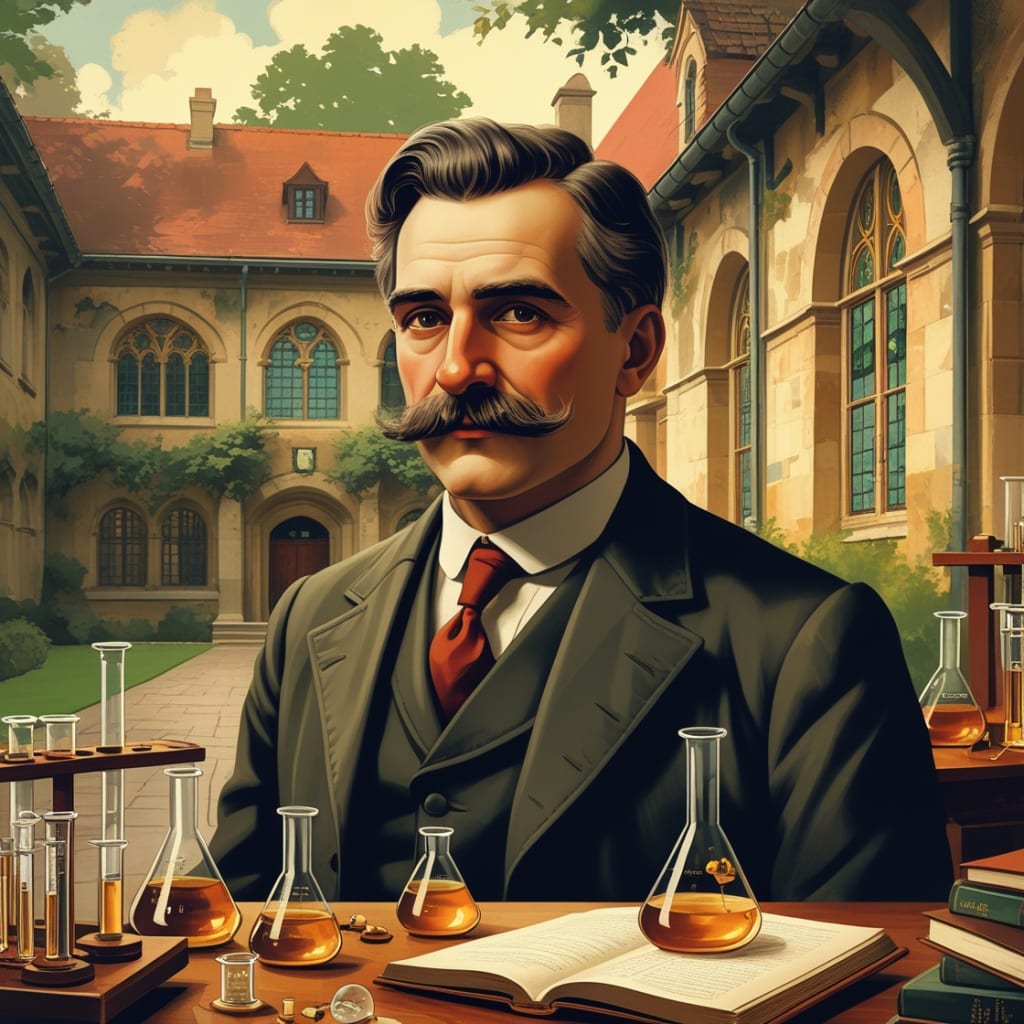
Fritz Haber, a name etched deeply in both scientific achievement and moral controversy, stands as one of history’s most paradoxical figures. Born in Breslau, Prussia (now Wrocław, Poland) in 1868, Haber’s contributions to chemistry earned him a Nobel Prize and led to innovations that have fed billions. Yet, he is also known as a key figure behind the development of chemical weapons in World War I. His life encapsulates the immense power of science to transform humanity—both for good and for ill.
Education and Scientific Foundation
Haber's academic journey was shaped by the intellectually rich environment of late 19th-century Germany. He studied chemistry at the University of Heidelberg under Robert Bunsen and later continued at the University of Berlin, where he studied under A. W. Hofmann. He eventually earned his doctorate in 1891 from the Friedrich Wilhelm University in Berlin. His education placed him among the elite chemists of his time, and his early work focused on organic chemistry and electrochemistry.
After earning his degree, Haber became a professor at the Karlsruhe Institute of Technology. It was here that he began the research that would define his legacy—the synthesis of ammonia from atmospheric nitrogen. Working with Carl Bosch of BASF, Haber developed what would become known as the Haber-Bosch process, a method of chemically fixing nitrogen to produce ammonia on an industrial scale.
The Agricultural Revolution: Feeding Billions
The Haber-Bosch process fundamentally altered the course of human civilization. Prior to this innovation, the availability of fixed nitrogen—essential for plant growth—was limited to natural sources like guano and nitrate deposits, which were finite and geopolitically contested. The Haber-Bosch process allowed for the industrial-scale production of fertilizers, directly enabling the agricultural productivity required to support a rapidly growing global population.
It is estimated that over 3 billion people today are fed as a result of Haber’s invention. Without synthetic fertilizers, modern agriculture as we know it would be unsustainable. This single development transformed Haber into a savior of sorts—a man whose work made it possible to stave off famine and food scarcity on a global scale.
The Dark Legacy: Weapons of Mass Destruction
Despite the life-sustaining benefits of his scientific work, Fritz Haber also used his knowledge for destruction. During World War I, Haber was a fervent German patriot who believed that science could serve the interests of the state. He played a pivotal role in developing and deploying chemical weapons, including chlorine gas, used for the first time on a large scale during the Second Battle of Ypres in 1915.
Haber personally supervised the gas attack, which killed thousands and set a horrifying precedent for chemical warfare. His belief that this technological advancement could shorten the war and reduce overall casualties reflects a utilitarian logic that would later draw immense criticism. The psychological and physical toll of gas warfare left deep scars on soldiers and society, marking one of the darkest chapters in the history of modern conflict.
This duality—feeding billions while contributing to the deaths of millions—encapsulates the moral ambiguity that defines Haber’s legacy. The tragedy is further compounded by the personal cost he paid: his wife, Clara Immerwahr, also a chemist, was a vocal pacifist who opposed her husband's work on chemical weapons. She took her own life shortly after the Ypres attack, reportedly in protest of his actions.
Exile and Death
Haber’s later years were marked by tragedy and exile. Being of Jewish descent, he faced increasing persecution under the Nazi regime, despite his earlier service to Germany. In 1933, he was forced to resign from his position and leave the country. He died in 1934 in Switzerland, disillusioned and in poor health.
Ironically, the same regime that forced him into exile would go on to use a pesticide derived from his research—Zyklon B—in the gas chambers of concentration camps. Though not developed for that purpose by Haber himself, the connection only deepens the ethical complexity surrounding his legacy.
Legacy and Lessons
Fritz Haber’s life raises essential questions about the responsibilities of scientists and the potential consequences of scientific advancement. Should the utility of scientific work be judged solely by its intentions, or must it also be weighed against its outcomes? Haber sincerely believed that he was serving humanity and his country, yet the outcomes of his work led to both immense good and irreparable harm.
Today, the Haber-Bosch process remains a cornerstone of global agriculture. However, it is also a contributor to environmental degradation, including greenhouse gas emissions and nitrogen runoff. Meanwhile, chemical weapons remain a threat, despite international bans, and continue to be used in conflicts around the world.
Haber’s story is a poignant reminder that scientific knowledge is inherently neutral—it is the application of that knowledge that determines its ethical value. The same discoveries that nourish the world can also destroy it, depending on the motivations of those who wield them.
Conclusion
Fritz Haber was not a villain nor a hero in the traditional sense—he was a complex figure shaped by the turbulent era he lived in, and his actions have had profound and lasting consequences. His contributions to science have saved billions, while also bringing about immense suffering. In studying his life, we are reminded of the ethical responsibilities that accompany scientific advancement and the importance of using knowledge for the betterment of humanity.
About the Creator
Bobi Dutch
I'm passionate about exploring educational phenomena, focusing on innovation, equity, and the evolving dynamics of learning. I analyze trends, strategies that shape modern education and aim to drive impactful, research-based improvements.
Keep reading
More stories from Bobi Dutch and writers in Education and other communities.
The Secret of Synchronization in Education
In an era defined by technological advancement and educational reform, one of the most transformative yet understated concepts is synchronization in education. This idea—of aligning various components of the learning process—holds the potential to revolutionize how students learn, teachers teach, and institutions function. Education Pro, a metaphor for modern, optimized learning platforms or philosophies, thrives on this secret ingredient. Synchronization in education is not merely about timing; it's about coherence, mutual understanding, technological integration, and harmonious collaboration that collectively drive effective learning outcomes.
By Bobi Dutch8 months ago in Education
The Comfort of Arrival: Why Certain Destinations Instantly Feel Familiar
There are moments in travel that defy logic. You arrive in a place you have never visited before, step onto its streets, breathe in its air, and suddenly feel at ease. There is no adjustment period, no sense of being out of place. Instead, there is a quiet recognition, as if the destination has been waiting for you. This feeling of instant belonging is not accidental, nor is it purely romantic imagination. It is the result of emotional, cultural, psychological, and environmental factors working together to create a sense of home far from home.
By Producer James Simon6 days ago in Education
The Proven Natural Skincare Secret with Healthy Skin
Healthy skin does not come from harsh products or complicated routines. It comes from working with nature, not against it. The natural skincare secret that many people overlook is the power of raw honey as a daily skin ally. This simple ingredient has been used for generations, yet many still do not understand its effectiveness. When used correctly, raw honey can change how your skin looks and feels.
By Kelln Small6 days ago in Education



Comments