
The Magic of Messy Learning
What Lower Elementary Teaches Us About Real Growth
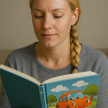

When we think about teaching young children, it’s easy to picture cheerful classrooms, bright posters, and songs about the days of the week. But anyone who’s spent real time in a lower elementary classroom knows: it’s not all crayons and circle time. It’s chaos — a loud, wobbly, joyful chaos. And in that chaos lies one of the most overlooked truths in education: the mess is the method.
Why Structure Isn’t Everything
The education system loves structure. Pacing guides. Benchmarks. Assessments. But children aged five to eight don’t operate on neat timelines. One minute they’re writing a sentence, the next they’re under the table pretending to be a cat. Traditional systems see this as distraction. But to an observant teacher, it’s data.
The shift in attention isn’t a failure. It’s a signal. It shows where a child’s curiosity lives. The lower elementary classroom, when it works, doesn’t shut that down — it follows it. A student fascinated by cats may write a story, build a cardboard house, measure how much a cat sleeps. That’s real interdisciplinary learning — and it starts by saying yes to the mess.
The Emotional Curriculum
Another secret of early elementary education? We’re teaching feelings just as much as facts. Before a child can add two-digit numbers or read a paragraph, they have to know how to ask for help, wait their turn, or say “I’m frustrated.”
We model empathy. We narrate our thinking. We celebrate mistakes.
When a child cries because they spelled “elephant” wrong, we don’t correct them — we sit beside them and talk through it. The lesson isn’t just spelling. It’s resilience. And those are the lessons they’ll carry far beyond the classroom.
Learning to Learn (Not Just to Perform)
At some point, many kids learn that school is about performance. Right answers. Gold stars. But in the early grades, we have a rare window — a moment before most children have internalized that pressure. That’s when we can teach them that struggle is not a sign of failure. It’s a sign that learning is happening.
I’ve seen it a hundred times: a child trying to tie their shoes. They try once, twice, cry, try again — and then beam with pride when it finally clicks. That’s learning. And it has everything to teach us about what kind of learners we want to raise.
The Teacher as Guide, Not Boss
In early grades, being a teacher means being a detective, a coach, and sometimes a human tissue box. You learn to read body language. To notice which child suddenly stops drawing when the room gets noisy. To spot the kid who always says “I don’t know” but lights up when asked to explain something to a peer.
You guide. You adjust. You make space.
This doesn’t mean you let the class run wild. It means you understand that control is less important than connection. And that deep learning often happens in moments that don’t look like learning at all.
What Older Grades (and Grownups) Can Learn
There’s a reason so many education experts, when asked where the best teaching happens, point to early childhood classrooms. Because that’s where the core of good pedagogy lives: trust, curiosity, relationships, play.
We forget, sometimes, that rigor and joy aren’t opposites. That discipline and delight can live in the same lesson. Lower elementary classrooms remind us that the goal isn’t just to raise test scores — it’s to raise thinkers, collaborators, and whole humans.
Maybe the best way to improve our schools isn’t to pile on more tech, more benchmarks, or more pressure. Maybe it’s to walk into a first-grade classroom and take notes.
In Defense of the Wiggle
The next time you hear someone dismiss the work of early educators as “just babysitting,” invite them to sit in a classroom for a day. To watch the moment a non-reader figures out a word. To see a child negotiate a conflict without adult help. To hear the question that derails the lesson plan — but leads to something better.
Because in the end, teaching young children isn’t just about preparing them for the future. It’s about honoring who they are right now — full of questions, motion, and possibility.
And if they’re wiggling while they learn? Maybe that’s not a problem. Maybe that’s the point.
About the Creator
Kelsey Thorn
I’m a teacher with a passion for writing about education and the art of teaching. I also love creating stories for children—gentle, imaginative, and full of little wonders.
Keep reading
More stories from Kelsey Thorn and writers in Education and other communities.
When the Day Begins Before the Bell
I often arrive at school before the sun has fully taken its place in the sky. The building feels half asleep, the way a house feels when someone is tiptoeing downstairs for a quiet morning. I unlock my classroom and breathe in the stillness. For a moment, nothing demands my attention. I set down my bag, turn on the soft lamp in the corner, and feel the quiet wrap around me. Sometimes this small pause holds more weight than I expect.
By Kelsey Thorn3 months ago in Education
My Deep Dive Into FSG 55: Lumber, Millwork, Plywood & Veneer — In Aviation & Aerospace Supply Chains
When I first explored FSC 55 – Lumber, Millwork, Plywood, and Veneer, I honestly didn’t expect it to have any meaningful connection to aerospace and aviation logistics. But as I studied deeper into Federal Supply Classification (FSC) systems and NSN (National Stock Number) management, I realized something important:
By Beckett Dowhana day ago in Education
Cassie and Johnny
I’m the kind of dame you notice. I’m no femme fatale, but you can’t ignore me, at least not until I warn you about what’s coming, then everybody ignores me. Hell, they usually blame me afterwards and give Johnny all the credit for saving the day, but my Johnny couldn’t save a seat at the movies without my help. Sure, he’s brawny, but brainy? Not so much. Like that time I asked him to spot me five bucks, and he said he didn’t see it anywhere on me, and believe you me, he looked but good.
By Harper Lewis4 days ago in Critique



Comments
There are no comments for this story
Be the first to respond and start the conversation.