

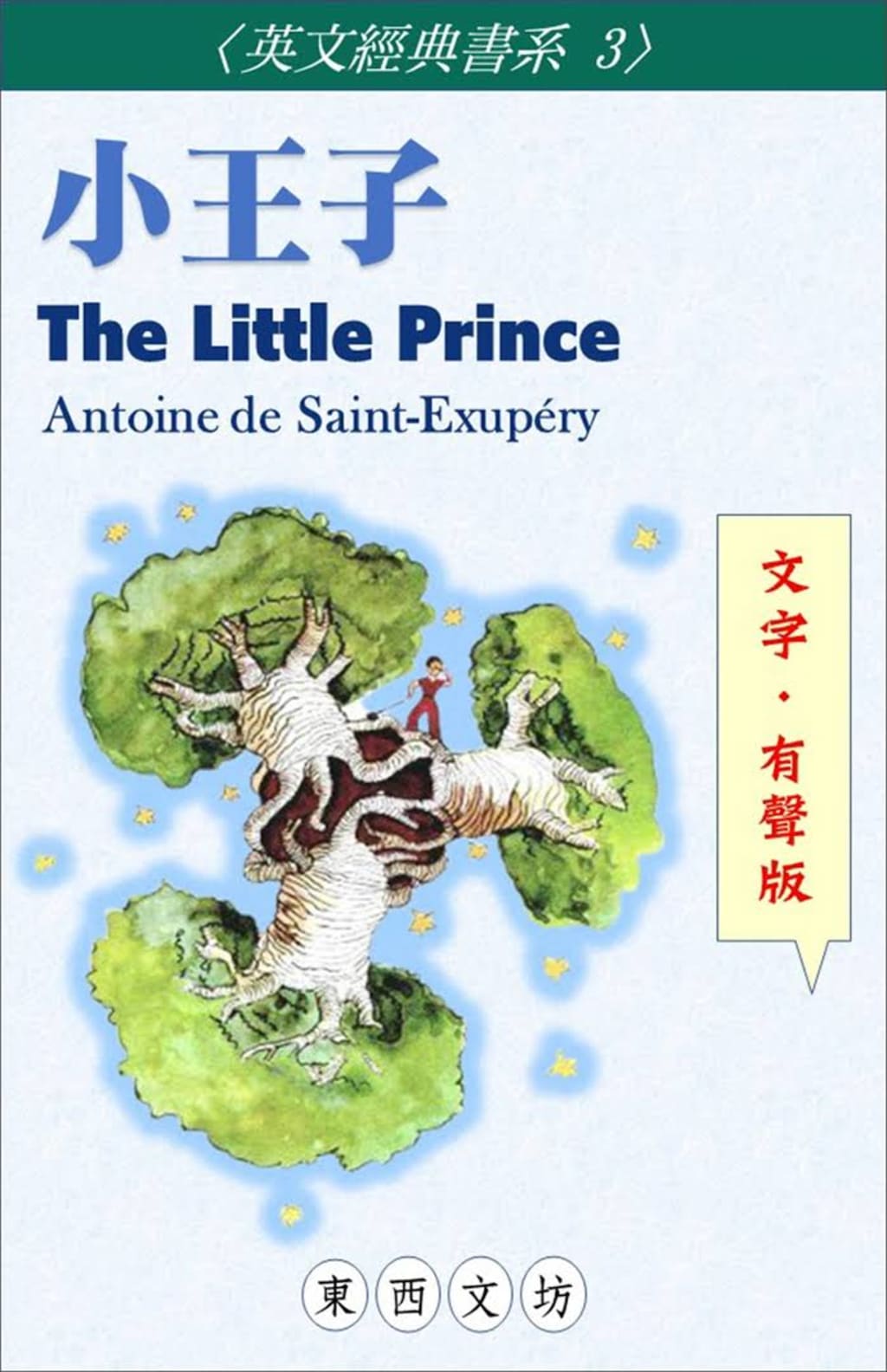
"The Little Prince" is a novella written by Antoine de Saint-Exupéry and published in 1943. The book is about a young prince who travels from planet to planet, meeting various inhabitants and learning important life lessons along the way.
The story begins when the narrator, a pilot, crashes his plane in the Sahara desert. While trying to repair his plane, he meets a little prince who asks him to draw a sheep. The narrator is surprised by the prince's request but obliges, and the little prince tells him about his adventures travelling from planet to planet.
The little prince's first planet is inhabited by a king who claims to rule over everything he sees. The prince is not impressed by the king's claims, but he learns that it is important to listen to others and show respect.
On the next planet, the prince meets a conceited man who is obsessed with his own beauty and importance. The prince realizes that the man is lonely and unhappy, and he teaches him the importance of looking beyond appearances.
On the third planet, the prince meets a drunkard who drinks to forget his shame. The prince learns that it is important to take responsibility for one's actions and face one's problems.
On the fourth planet, the prince meets a businessman who is too busy counting stars to appreciate their beauty. The prince learns that material possessions are not as important as simple pleasures like friendship and nature.
On the fifth planet, the prince meets a lamplighter who faithfully lights and extinguishes his lamp every day. The prince learns that dedication and commitment are important virtues.
On the sixth planet, the prince meets a geographer who has never travelled anywhere. The prince learns that knowledge is important, but experience is equally valuable.
Eventually, the little prince arrives on Earth and meets a fox. The fox teaches him about the importance of building relationships and taming others. The little prince also meets a pilot, whom he becomes friends with, and he shares with him the story of his travels.
The book is a reflection on the human condition and the importance of simplicity, love, and friendship. It ends with the little prince returning to his own planet and the pilot realizing the importance of the little prince's message.
The Little Prince" About
" by Antoine de Saint-Exupéry is a timeless tale that offers many lessons about life, love, and the human condition. The story is a beautiful fable that captures the essence of childhood innocence and wonder and offers insights into the meaning and purpose of life.
At its core, "The Little Prince" is a story about the importance of cultivating meaningful relationships, the dangers of materialism and conformity, and the power of imagination and creativity.
One of the main lessons of the story is the importance of connecting with others. Throughout the book, the little prince travels from planet to planet and encounters a variety of different characters. Some of these characters are selfish and vain, while others are kind and compassionate. Through his travels, the little prince learns that true happiness and fulfilment come not from material possessions but from the relationships we build with others.
In the story, the little prince becomes friends with a fox, who teaches him about the importance of taming and building relationships. The fox tells the little prince that "one only understands the things that one tames," and that "to me, you are still nothing more than a little boy who is just like a hundred thousand other little boys. And I have no need of you. And you, on your part, have no need of me. To you, I am nothing more than a fox like a hundred thousand other foxes. But if you tame me, then we shall need each other."
This lesson emphasises the importance of building meaningful relationships with others and taking the time to connect with those around us. It also underscores the idea that we can only truly understand and appreciate the things in life that we take the time to cultivate and nurture.
Another important lesson from "The Little Prince" is the danger of conformity and materialism. The little prince encounters a number of characters who are obsessed with wealth, power, and status and who have lost touch with their own humanity as a result. These characters represent the dangers of a society that values material possessions and conformity above all else.
In the story, the little prince's encounter with the businessman highlights the pitfalls of a life driven by greed and materialism. The businessman is so consumed with counting stars and amassing wealth that he fails to appreciate the beauty and wonder of the world around him. The little prince, by contrast, finds joy in simple pleasures, like the sound of the wind and the fragrance of a flower.
Ultimately, "The Little Prince" teaches us the power of imagination and creativity. The story encourages us to look beyond the surface of things and to embrace the beauty and mystery of the world around us. It invites us to embrace our inner child, to reconnect with our sense of wonder and awe, and to find joy in the simple things in life.
In conclusion, "The Little Prince" is a beautiful fable that offers many valuable lessons about life, love, and the human condition. Through its whimsical characters and poetic language, it teaches us about the importance of building meaningful relationships, the dangers of conformity and materialism, and the power of imagination and creativity. It reminds us to cherish the simple things in life, to embrace our inner child, and to never lose sight of the beauty and wonder of the world around us.
Thanking You.....❤️
About the Creator
What causes cavities
When a team of archaeologists recently came across some 15,000-year-old human remains, they made an interesting discovery. The teeth of those ancient humans were riddled with holes. Their cavities were caused by the same thing that still plagues us today: specific tiny microbes that live in our mouths.
By Munesh Yadavabout 23 hours ago in Education
How Business Coaching Helps Founders Scale With Clarity and Control
Business coaching assists founders to scale since hustle and reactivity are substituted with structure, systems and strategic leadership. Strategic coaching provides clarity in the marketing, operations, leadership, and decision-making roles of the business, eliminating the need to use the owner as the bottleneck, instead enabling the business to expand without havoc, burnout, or firefighting.
By Alice Adams5 days ago in Education




Comments
There are no comments for this story
Be the first to respond and start the conversation.