
The Life and Legacy of Muhammad Sallallahu Alaihi Wasallam: From Humble Beginnings to Prophet of Islam.
Subtitle: A Biography of the Messenger of Allah and the Impact of His Teachings on the World
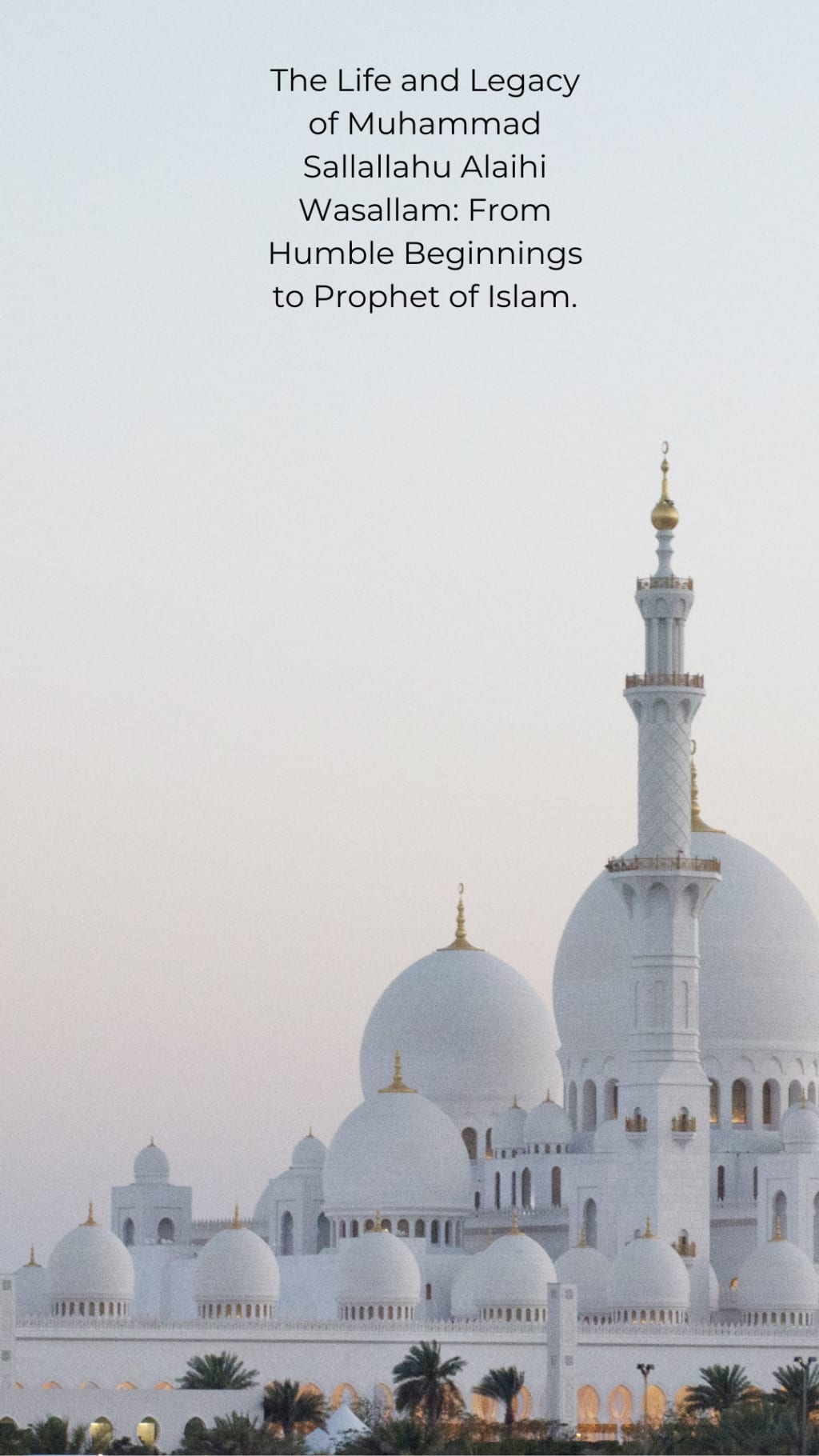
Muhammad Sallallahu Alaihi Wasallam is one of the most influential figures in the history of the world. He is revered by over a billion Muslims worldwide as the final Prophet of Islam, whose teachings and actions continue to shape the lives of millions of people every day. Born in the Arabian city of Mecca in the year 570 CE, Muhammad's early life was marked by hardship, poverty, and loss. However, through his unwavering faith, determination, and dedication to Allah, he rose to become a respected leader and messenger of Islam, leaving behind a legacy that would endure for centuries to come.
Early Life:
Muhammad was born into the Banu Hashim clan of the Quraysh tribe, one of the most prominent families in Mecca at the time. His father, Abdullah, died before he was born, and his mother, Aminah, died when he was just six years old. He was then raised by his grandfather, Abdul Muttalib, and later by his uncle, Abu Talib. Despite his difficult upbringing, Muhammad was known for his honesty, kindness, and compassion towards others, earning him the nickname "Al-Amin," or "The Trustworthy."
At the age of 25, Muhammad married Khadijah, a wealthy businesswoman who was 15 years his senior. Their marriage was a happy one, and Khadijah was one of Muhammad's most ardent supporters and believers in his prophethood.
Prophethood and Teachings:
In the year 610 CE, at the age of 40, Muhammad received his first revelation from Allah while meditating in a cave on Mount Hira outside of Mecca. The angel Jibreel (Gabriel) appeared to him and revealed the first verses of what would become the Quran, the holy book of Islam. Over the next 23 years, Muhammad received further revelations, which he shared with his followers, teaching them the principles of Islam and its practices.
Muhammad's teachings emphasized the oneness of Allah, the importance of prayer, fasting, and charity, and the equality of all people before Allah regardless of their race, ethnicity, or social status. His message was one of peace, compassion, and justice, and he preached against the oppressive practices of the pre-Islamic Arab society, such as idol worship, slavery, and the mistreatment of women.
Persecution and Hijra:
As Muhammad's teachings gained more followers, he faced increasing persecution from the ruling Quraysh tribe, who saw his message as a threat to their power and way of life. Muhammad and his followers faced social boycott, physical violence, and even death threats. In the year 622 CE, Muhammad and his followers were forced to leave Mecca and migrate to the city of Medina, an event known as the Hijra.
The Hijra marked a turning point in Islamic history, as it was the beginning of the Islamic calendar and the establishment of the first Islamic state in Medina. Muhammad's leadership and guidance during this time helped to unite the diverse tribes of Medina and establish a system of justice and fairness that earned the respect and admiration of both Muslims and non-Muslims alike.
Conquest of Mecca and Final Years:
After several years of conflict with the Quraysh, Muhammad and his followers were able to conquer Mecca in 630 CE, without any bloodshed, and the city was unified under the banner of Islam. Muhammad continued to spread his message and guide his followers until his death in 632 CE,
death of Muhammad:
Muhammad's death was a profound loss for the Muslim community, and it was a moment of great sadness for his family and followers. He was buried in Medina, and his legacy lived on through the teachings of Islam and the Quran.
Legacy and Impact:
Muhammad's life and teachings continue to have a profound impact on the world today, more than 1,400 years after his death. Islam is now the second-largest religion in the world, with over 1.8 billion followers, and it has played a significant role in shaping the cultural, social, and political landscape of many countries.
Muhammad's teachings on equality, justice, and compassion have inspired countless individuals and movements throughout history, including the civil rights movement in the United States and the anti-apartheid movement in South Africa. His message of peace and unity has also been a source of comfort and solace for millions of people around the world.
Conclusion:
Muhammad Sallallahu Alaihi Wasallam was a remarkable individual who overcame great challenges to become a respected leader and messenger of Islam. His teachings and actions continue to inspire and guide millions of people around the world, and his legacy is a testament to the power of faith, compassion, and dedication. As we reflect on his life and teachings, we are reminded of the importance of unity, justice, and peace, and the transformative impact they can have on our lives and our world.
About the Creator
Keep reading
More stories from Shivangi Saha and writers in Education and other communities.
Exploring India’s Treasures .
India is a land of incredible diversity and rich cultural heritage, with a wealth of tourist attractions that draw visitors from all over the world. From the iconic Taj Mahal to the serene backwaters of Kerala, India offers an endless array of experiences for the intrepid traveler. In this story, we follow the journey of Emma, a tourist from England, as she sets out to explore some of India's most famous tourist destinations.
By Shivangi Saha3 years ago in Education
How Japan Saved Its Biggest City from Collapse
400 years ago, modern-day Tokyo was known as Edo, and it was already one of the biggest cities in the world, with a population approaching 1 million. However, it was on the verge of ecological collapse. Years of intense logging had led to massive deforestation. The city now faced timber shortages and the impacts of severe erosion and frequent flooding that threatened food supplies. But over just a few decades, Edo will transform and become one of the most sustainable and efficient cities in history.
By Munesh Yadava day ago in Education
Understanding Laravel Helper Functions and Their Use Cases
Laravel is widely appreciated for its clean syntax, expressive structure, and developer-friendly ecosystem. One of the most underrated yet powerful features of the framework is its built-in helper functions. These helpers simplify common tasks, reduce boilerplate code, and improve overall development speed. If you’re working with Laravel regularly, understanding helpers in Laravel can significantly improve how efficiently you write and maintain code, especially when building modern applications such as dashboards, SaaS platforms, or integrations with tools like the Best AI Video Ads Tools for marketing automation.
By Lennox Graya day ago in Education


Comments
There are no comments for this story
Be the first to respond and start the conversation.