
The Life and Impact of Hugh M. Browne
A Legacy of Innovation and Uplift
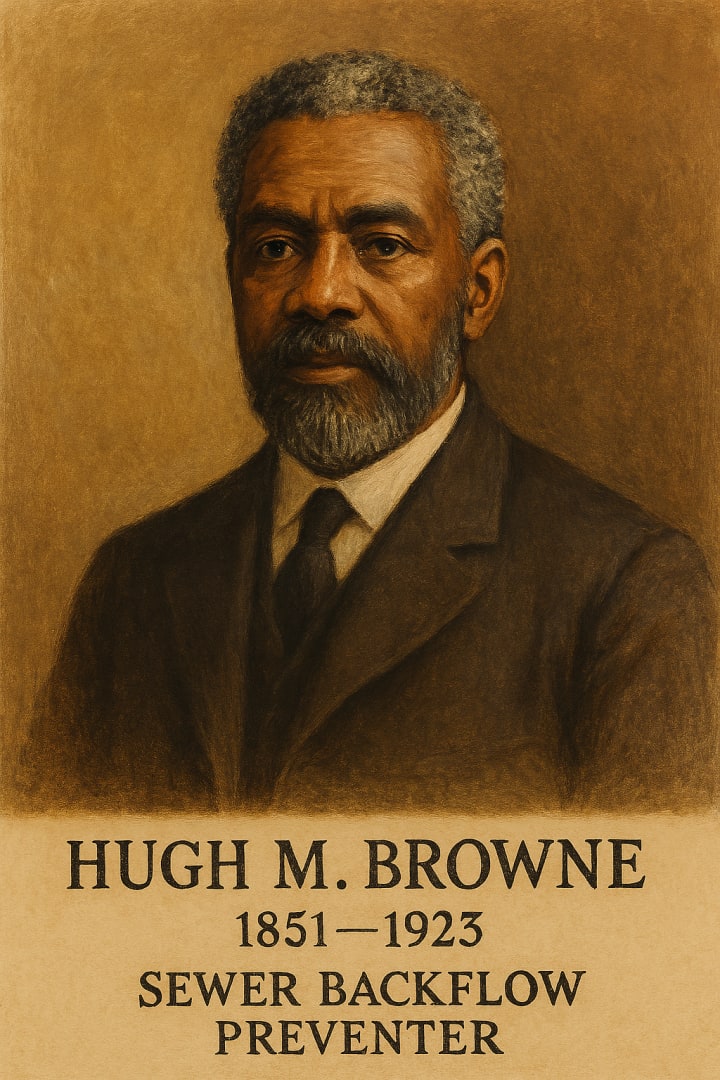
WASHINGTON, D.C., 1923 In an era defined by both oppressive barriers and extraordinary breakthroughs for African Americans, one educator‑inventor stood at the crossroads of civic progress, public health, and educational reform. Hugh Mason Browne — born June 12, 1851, in Washington, D.C. — dedicated his life to elevating living conditions and broadening educational opportunity for Black Americans. Though best remembered as a pioneering school leader and advocate of industrial learning, Browne also contributed meaningfully to public sanitation through a patented invention designed to stop contaminated wastewater from seeping into homes.
A Scholar Formed Amid Reconstruction Optimism
Browne grew up in a prominent free Black family in Washington, D.C., where the ideals of progress, education, and civic duty shaped his early environment. After excelling in the city’s segregated public school system, he earned a B.A. from Howard University in 1875 and later completed his theological and ministerial training at Princeton Theological Seminary in 1878.
Armed with both intellectual rigor and moral purpose, Browne traveled abroad for advanced study in Scotland and Germany, experiences that further expanded his sociopolitical worldview. His early academic path already reflected a signature trait: blending deep theoretical learning with a drive to solve real‑world problems affecting everyday people.
Champion of Practical Education and Social Advancement
Browne’s commitment to practical skills and industrial education became central to his philosophy. His work as a professor at Liberia College from 1883–1886 marked an early attempt to reform educational systems by shifting from purely classical learning toward skill‑based, hands‑on instruction. This approach aligned him with the emerging national conversation about the best strategies for empowering African Americans in the post‑Reconstruction era.
This ideology placed Browne in intellectual dialogue with towering contemporaries such as Booker T. Washington and W. E. B. Du Bois. He participated in the **Committee of Twelve for the Advancement of the Interests of the Negro Race, a short‑lived but historically important effort to build unity among Black leaders seeking coordinated strategies for racial uplift.
Despite ideological differences among the group’s leaders, Browne managed to occupy a thoughtful middle ground — valuing Washington’s emphasis on vocational training while respecting Du Bois’s push for civil rights and classical education for future leaders.

Inventor of a Public Health Safeguard
Beyond his academic leadership, Browne demonstrated a practical ingenuity reminiscent of Black inventors like Elijah McCoy and George Washington Carver. In the late 1880s, Browne turned his attention to an everyday but dangerous problem: contaminated wastewater backing up into residential cellars.
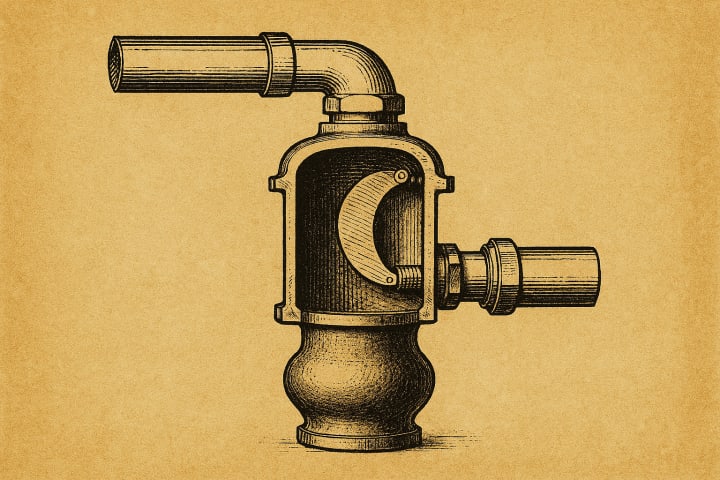
On April 29, 1890, he was awarded a U.S. patent for a device designed to prevent the backflow of sewer water into houses. The invention functioned as a protective barrier, improving sanitation and reducing the health risks associated with wastewater infiltration — a major public concern in densely populated urban neighborhoods of the 19th century.
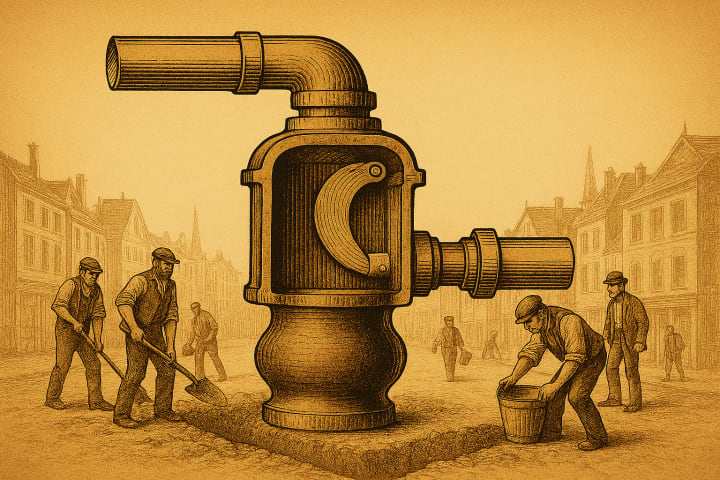
Newspapers of the era later credited Browne’s device among notable inventions by African Americans, reflecting the broader contributions Black innovators made to everyday American life despite working under the constraints of segregation and systemic discrimination.
Leadership at the Institute for Colored Youth
In 1902, Browne became principal of the Institute for Colored Youth, today known as Cheyney University of Pennsylvania. His leadership transformed the institution. Viewing education as a means to dignified labor and upward mobility, he moved the school from Philadelphia to rural Cheyney to expand its facilities and align it with the industrial education model championed by Washington. He also established the Training School for Teachers, ensuring that Black educators would carry his instructional philosophy into classrooms across the country.
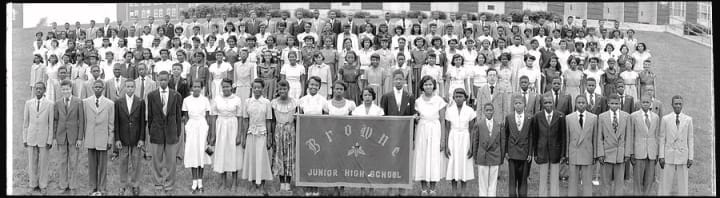
During his tenure (1902–1913), Browne strengthened academic programming while maintaining his unwavering focus on practical skill development a fusion that would influence American vocational training for decades.
A Legacy Rooted in Dignity, Innovation, and Uplift
By the time of his death on October 30, 1923, Browne had created a multilayered legacy: inventor, educator, theologian, civil rights advocate, and institutional leader. His life serves as a powerful reminder that innovation is not limited to laboratories — it can emerge from classrooms, communities, and the persistent pursuit of a better life for others.
His sewer backflow preventer may seem modest compared to grander technological feats, but like the man himself, the invention addressed a simple, essential need: ensuring safe, dignified living conditions for families. In both his educational work and his engineering insight, Hugh M. Browne helped build the foundations of a more “civilized living environment,” advancing public welfare at a time when such advocacy required extraordinary resolve.
PLEASE SUBSCRIBE FOR MORE STORIES
About the Creator
TREYTON SCOTT
Top 101 Black Inventors & African American’s Best Invention Ideas that Changed The World. This post lists the top 101 black inventors and African Americans’ best invention ideas that changed the world. Despite racial prejudice.
Keep reading
More stories from TREYTON SCOTT and writers in Education and other communities.
A New Story About Henry Blair
Henry Blair rose before the sun most mornings, long before the fields warmed under the Maryland sky. As a free Black farmer in the early 1800s, he understood the land as if it were kin — stubborn at times, generous at others, and always demanding more from a man than daylight could give.
By TREYTON SCOTTa day ago in Education
Casie Hynes and the Push to Redefine Mathematics Education
Mathematics has always played a central role in education, yet it remains one of the most polarizing subjects students encounter. Some learners feel empowered by numbers and patterns, while others experience frustration and self-doubt early in their academic journey. Despite decades of discussion about reform, many math classrooms still rely on methods that emphasize memorization and speed over understanding and curiosity. In a world shaped by data, technology, and constant change, this approach no longer meets the needs of today’s students.
By Casie Hynes6 days ago in Education
The Silent Surge Mapping China USD 28.35 Billion E-Bike Future (2025–2033)
The 2025-2026 "Cash for Clunkers" Boom The most critical driver of market volume in the last 18 months has been the National Electric Bicycle Trade-In Program. Launched in late 2024 and expanded in early 2025, this government initiative aimed to replace millions of aging, lead-acid battery bikes with safer, lithium-ion, and smart-connected models.
By Neeraj kumar3 days ago in Education



Comments
There are no comments for this story
Be the first to respond and start the conversation.