
The Legacy of the Aztec Jaguar Warriors
Mesoamerica's Fiercest Elite

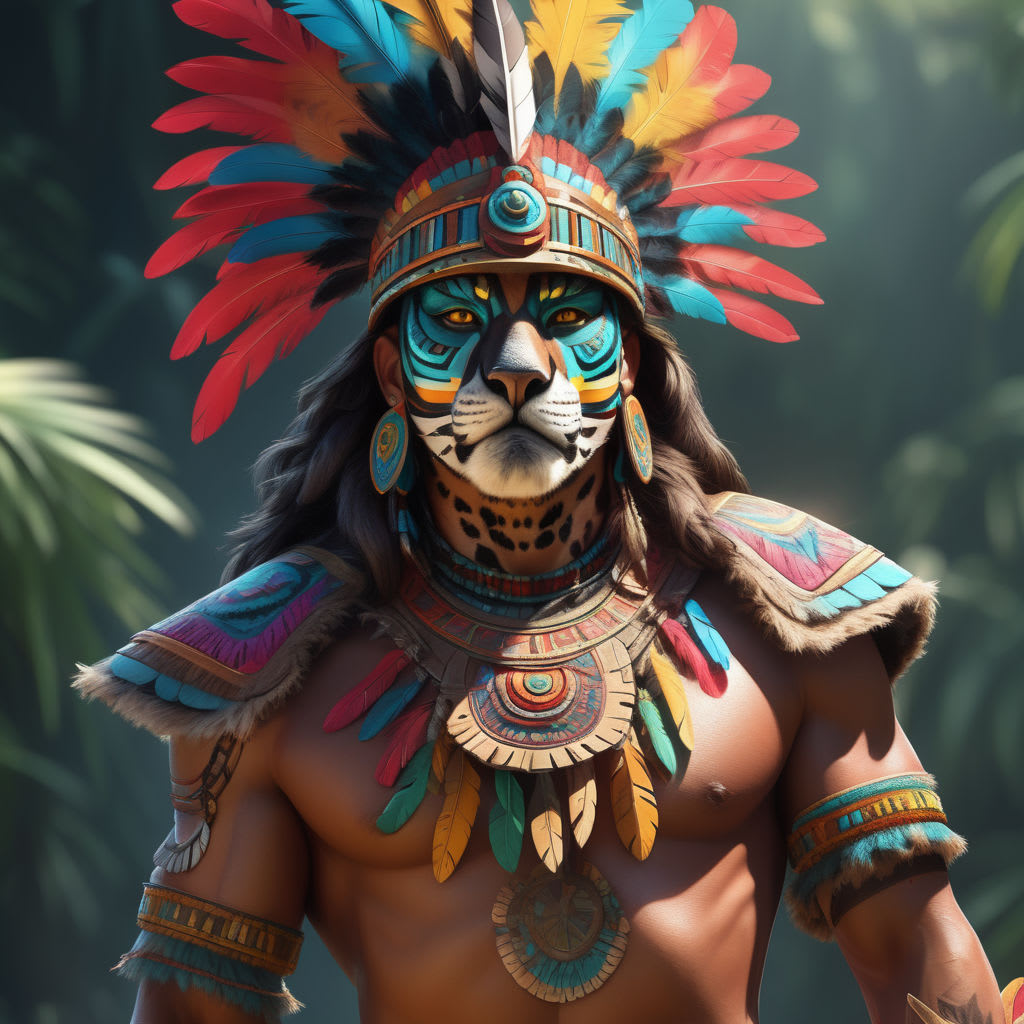
The Aztec Jaguar Warriors, or Oelotl in the Nahuatl language, meaning "those with jaguar skin," were among the most revered and formidable military units in Mesoamerican history. Operating from the 14th to the 16th centuries, these elite warriors embodied the fierce spirit and martial prowess of the Aztec Empire. Their legacy, marked by valor and ritual, offers a compelling insight into the complex world of Aztec warfare and religion.
Origins and Symbolism
The jaguar held a sacred place in Aztec culture, symbolizing strength, agility, and ferocity. For the Aztecs, the jaguar was not just a fearsome predator but also a symbol of the divine. The warriors who wore jaguar skins sought to channel these attributes, believing that by adopting the guise of this powerful animal, they could enhance their supernatural abilities and combat effectiveness.
Training and Social Status
Becoming a Jaguar Warrior required extraordinary skill and bravery. Candidates were drawn from the lower echelons of Aztec society, including peasants, artisans, and merchants. However, military achievements could offer significant social mobility. Jaguar Warriors had the opportunity to acquire land, wealth, and honor, thereby elevating their status within Aztec society.
The training for Jaguar Warriors was rigorous and multifaceted. They trained at the Quali, or "House of the Eagles," a special facility dedicated to their education. Here, they received comprehensive instruction in military tactics, religious rites, and cultural traditions. The training was designed to prepare them not only as elite soldiers but also as priests, capable of fulfilling religious and ceremonial duties.
Combat and Equipment
On the battlefield, Jaguar Warriors were both feared and respected for their distinctive appearance and combat skills. They wore light armor made from jaguar skin, which included the head and claws of the animal, creating an intimidating and formidable presence. This attire not only symbolized their connection to the jaguar but also served practical purposes in combat.
The primary weapon of the Jaguar Warriors was the Macuahuitl, a wooden sword edged with razor-sharp obsidian blades. This weapon was capable of inflicting severe damage, with the ability to cut through flesh and bone, and was even reputed to decapitate a horse with a single blow. Another essential weapon was the Tlaloc, a staff tipped with obsidian used for stabbing and tearing enemies. The warriors also carried obsidian daggers for close combat and used projectile weapons like the Atlatl, a spear-throwing device that increased the force and accuracy of darts, and the Tlaloc, a wooden bow used to shoot arrows.
Their shields, known as Chili, were constructed from palm fibers and reinforced with leather or wood. These shields were often decorated with feathers and symbols that identified the warrior and his group. In addition to offering protection, the shields were used to capture prisoners, a crucial aspect of the Jaguar Warriors’ role.
Rituals and Sacrifices
The role of the Jaguar Warriors extended beyond warfare into religious rituals. They were deeply involved in Aztec religious practices, particularly those dedicated to their patron deity, Tezcatlipoca, the god of the night sky, war, destiny, and magic. The capture of prisoners was a central aspect of their religious duties. Captives were subjected to a purification process, adorned with fine clothing and jewels, and then taken to the main temple of Tenochtitlan for sacrifice. This act was believed to honor the gods and maintain cosmic balance.
The Jaguar Warriors also participated in various ceremonial rites, such as the Dance of the Flyer, which imitated the movement of the sun, and the Fire Race, symbolizing the sun's journey across the sky. These rituals were designed to strengthen their connection to the divine and demonstrate their courage and devotion.
Legacy and Fall
Despite their valor and strategic prowess, the Jaguar Warriors could not withstand the onslaught of Spanish conquistadors and their indigenous allies. The fall of Tenochtitlan in 1521 marked the end of the Aztec Empire and, consequently, the decline of the Jaguar Warriors. The city was destroyed, and the Spanish built their new capital, Mexico City, on its ruins.
The conquest of Mexico, led by Hernán Cortés, was a turning point. Cortés, initially mistaken for the returning god Quetzalcoatl, exploited internal Aztec conflicts and alliances with rival indigenous groups. The Jaguar Warriors, along with other Aztec forces, mounted a fierce resistance but were ultimately outnumbered and outgunned.
In the final siege, the Jaguar Warriors fought bravely but faced overwhelming odds. The city fell after a grueling three-month siege, during which the defenders succumbed to hunger, disease, and relentless Spanish attacks. The fall of Tenochtitlan marked not only the end of the Aztec Empire but also the end of the Jaguar Warriors as a powerful military force.
Today, the Jaguar Warriors are remembered not only for their martial skills but also as symbols of resistance and bravery. Their story is a testament to the grandeur and complexity of the Aztec civilization, reflecting a legacy of courage and honor that continues to captivate and inspire.
About the Creator
Horace Wasland
Research analyst, writer & mystical healer. Exploring the edge where science meets mystery. From mystery/the mystical, to facts, news & psychology. Follow for weekly insights on all four and please leave a tip if you like what you read :)
Keep reading
More stories from Horace Wasland and writers in Education and other communities.
Top 7 Life Changing Books to Read in 2026
In 2026, readers are not just looking for entertainment—they want books that change the way they think, feel, and see the world. With endless content available online, only a few books continue to stand out, remain widely read, and influence conversations across generations. These are the books people keep recommending, searching for, and returning to year after year.
By Waqar Khan2 days ago in Education
The Hidden Importance of Design Hierarchy: How Layout Guides Attention and Improves Readability
Design Hierarchy Is the Foundation of a Clear, Effective Website Design hierarchy is one of the most influential principles in web design — yet it’s often overlooked by users because a strong hierarchy feels seamless and natural. Hierarchy determines what people notice first, how they scan a page, and what they choose to engage with. When done correctly, it guides attention effortlessly, improves readability, and makes websites feel intuitive.
By Power Marketing Internationala day ago in Education
Miss Persephone's Manual to a Seemingly Ordinary Life
Miss Persephone was found at the dining table, her blue eyes swollen, her tears arriving and retreating like the tides of the ocean. Earlier that day, her family had visited her in the retirement home where she had lived for eight years. It was her eightieth birthday.
By Imola Tóth2 days ago in Fiction


Comments (1)
Amazing piece