
"The Legacy of Sri Lanka's Civil War: Healing the Wounds of a Nation
1. A Nation Divided: The Roots of Sri Lanka's Civil War 2. The Brutal Conflict: Tamil Separatists and Government Crackdowns International Efforts and a Failed Ceasefire The Devastating Impact of the 2004 Tsunami 3. Victory and Tragedy: The End of the War 4. A Complex Legacy: Reconciliation, Marginalization, and Criticism 5. The Economic Fallout: The Struggle to Recover Healing and Building a Brighter Future for Sri Lanka.
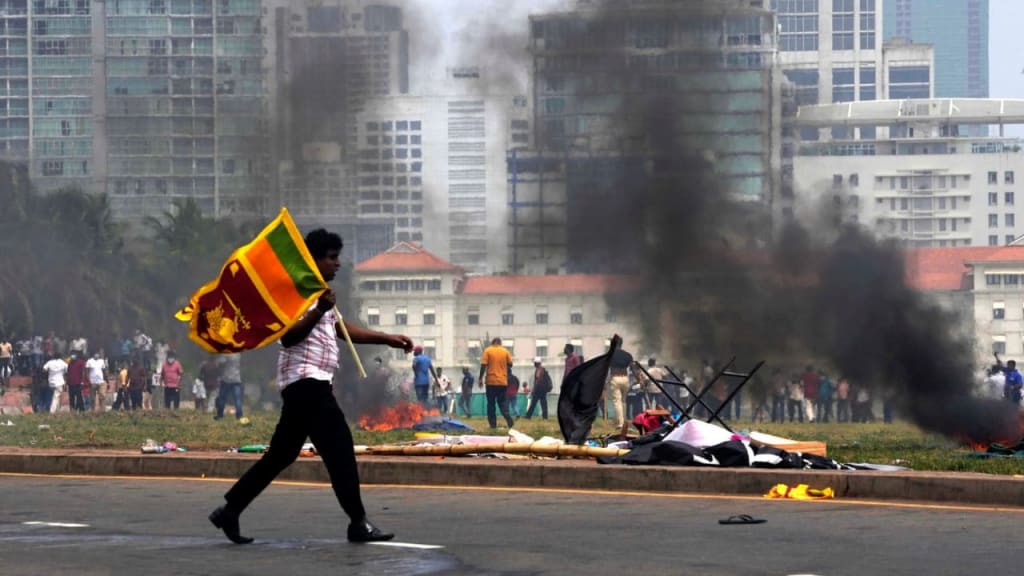
Once a land of peace and harmony, Sri Lanka was torn apart by a brutal civil war that lasted for more than three decades. It was a conflict that had its roots in the country's complex history, and it left deep scars on the nation's psyche.
The conflict began in 1983, when the Liberation Tigers of Tamil Eelam (LTTE), a separatist group that sought an independent Tamil state in the north and east of the country, launched a series of attacks on Sri Lankan military targets. The LTTE drew its support from the Tamil minority, which had long felt marginalized by the Sinhalese-dominated government.
The Sri Lankan government responded with force, launching a crackdown on the LTTE and Tamil civilians alike. This only served to escalate the conflict, as the LTTE intensified its attacks and began to engage in acts of terrorism. The violence soon spread throughout the country, with both sides committing atrocities and human rights abuses.
As the conflict dragged on, the international community began to take notice. Diplomatic efforts were made to broker a peace deal, but they proved unsuccessful. The LTTE, led by Velupillai Prabhakaran, refused to accept anything less than a separate Tamil state, while the government was unwilling to concede any territory.
In 2002, a ceasefire was brokered by Norway, but it proved to be short-lived. The LTTE used the ceasefire to re-arm and regroup, and the government continued to target the Tamil population. In 2004, a tsunami struck Sri Lanka, killing more than 30,000 people and displacing hundreds of thousands. The disaster highlighted the urgent need for a resolution to the conflict, but peace remained elusive.
In 2009, the Sri Lankan military launched a major offensive against the LTTE, and after months of intense fighting, they finally declared victory. Prabhakaran was killed, and the LTTE was effectively destroyed. The government declared an end to the war, but the cost had been high. An estimated 100,000 people had died, and many more had been displaced or traumatized by the violence.
The legacy of the Sri Lankan civil war is a complex one. While the conflict is over, the wounds it inflicted on the country's society and politics remain. There are still deep divisions between the Sinhalese and Tamil communities, and the government's handling of the conflict has been criticized by human rights groups.
The LTTE, which was known for its brutal tactics, has been designated as a terrorist organization by many countries, including the United States, India, and the European Union. The group's use of suicide bombers and child soldiers was widely condemned, and its tactics were seen as a threat to international security.
Today, Sri Lanka is struggling to come to terms with its past. The country's government has launched a reconciliation process, which aims to address the grievances of the Tamil community and promote national unity. However, progress has been slow, and many Tamils still feel marginalized and discriminated against.
The civil war has also had an impact on Sri Lanka's economy, which suffered during the conflict and has struggled to recover. The country's tourism industry, in particular, has been hit hard, as tourists have been reluctant to visit a country that was once synonymous with violence and instability.
In the end, the Sri Lankan civil war was a tragedy for all those involved. It was a conflict that could have been avoided, but instead, it was allowed to escalate until it became a full-blown war. The scars it left behind will take a long time to heal, but with patience, understanding, and a commitment to peace, Sri Lanka can build a brighter future for all its citizens.
About the Creator
Keep reading
More stories from writers in Education and other communities.
E-Invoicing as a Catalyst for Digital Taxation and Business Efficiency in this Digital Era
Introduction In today’s rapidly evolving digital economy, businesses and governments are increasingly turning to technology to improve efficiency, transparency, and compliance. One of the most significant developments in this transformation is electronic invoicing, commonly known as e-invoicing. E-invoicing refers to the generation, exchange, validation, and storage of invoices in an electronic format between suppliers and buyers, often through government-mandated platforms or standardized systems.
By Bobby Yadav5 days ago in Education
Innovation Without Compassion: How the Absence of Empathy Undermines Modern Healthcare
Healthcare innovation promises efficiency, accuracy, and expanded access to care. New technologies, digital platforms, and streamlined systems continue to reshape medicine. However, when innovation moves forward without empathy, it often fails the very people it intends to serve. Patients feel disconnected, clinicians feel overwhelmed, and organizations struggle to achieve meaningful results.
By Mark Bouzyk8 days ago in Education
Dead and Wearing Green
She was wearing that green dress when I first saw her, five years ago to the day. Flowing meadow fabric draped over long legs, thick auburn hair flowing down her back. That smile. Of course, she is still beautiful now. But now she is no longer alive.
By Karen Cave5 days ago in Fiction



Comments
There are no comments for this story
Be the first to respond and start the conversation.