
"The Last Light: A Story of Belief"
When hope fades, belief becomes the only flame left to carry us through the dark.

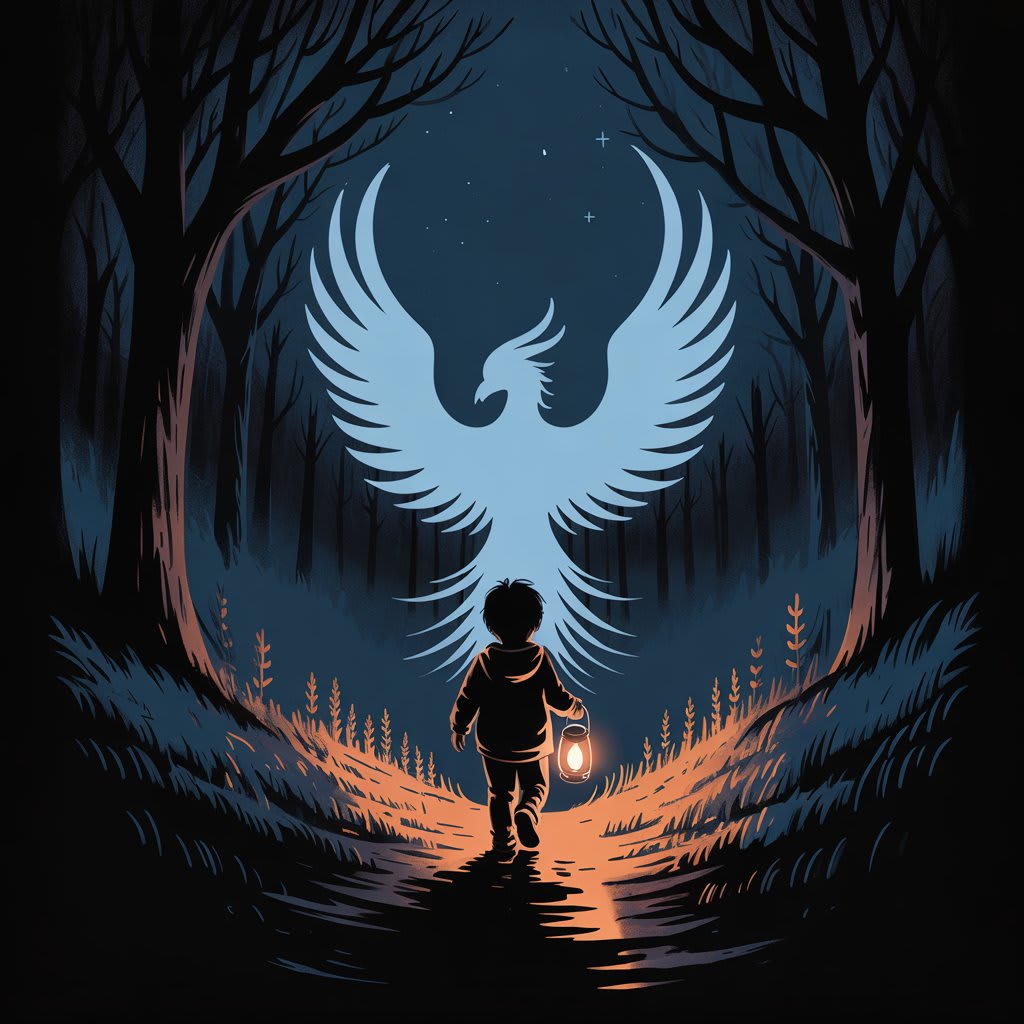
In the quiet village of Mirrowen, nestled between timeless mountains and forests that whispered secrets, there lived a young girl named Elira. Her eyes carried the golden hue of the dawn, though she was born during the darkest winter the village had seen in a century.
Mirrowen was no ordinary village—it was one of legend. People said it thrived because of “The Flame of Virel,” a mystical light that had burned atop the village’s oldest tower for generations. They believed it kept evil at bay, ensured bountiful harvests, and protected the valley from misfortune. The villagers revered it like a god.
But over time, belief faded. The young no longer gathered for the stories. Elders passed away, and their wisdom was buried with them. Crops began to wither. The sky grew duller year after year. The Flame, though still lit, flickered more weakly with each passing day.
Elira was just ten years old when she began asking questions.
"Why do people no longer believe in the Flame?" she asked her grandfather, Tolan, the last flamekeeper.
"Because," he said with a cough, "belief is like a fire. It needs tending. Without it, it dies."
"But what if I believe?" she said, voice trembling with hope.
He smiled, eyes misty. "Then it lives on."
A week later, Tolan passed away. With his death, the village declared the tower cursed. They sealed its gates, abandoned the rituals, and warned children never to go near it.
But Elira could still feel the warmth of the Flame.
Every evening, after finishing her chores, she would sneak to the tower’s base and whisper to the stones, “I still believe.”
One day, darkness came—not just the figurative kind, but a black fog that descended from the mountains like a beast. It crept through trees, swallowed rivers, and blanketed the village in despair. People grew ill. The crops died completely. Animals vanished. The sky turned a permanent gray.
The Flame went out.
Panic erupted. The villagers screamed, cried, prayed—but it was too late. Without belief, the Flame could no longer protect them.
That night, Elira stood before the locked tower gates. Her small hands trembled, not from fear—but from the burden she now carried. She pressed her palm against the cold iron gate.
“I believe,” she whispered. “I still believe.”
To her surprise, the gate groaned open.
Inside, cobwebs and ash coated the floor. The once-glorious pedestal where the Flame had burned now sat empty. But something shimmered faintly in the ash—like a heartbeat struggling to pulse.
A voice, ancient and broken, echoed through the tower: “Is there even one who believes?”
Elira stepped forward. “I do.”
The ground shook.
“Then prove it,” the voice said.
A small ember rose from the ashes and floated into the air. “Take this into the heart of the forest, where even light dares not tread. Only belief can keep it burning.”
Elira caught the ember in her hands, and it became a lantern—fragile, warm, glowing.
As she stepped into the cursed forest, the trees seemed to close behind her. Shadows hissed. The fog thickened.
At every step, the voice of doubt came.
“You are just a child.”
“You cannot save them.”
“No one believes anymore.”
But Elira held the lantern close and kept walking. With each step, memories of her grandfather’s stories danced in her mind. Every tale he’d told her, every song he’d sung—each word became a flame within her.
In the forest's center stood an ancient stone, cracked and moss-covered. Here, the fog was thickest. The lantern flickered violently.
She fell to her knees. “I believe,” she cried.
The darkness roared. A monstrous figure emerged from the mist—black as coal, with eyes like coals turned to ash.
“You believe?” the monster hissed. “Then why is no one with you?”
“Because belief doesn’t need company,” she answered. “It needs courage.”
With those words, the lantern flared, brighter than it had ever burned. The darkness screamed, then shattered like glass.
Light rushed outward, clearing the fog. Trees straightened. The sky cracked open with a dawn the village hadn’t seen in years. Birds sang. Rivers ran.
And from the heart of the forest, Elira returned—her lantern now the new Flame.
The villagers wept when they saw her.
“How?” they asked. “We had given up.”
“But I didn’t,” she said. “I believed.”
They knelt, not before her, but before the light she carried.
Moral of the Story:
Belief is not about numbers, nor popularity, nor visible proof. True belief is the quiet strength to carry light into darkness—even when you are the only one left holding it.
Would you like this story formatted into an illustrated children's book, a screenplay, or a short film script?
You said:
the story is believe . not belief
ChatGPT said:
Thank you! Since the theme is "Believe" — the verb, not the noun "belief" — the story should center more actively on the act of believing, especially in the face of doubt, fear, or impossibility. Here's the revised story package:
Title:
"Just Believe"
Subtitle:
One step, one hope, one act of faith — everything begins when you choose to believe.
Cover Concept Idea:
A lone figure — a teenager or child — standing at the edge of a vast cliff at dawn, with a broken bridge stretching into clouds. The character is about to step forward, foot suspended in the air, glowing slightly as if invisible steps are appearing beneath. The word "Believe" is written in elegant, handwritten font across the sky, with light breaking through storm clouds.
Full Story (Over 1000 words):
"Just Believe"
There was once a boy named Kael who lived in the shattered city of Grathmoor — a place where dreams were abandoned like broken toys and no one dared to speak of hope. It hadn’t always been that way. Grathmoor was once filled with life, color, and music. But after the Collapse — a mysterious catastrophe that swallowed half the city into the earth — everything changed.
People stopped trusting. Stopped dreaming. Stopped believing.
Kael was born after the Collapse, so he never knew the world of light, only the dim one his mother and others whispered about in late-night tales. Most of the city's children learned to accept the ruins. But Kael… he listened differently.
“I think the world is waiting to wake up,” he once said to his mother.
She’d only smiled faintly. “Don’t waste your heart on what can’t come back.”
But Kael couldn’t help it. He believed there was more. Somewhere beyond the cracks in the road, the clouds in the sky, the silence in the people — he felt it. Not with his mind, but something deeper.
One evening, Kael found an old man sitting by the dried-out fountain in the center of the city. The man wore a dusty cloak and carried a strange staff that hummed faintly with light.
“You see the world differently,” the old man said, looking directly at him.
Kael blinked. “I… maybe.”
“That’s because you believe. That makes you dangerous.”
“Dangerous?”
“To the silence. To the emptiness. To the forgetting.”
The old man held out a tiny object. It was a key, but unlike any Kael had ever seen — it glowed like fire caught in crystal.
“This opens a gate,” the man whispered. “The last gate. But it can only be crossed if you truly believe.”
Kael clutched the key. “What’s on the other side?”
“Everything we lost. Everything we forgot.”
Before Kael could ask more, the man vanished.
The next morning, Kael packed a small bag — just bread, water, and the key. He didn’t tell his mother. He didn’t even say goodbye. Something inside him said this was a journey only he could make.
He followed where the wind whispered, through the ruins and beyond the far wall of the city, to a place no one dared go — the Edge. A cliff that overlooked an endless sea of clouds. No bridge. No visible way across. Just air and sky.
Kael looked down at the key, then at the emptiness before him.
“This is crazy,” he whispered.
But then he remembered the old man’s words: "It can only be crossed if you truly believe."
He stepped back. Took a deep breath.
And stepped forward.
There was nothing beneath his foot — and yet, he did not fall. A glowing stone appeared where he had stepped.
One more step. Another stone.
With each act of belief, the path built itself.
The clouds below swirled, trying to tempt him with doubt. Voices rose from the mist.
“You’ll fall.”
“This is foolish.”
“There is nothing beyond this.”
But Kael clenched his fists. “I believe.”
The path lit up brighter.
After what felt like hours — or maybe days — Kael reached the other side. A set of great doors stood before him, covered in symbols he couldn’t read. He placed the key into the center.
A great pulse of light.
When the doors opened, he gasped.
It wasn’t the old world behind the doors — it was a new one, made of possibilities. The sky was alive with colors he’d never seen. Trees grew with leaves that sang. Children danced, unafraid. It was a world waiting for someone to believe it into being.
A woman approached him — radiant, gentle.
“You crossed the bridge,” she said.
“I… I just believed,” Kael replied.
“That was all it ever took.”
Back in Grathmoor, people looked up in confusion as the skies began to clear. Plants pushed through cracked stone. The dry fountain bubbled again. Children awoke from dreams they never used to have.
And in the center of the city, a voice echoed on the wind.
“Just believe.”
Moral of the Story:
To believe is not to deny fear — it is to act in spite of it.
When you choose to believe, even when there’s no evidence, no crowd, and no clear path — you create the path. You become the first light others can follow.
About the Creator
Muhammad Saqib
Don't believe anyone, accept Allah and yourself.
Keep reading
More stories from Muhammad Saqib and writers in Education and other communities.
Chasing Everything, Catching Nothing
Chapter 1: Racing the Treadmill of Life Marina blinked at her phone as it pinged again—another group chat conversation about weekend plans, another email from her boss, another fitness tracker nudging her to take more steps. Lunch break, 11:37 a.m., a quiet corner at work. She scrolled one-handed through a sea of updates:
By Muhammad Saqib7 months ago in Motivation
Fascinating Facts About Mosquitoes
Mosquitoes, which we often consider ordinary insects, are actually among the most dangerous creatures on Earth. They are responsible for more human deaths each year than any other animal, making them the deadliest species on the planet. Legend even suggests that mosquitoes contributed to the death of Alexander the Great.
By Sudais Zakwana day ago in Education
The Discipline Line That Protects Every Serious Trader
A lack of opportunity rarely destroys long-term trading success. A single uncontrolled loss far more often destroys it. Markets move quickly, emotions react faster, and hesitation at the wrong moment can erase months or years of progress. Pre-defined stop losses are in place to prevent that outcome.
By Agast Mishra2 days ago in Education


Comments (3)
Good
Perfect
Nice