
The largest naval battle in human history
A naval battle that took place near Leyte Island in the Philippines on the Pacific battlefield in World War II was the largest naval battle in history in terms of the total tonnage of the warships that the two armies put into the battlefield, and it was also the last aircraft carrier battle so far. Completely destroyed Japan's aircraft carrier force

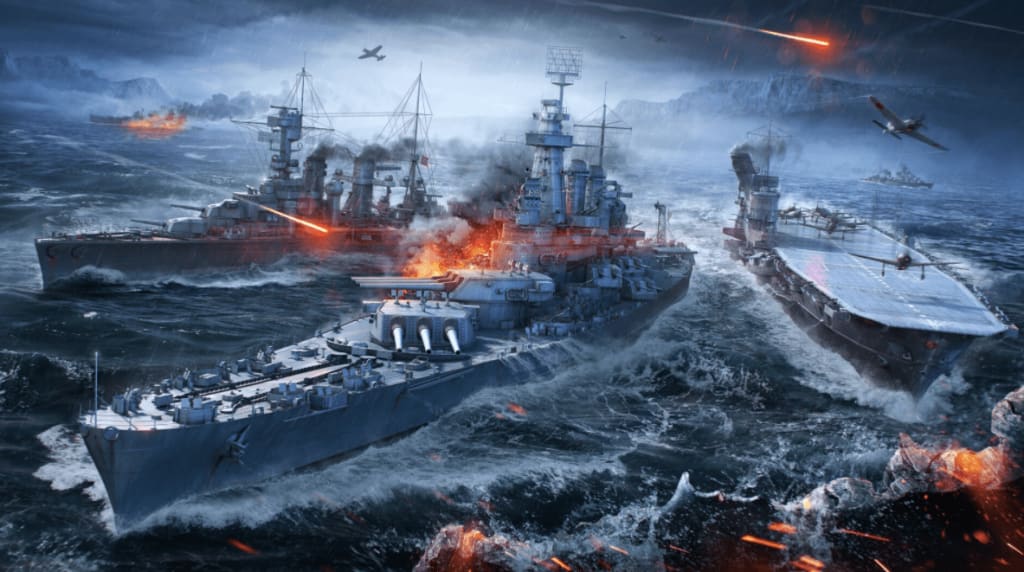
The naval battle lasted from October 20 to October 26, 1944. Within six days, the total tonnage of the Japanese and Allied ships exceeded 2 million tons, of which the Allied fleet reached 1.33 million tons and the Japanese Navy 730,000 tons. 21 aircraft carriers, 21 battleships, 170 destroyers and nearly 2,000 military aircraft participated in the battle. After the Japanese lost the battles on Saipan and Mariana Islands, if they lost the Philippines or Taiwan, Japan's "south line" of resources would be cut off, and the connection with China, North Korea, and the mainland in Southeast Asia would be cut off. Japan therefore decided to take a desperate attempt to repel the Allied landing force on Leyte and defeat its sea power. After several deliberation, the Allies gave up attacking Taiwan and landed in the Philippines first, and were determined to cover the landing with superior military force, and defeated the Imperial Japanese Navy who came to support in one fell swoop.
As expected, the Japanese combined fleet, which was far outnumbered, was defeated. Thirteen heavy warships above the cruiser were sunk, and Japan's sea-based and land-based air forces in the Philippines were eliminated, which seriously affected Japan's overall strength. From then on, the Japanese combined fleet was no longer a strategic force in the Pacific War. This battle also laid the foundation for the subsequent successful capture of the Philippine Islands and Okinawa by the US military.
Battle result
US losses
3 aircraft carriers: light aircraft carrier Princeton (special attack kamikaze), escort carrier USS Gambier (sunk by naval guns), escort carrier USS Sainte (special attack kamikaze);
2 destroyers: USS Johnston (DD-557), USS Hall (DD-533)
Escort destroyer 1: Roberts (DE-413)
162 aircraft were lost and 3,000 casualties. Another 4 aircraft carriers, 2 destroyers, 3 frigates, and 1 submarine were injured.
Japan's loss
Japan:
Four aircraft carriers: the fleet aircraft carrier Zuikaku, the light aircraft carriers Zuiho, Chitose, and Chiyoda, all sank.
3 battleships: Musashi, Fuso, Yamashiro sank.
6 heavy cruisers: Atago, Maya, Chokai, Mogami, Suzuya, Tsukuma were sunk,
4 light cruisers: Noshiro, Abukuma, Kinu, and Tama sank.
11 destroyers:
Wakaba/Uiharu 1944.10.24 Sunk by U.S. carrier-based aircraft in the Battle of Leyte Gulf
Yamagumo/Asashio 1944.10.25 sunk by USS McDermott in the Battle of Surigao Strait
Asakumo/Asakumo 1944.10.25 sunk by the US cruiser "Denver" in the Battle of Surigao Strait
High tide/Asakusa 1944.10.25 sunk by US destroyers in the Battle of Surigao Strait
Qiuyue / Qiuyue 1944.10.25 Northeast of Cape Engano was bombed and sunk by US carrier aircraft
Early Moon/Autumn Moon 1944.10.25 Sunk by U.S. Fleet artillery fire northeast of Cape Engano
Early Frost/Yuyun 1944.10.26 Sunk by US carrier-based aircraft in the southeast of Mindoro
Nobu / Yang Yan 1944.10.26 sunk by the U.S. fleet southeast of Legaspi, Luzon Island
Fujinami/Yugu 1944.10.26 Sunk by U.S. carrier-based aircraft in the waters off Samar Island
Ura wave / Fubuki 1944.10.26 in the San Bernardino Strait was blown up and sunk by a US carrier-based aircraft
Shiranui/Yang Yan 1944.10.27 was blown up and sunk by a US carrier aircraft north of Mindoro
There were also 7 submarines, 288 aircraft lost, and about 10,000 casualties.
Yamato, Nagato, Kongo, Haruna, Ise, and Hinata in the battleship were all injured to varying degrees. On the way back, Kongo was sunk by the U.S. submarine Hiace.
The 6 heavy cruisers Kaohsiung, Myoko, Kumano, Nachi, Tone, and Haguro were all injured to varying degrees. Among them, Kaohsiung, Myoko, and Kumano were seriously injured and never recovered their combat power. Kumano and Nachi were in Manila a month later. sunk nearby.
Campaign Evaluation
The Battle of Leyte Gulf was the last naval battle of the Pacific War and the largest naval battle to date in history. This naval battle wiped out Japan's naval power. Except for aircraft based on land, the Japanese navy almost disappeared, and the U.S. military gained absolute sea control. Jisaburo Ozawa said in the post-war trial: "After this war, Japan's sea force has become an absolute auxiliary force. Except for some special ships, it is no longer useful for sea warships. already."
About the Creator
Keep reading
More stories from writers in Education and other communities.
How Early Hustle Jobs Build Real Mental Toughness for Life
Early hustle jobs—like babysitting, mowing lawns, stocking shelves, or working the drive-thru—might seem small on paper, but they often shape big psychological strengths. These first experiences with responsibility, pressure, and real-world expectations can build mental toughness in ways school alone usually can’t.
By David Lipan7 days ago in Education


Comments
There are no comments for this story
Be the first to respond and start the conversation.