
The Israel-Iran Conflict: A Short Overview
Understanding the Historical Roots and Modern Dynamics of Tensions
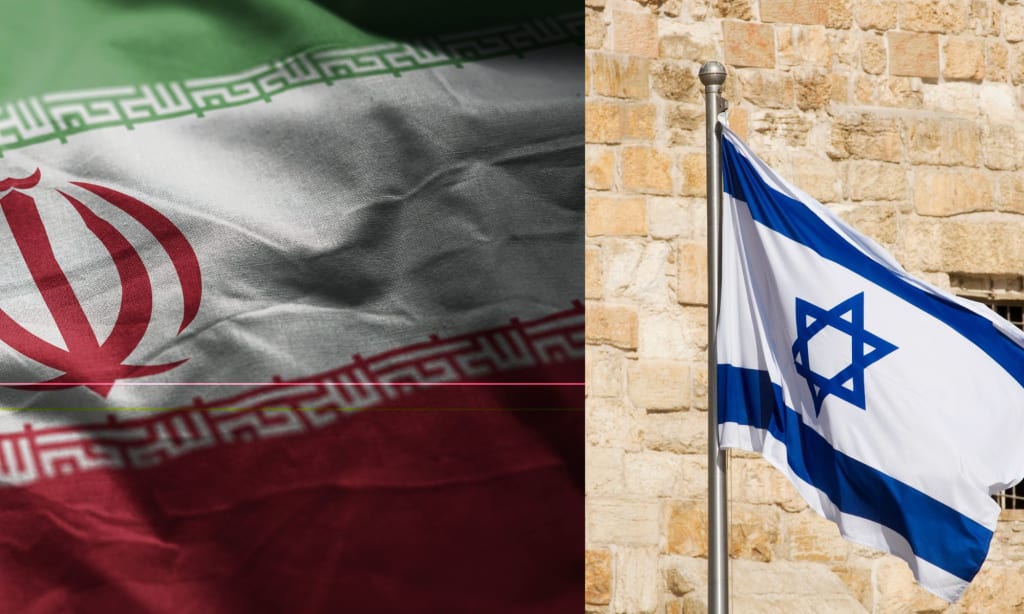
Historical Context
The relationship between Israel and Iran was relatively cordial before the 1979 Iranian Revolution, during which the U.S.-backed Shah of Iran was overthrown. Following the revolution, Iran became an Islamic Republic under Ayatollah Khomeini, leading to a drastic shift in foreign policy. The new Iranian regime adopted a vehemently anti-Israel stance, viewing Israel as a Western puppet and a key adversary in the region.
Key Issues
Nuclear Ambitions: One of the central issues in the Israel-Iran conflict is Iran's nuclear program. Israel perceives a nuclear-armed Iran as an existential threat and has actively sought to undermine Tehran’s nuclear ambitions through diplomatic pressure and, allegedly, covert operations.
Support for Militant Groups: IranThe conflict between Israel and Iran is a complex geopolitical struggle that significantly impacts the Middle East and the international community. Rooted in historical animosities, ideological differences, and regional power dynamics, this conflict has evolved over decades, particularly since the Islamic Revolution in Iran in 1979.
Historical Context
The relationship between Israel and Iran was relatively cordial before the 1979 Iranian Revolution, during which the U.S.-backed Shah of Iran, Mohammad Reza Pahlavi, was overthrown. The Shah maintained strong ties with Israel, which was then viewed as a bulwark against Arab nationalism and communism in the region. However, following the revolution, Iran transformed into an Islamic Republic under Ayatollah Khomeini, leading to a drastic shift in foreign policy. The new Iranian regime adopted a vehemently anti-Israel stance, perceiving Israel as a Western puppet and a key adversary in the region.
Khomeini's government positioned itself as a champion of the Palestinian cause, portraying Israel as an oppressor of the Palestinian people. This ideological framing galvanized support for anti-Israel sentiments among various groups in the Arab world and beyond. Additionally, Iran's support for militant groups opposed to Israel, such as Hezbollah in Lebanon and Hamas in Gaza, further solidified its adversarial stance.
Key Issues
Nuclear Ambitions: One of the central issues in the Israel-Iran conflict is Iran's nuclear program. Israel perceives a nuclear-armed Iran as an existential threat, prompting the country to actively seek to undermine Tehran’s nuclear ambitions through diplomatic pressure and, allegedly, covert operations. The 2015 Iran nuclear deal, known as the Joint Comprehensive Plan of Action (JCPOA), aimed to curb Iran’s nuclear capabilities in exchange for relief from economic sanctions. However, Israel strongly opposed the agreement, arguing that it would not prevent Iran from eventually developing nuclear weapons.
Support for Militant Groups: Iran’s backing of militant organizations has further escalated tensions between Israel and Iran. Hezbollah, which receives financial, military, and logistical support from Iran, has been involved in multiple conflicts with Israel, notably the 2006 Lebanon War. Similarly, Iran’s support for Hamas has contributed to ongoing hostilities in Gaza. Israel views these groups as proxies that threaten its security, leading to frequent military confrontations and operations aimed at curbing their capabilities.
Regional Influence: The power struggle extends beyond bilateral relations, as Iran seeks to expand its influence across the Middle East. This expansion often clashes with Israel’s interests and those of other regional actors, including Saudi Arabia and the United States. The so-called “Shia Crescent,” a term used to describe Iran’s network of allied groups across Iraq, Syria, and Lebanon, is seen by Israel as a direct challenge to its security and stability.
Recent Developments
In recent years, the Israel-Iran conflict has manifested in various forms, including cyber warfare, drone strikes, and military engagements. Israel has conducted airstrikes against Iranian targets in Syria to prevent Iranian military entrenchment near its borders. These strikes aim to disrupt the supply of advanced weaponry to Hezbollah and other Iranian-backed groups, underscoring Israel's commitment to maintaining its security.
Meanwhile, Iran has threatened retaliation, contributing to an ongoing cycle of hostility. The assassination of Iranian nuclear scientist Mohsen Fakhrizadeh in 2020, attributed to Israeli intelligence, marked a significant escalation in the covert conflict. The incident underscored Israel’s willingness to take decisive action to prevent Iran from achieving its nuclear goals.
Furthermore, the U.S. withdrawal from the Iran nuclear deal in 2018 heightened tensions, as Iran began to advance its nuclear program further. The subsequent escalation of rhetoric and military posturing from both sides has created a precarious situation in the region.
The Broader Implications
The Israel-Iran conflict has significant implications not only for the two nations but also for regional stability and international relations. The ongoing tension contributes to a volatile environment in the Middle East, affecting U.S. foreign policy and the interests of other nations.
As the conflict continues, it raises concerns about the potential for a larger regional war involving multiple actors. The involvement of global powers, including the United States, Russia, and European nations, complicates the situation further. Diplomatic efforts to de-escalate tensions and promote dialogue have been attempted but often face significant challenges due to entrenched positions and mutual distrust.
Conclusion
The Israel-Iran conflict remains a complex and evolving situation with no immediate resolution in sight. Both nations are entrenched in their positions, with Israel committed to countering Iran’s influence and nuclear capabilities, while Iran continues to assert its regional ambitions. The implications of this conflict extend beyond the two nations, affecting regional stability and international relations in the Middle East.
As both sides navigate this fraught relationship, the potential for further conflict persists, underscoring the need for diplomatic efforts to de-escalate tensions. A comprehensive and lasting resolution will require addressing the underlying issues that have fueled the conflict for decades, including historical grievances, ideological differences, and competing national interests. The path to peace remains uncertain, but it is crucial for the future stability of the region and the broader international community.
About the Creator
5 Essential Tools You Need to Work Remotely
Remote work has moved from being a perk to a permanent way of working for millions of professionals worldwide. While working from home or anywhere with an internet connection offers flexibility and freedom, success in a remote environment depends heavily on the tools you use.
By Bahati Mulishi7 days ago in Education
The Dark Engine: France’s Carbon Black Evolution and the USD 863.78 Million Future (2026-2034)
France has long been a global pioneer in automotive engineering and chemical innovation, but in 2026, one of its most critical industrial materials is undergoing a quiet, high-tech revolution. Carbon Black the soot-like material that gives tires their strength and plastics their durability is no longer just a commodity. Driven by the aggressive transition to Electric Vehicles (EVs), stringent EU environmental mandates, and a nationwide shift toward the circular economy, the France carbon black market is entering a era of sophisticated growth. According to latest research, the market was valued at USD 597.72 Million in 2025 and is projected to reach USD 863.78 Million by 2034, exhibiting a steady CAGR of 4.18% during 2026-2034.
By Neeraj kumar5 days ago in Education




Comments
There are no comments for this story
Be the first to respond and start the conversation.