
The Impact of Technology on Education
Exploring How Modern Technology Is Revolutionizing Teaching and Learning Worldwide

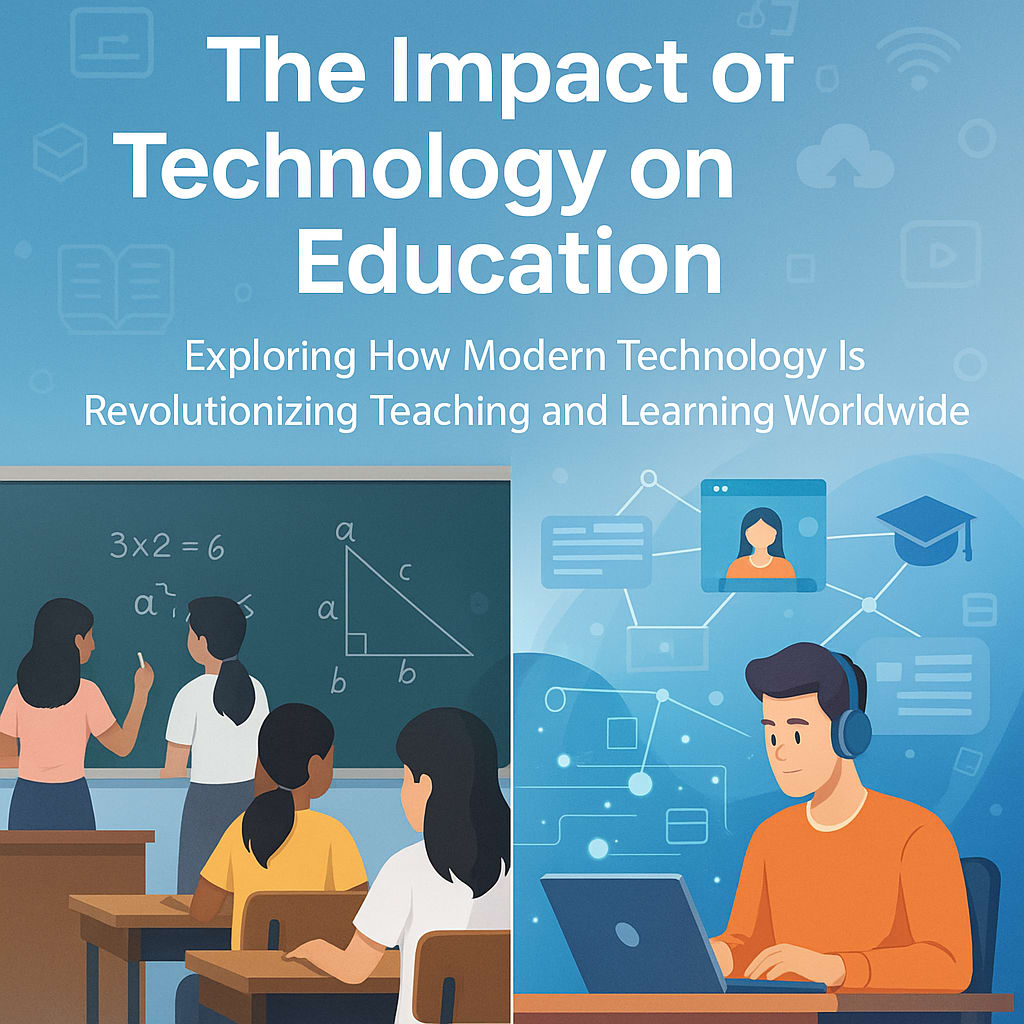
Technology has changed every part of our lives, and education is no exception. From online classes to digital books, the way students learn today is very different from the past. Technology has made education more accessible, flexible, and interactive. This article explores how technology has transformed education, its benefits, challenges, and real-world examples.
1. Access to Education for Everyone
In the past, many students could not attend school due to distance, cost, or lack of resources. Today, with the help of technology, students from any part of the world can access quality education. Online platforms like Khan Academy, Coursera, and edX offer free or affordable courses in different subjects. All you need is an internet connection and a device.
Real-World Example:
During the COVID-19 pandemic, schools and universities around the world shifted to online classes. Millions of students continued their education from home using Zoom, Google Classroom, and Microsoft Teams. This proved how important technology is for keeping education going in difficult times.
2. Interactive Learning and Better Engagement
Technology makes learning more interesting. Videos, animations, quizzes, and games help students understand difficult topics easily. Smartboards, tablets, and educational apps make the classroom more interactive. Students are no longer just listeners; they actively take part in the learning process.
Real-World Example:
Apps like Duolingo make language learning fun with games and rewards. Children enjoy using such apps and learn faster compared to traditional methods.
3. Learning at Your Own Pace
One of the best things about technology in education is personalized learning. Students can learn at their own speed. If someone finds a topic hard, they can watch the lesson again or take more time to understand it. If they are quick learners, they can move ahead without waiting for others.
Real-World Example:
Platforms like Khan Academy adjust the level of difficulty based on the student's performance. This helps students improve without feeling left behind or bored.
4. Global Learning and Collaboration
Technology allows students to connect with others around the world. They can share ideas, work on group projects, and learn about different cultures. This helps students become global citizens and prepares them for the international job market.
Real-World Example:
Many schools use eTwinning in Europe to connect classrooms across countries. Students from France, Spain, and Germany can work together on science or history projects using video calls and shared documents.
5. Instant Feedback and Performance Tracking
Teachers can now give feedback quickly through online tests and assignments. Students know their results immediately and can work on their weak areas. Teachers also use data to understand which students need more help.
Real-World Example:
Google Classroom allows teachers to post quizzes, grade assignments, and give feedback all in one place. This saves time and keeps everything organized.
6. Cost-Effective and Environment-Friendly
Using technology can save money. Instead of buying expensive books, students can read e-books. Online classes reduce the need for transport and buildings, which also helps the environment.
Real-World Example:
Many universities now offer MOOCs (Massive Open Online Courses), which provide high-quality education for free or at a low cost. Students get knowledge from top professors without leaving their homes.
7. Challenges of Technology in Education
While technology has many benefits, it also has some challenges. Not every student has access to the internet or devices. This is called the "digital divide." Also, too much screen time can affect health, and some students may get distracted by games or social media.
Real-World Example:
In rural areas of countries like India and Pakistan, many students struggle with poor internet and lack of smartphones or laptops. This makes online learning difficult for them.
8. The Role of Teachers with Technology
Some people fear that technology will replace teachers, but this is not true. Technology helps teachers, but it cannot replace their guidance and support. Teachers are still needed to explain, motivate, and help students understand what they learn.
Real-World Example:
A teacher using a smartboard still needs to plan lessons, ask questions, and interact with students. The board is just a tool to make the lesson more engaging.
Conclusion
Technology has brought a revolution in the field of education. It has made learning more fun, flexible, and available to everyone. However, it should be used wisely and equally so that no student is left behind. With the right balance of technology and human support, the future of education looks bright.
About the Creator
Keep reading
More stories from Muhammad Nawaz and writers in Education and other communities.
Hidden Pig Fat in Everyday Products: What Every Muslim Must Know About E-Codes
Why Was the Pig Created? It is very important for every Muslim to read this In Europe and nearly all American countries, pork is the primary choice of meat. These countries have many farms dedicated to raising pigs. In France alone, there are more than 42,000 pig farms.
By Muhammad Nawaz9 months ago in Education
What Should Be Your Main Focus During an Online Limited Radiology Tech Program
Well, the short answer is that there is not a single module that you should strictly focus on. If you want to become a X-ray technician, you need to develop both technical and soft skills.
By Meaghan Howe3 days ago in Education
Precision in Motion: The Rise of Sport Shooting and Firearms in Modern Competition
Sport shooting has grown from a simple test of aim into a structured sport that demands discipline, patience, and technical skill. Today, sport shooting and firearms play a major role in global competitions, training programs, and recreational events. Athletes train for years to improve accuracy and control. They study equipment, posture, breathing, and focus. Because of this dedication, sport shooting has become a respected sport that rewards precision and calm thinking.
By Matthew Pothoff2 days ago in Education
Hottest in the Office
Dear Rafi, You’re very distracting to work around. For the first second I saw you the other day, I thought you were some type of executive. It took a moment to realize no, you were just the new guy, dressed up for the job he wants. Be still, my heart.
By Gabriel Shames4 days ago in Pride



Comments
There are no comments for this story
Be the first to respond and start the conversation.