
The Impact of Pollution on Cognitive Function and Mood
Exploring the Hidden Effects of Environmental Stressors on Brain Health and Emotional Well-Being

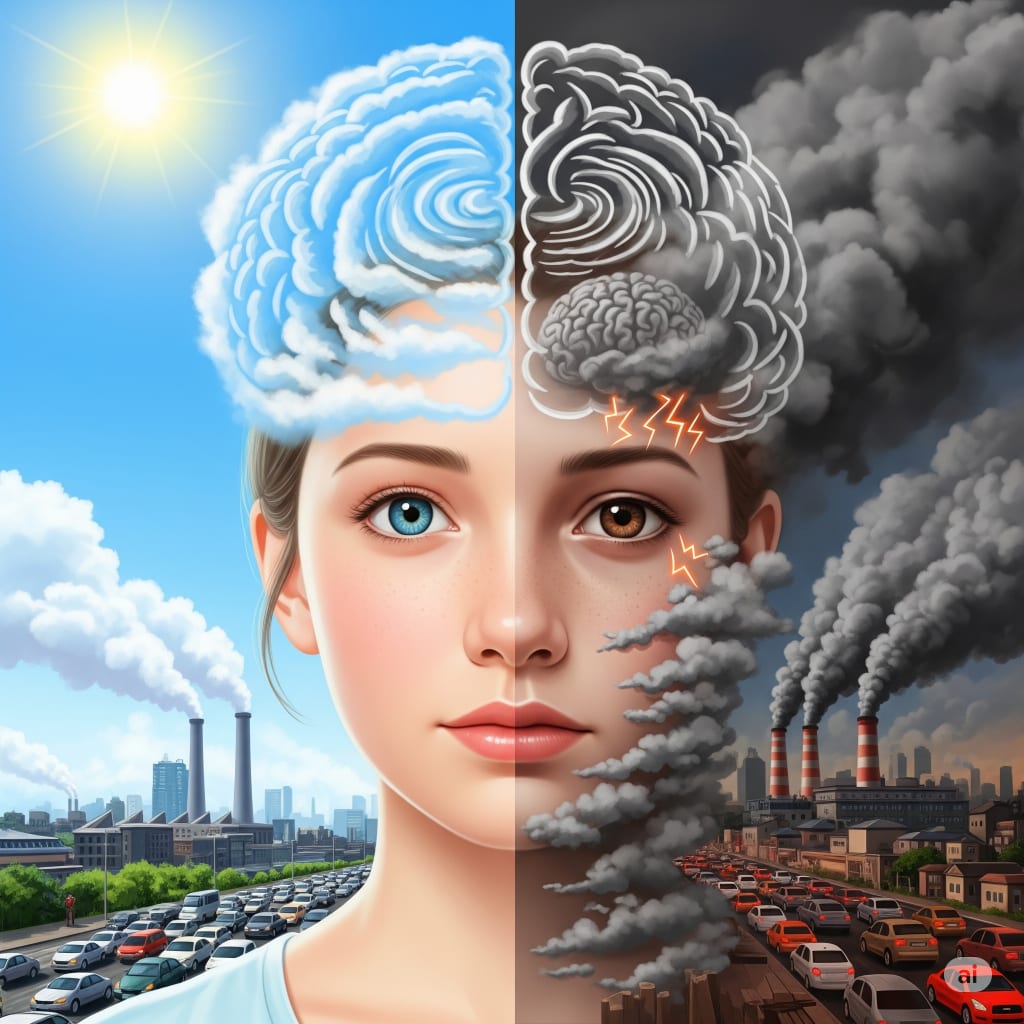
Pollution, a pervasive issue in modern society, extends far beyond its visible effects on the environment. While smog-filled skies and polluted rivers often dominate discussions, the less visible consequences of pollution—its effects on human health, particularly cognitive function and mood—are equally alarming. As urbanization and industrialization continue to rise, exposure to pollutants such as air particulates, heavy metals, and noise has become a daily reality for millions. Emerging research highlights how these environmental stressors impair cognitive abilities and influence emotional well-being, with significant implications for public health and societal functioning. This article explores the mechanisms through which pollution affects cognitive function and mood, supported by scientific evidence, and discusses potential strategies to mitigate these impacts.
Air Pollution and Cognitive Function
Air pollution, particularly fine particulate matter (PM2.5) and nitrogen dioxide (NO2), has been extensively studied for its effects on the brain. These microscopic particles, emitted from vehicles, industrial activities, and fossil fuel combustion, can penetrate the respiratory system and, in some cases, cross the blood-brain barrier. Once in the brain, they trigger inflammation and oxidative stress, which can disrupt neural pathways and impair cognitive processes.
Studies have shown that long-term exposure to air pollution is associated with reduced cognitive performance across various domains. For example, a 2018 study published in Proceedings of the National Academy of Sciences found that prolonged exposure to high levels of PM2.5 in China was linked to significant declines in verbal and mathematical test scores, particularly among older adults. The researchers estimated that a 10 µg/m³ increase in PM2.5 exposure over three years was equivalent to the cognitive decline associated with aging by one to two years. This effect is particularly concerning for vulnerable populations, such as children, whose developing brains are more susceptible to environmental toxins.
Children exposed to air pollution often exhibit deficits in attention, memory, and executive function. A longitudinal study in Barcelona, Spain, conducted as part of the BREATHE project, found that children attending schools in high-pollution areas performed worse on cognitive tests than those in cleaner environments. These findings suggest that air pollution may hinder academic performance and long-term cognitive development, potentially perpetuating socioeconomic disparities in areas with poor air quality.
The mechanisms behind these effects are multifaceted. PM2.5 and other pollutants can induce neuroinflammation, disrupt neurotransmitter balance, and reduce cerebral blood flow, all of which impair cognitive processes. Additionally, pollutants may accelerate the accumulation of beta-amyloid plaques, a hallmark of Alzheimer’s disease, raising concerns about their role in neurodegenerative disorders. These findings underscore the urgent need to address air pollution as a public health priority to protect cognitive health across the lifespan.
Pollution and Mood Disorders
Beyond cognitive impairment, pollution significantly affects mental health and mood. Exposure to air pollutants has been linked to increased rates of anxiety, depression, and mood dysregulation. A 2019 study published in Environmental Health Perspectives analyzed data from over 150,000 individuals across the United States and Denmark, finding that higher levels of PM2.5 exposure were associated with increased risks of depression and anxiety diagnoses. The study suggested that a 10 µg/m³ increase in PM2.5 exposure over a year raised the likelihood of depression by up to 7%.
The relationship between pollution and mood is not limited to air quality. Noise pollution, often a byproduct of urban environments, also plays a significant role. Chronic exposure to high levels of noise, such as from traffic or industrial activities, elevates stress hormone levels, particularly cortisol, which can disrupt emotional regulation. A 2020 meta-analysis in Environmental Research found that individuals living in areas with high noise pollution reported higher levels of irritability, stress, and depressive symptoms compared to those in quieter environments.
Water and soil pollution, particularly from heavy metals like lead and mercury, also contribute to mood disturbances. These toxins can accumulate in the body, affecting the central nervous system and altering neurotransmitter function. For instance, lead exposure has been linked to increased aggression and impulsivity, while mercury exposure is associated with anxiety and mood swings. Communities near contaminated water sources or industrial sites often report higher rates of mental health issues, highlighting the intersection of environmental and psychological health.
The psychological impact of pollution is compounded by its indirect effects. Living in heavily polluted areas can lead to "environmental distress," a form of psychological stress caused by degraded surroundings, restricted access to green spaces, and concerns about health risks. This distress can exacerbate feelings of helplessness and anxiety, further deteriorating mood and mental well-being.
Vulnerable Populations and Societal Implications
Certain groups are disproportionately affected by pollution’s impact on cognitive function and mood. Low-income communities and marginalized populations often live in areas with higher pollution levels due to proximity to industrial zones, highways, or waste facilities. This environmental injustice amplifies health disparities, as these groups face greater exposure to pollutants and have fewer resources to mitigate their effects. Children, the elderly, and individuals with preexisting health conditions are also more vulnerable, as their physiological or developmental stages make them less resilient to environmental stressors.
The societal implications of pollution’s effects on cognition and mood are profound. Cognitive decline in populations exposed to pollution can lead to reduced workforce productivity, increased healthcare costs, and higher rates of neurodegenerative diseases. Similarly, the rise in mood disorders contributes to mental health crises, straining healthcare systems and diminishing quality of life. Addressing these issues requires a multifaceted approach, including stricter environmental regulations, improved urban planning, and increased access to mental health resources.
Mitigation Strategies
Mitigating the impact of pollution on cognitive function and mood requires coordinated efforts at individual, community, and policy levels. At the individual level, people can reduce exposure by using air purifiers, wearing masks in high-pollution areas, and advocating for cleaner environments. Communities can invest in green spaces, which have been shown to improve air quality and promote mental well-being. A 2019 study in Scientific Reports found that access to parks and natural areas was associated with lower stress levels and improved cognitive performance.
At the policy level, governments must enforce stricter emissions standards and invest in renewable energy to reduce air pollution. Urban planning initiatives that prioritize walkable cities, public transportation, and noise reduction can also mitigate environmental stressors. Public health campaigns can raise awareness about the cognitive and emotional risks of pollution, encouraging proactive measures to protect vulnerable populations.
Conclusion
Pollution’s impact on cognitive function and mood is a pressing public health issue that demands immediate attention. From impairing memory and attention to exacerbating anxiety and depression, environmental pollutants pose a significant threat to human well-being. By understanding the mechanisms behind these effects and implementing effective mitigation strategies, society can protect both the environment and the mental health of its citizens. As research continues to uncover the intricate links between pollution and psychological health, it is clear that clean air, water, and soil are not just environmental imperatives but also essential for fostering a cognitively sharp and emotionally resilient population.
About the Creator
Keep reading
More stories from Zakaria Muhammad and writers in Education and other communities.
The Future of Artificial Intelligence
Artificial Intelligence (AI) is no longer a concept confined to science fiction or academic laboratories. It has firmly entered our daily lives, shaping how we work, communicate, travel, and even think. From voice assistants like Siri and Alexa to self-driving cars and advanced medical diagnostics, AI has demonstrated enormous potential. But what lies ahead in the future of artificial intelligence? How will it evolve, and what kind of impact will it have on our world in the coming decades?
By Zakaria Muhammad 9 months ago in Education
The 15-Minute Reading Habit That Can Transform Your Mind
Reading for just 15 minutes a day may sound like a small goal, but it can create a major shift in the way your mind works. In today’s fast-paced world, many people feel overwhelmed by constant notifications, short-form content, and nonstop distractions. This makes it harder to focus, think clearly, and stay mentally calm. The good news is that you don’t need hours of free time to improve your brain—you only need consistency. A daily reading habit, even for a short time, can strengthen your focus, sharpen your thinking, and support long-term personal growth.
By Paul Wiedmaier8 days ago in Education
A Guide to Centerburg, Ohio, Musical Heritage Through Its Venues and Community Festivals
Centerburg, Ohio's, has a musical heritage shaped by people who value tradition, creativity, and togetherness. Music in this village is not treated as a separate attraction. It is part of daily life, woven into gatherings, celebrations, and shared moments. Visitors often notice that music here feels sincere and welcoming, not rushed or commercial.
By Kevin Knasel6 days ago in Education



Comments
There are no comments for this story
Be the first to respond and start the conversation.