
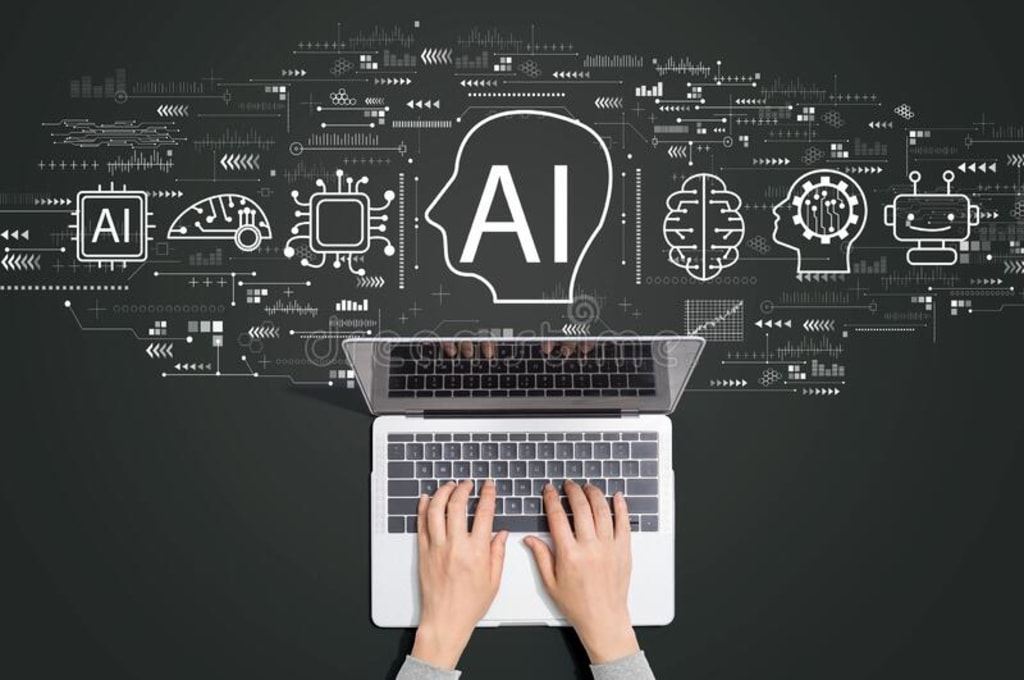
The earliest attempts to build intelligent devices by humans may be found in the history of artificial intelligence (AI). Robots and automata were supposedly made by the gods to carry out various jobs in Greek mythology. But the history of artificial intelligence as we know it now began in the middle of the 20th century when scientists and researchers started looking into the idea of building robots that could think and learn similarly to humans.
John McCarthy, a computer scientist, first used the term "artificial intelligence" in 1956 during a conference held at Dartmouth College. McCarthy put out the notion of building intelligent robots that could think, learn, and resolve issues on their own, along with a group of researchers.
There was a lot of excitement over AI's potential in the 1950s and 1960s. Researchers imagined they could build machines that would be capable of doing things that were previously considered to be beyond the capabilities of machines. The development of AI, however, was sluggish, and many of the early computers lacked superior intelligence.
The early methods of AI, which centred on building all-purpose intelligent machines, began to give way to more specialised applications in the 1970s and 1980s. Expert systems, developed and deployed in industries like medical and finance, were created to deliver expert-level knowledge in particular subjects.
Machine learning and data mining made significant strides in the 1990s and 2000s, enabling computers to learn from data and predict the future. As a result, systems like recommender systems, used by businesses like Netflix and Amazon to offer movies and products to their clients, were created.
The many benefits of artificial intelligence (AI) can help people and businesses in a variety of areas. Some of the main benefits of AI are as follows:
1. Enhanced effectiveness and productivity: AI may automate routine, boring jobs, freeing people and organisations to concentrate on more difficult, high-value tasks. Increased productivity and efficiency may result from this.
2. Accuracy: It is increased because AI systems are better at processing vast volumes of data rapidly and accurately, which lowers the possibility of errors and improves accuracy.
3. Cost savings: AI can assist businesses in lowering labour and time-related expenses by automating operations and processes.Improved decision-making is possible because to AI, which can evaluate vast volumes of data and offer insights that people might not be able to notice.
4. Personalization: AI can analyse data about specific people and offer tailored recommendations, enhancing customer satisfaction and experience.
5. Enhanced safety: AI can be used to keep people safe in hazardous or dangerous areas, including mining or firefighting.
6. Scalability: AI is scalable for enterprises of all sizes since it can manage vast volumes of data and tasks.
In general, AI has the power to transform entire sectors and enhance many facets of daily life. The advantages of AI technology will only increase as it develops.
Because to developments in deep learning and neural networks, artificial intelligence (AI) has seen a comeback in the last ten years. A type of machine learning called deep learning involves teaching artificial neural networks to spot patterns in data. This has produced innovations in fields including speech recognition, computer vision, and natural language processing.
AI is currently employed for a variety of purposes, including self-driving cars, medical diagnosis, and financial analysis. AI has immense potential, and many experts predict that technology will have a significant influence on society in the years to come. Concerns regarding the effects of AI on employment and the economy, as well as the moral ramifications of building computers that can think and learn like humans, do exist, though.
In conclusion, the development of AI is a tale of creativity and tenacity. Researchers and scientists have been working relentlessly to uncover the potential of AI from the earliest aspirations of building intelligent machines to the current state of the art in deep learning and neural networks. The future of AI is undeniably fascinating and full of potential, despite the difficulties and worries that exist.
About the Creator
Keep reading
More stories from SriDharshan J and writers in Education and other communities.
CHATGPT Vs GOOGLE
The way we engage with technology has been completely transformed by artificial intelligence. Google and ChatGPT are two of the most well-known AI models to have developed in recent years. Both have distinctive qualities of their own, but how do they compare to one another? This article will contrast ChatGPT with Google, examining their benefits and drawbacks as well as the range of industries in which they might be used.
By SriDharshan J3 years ago in Education
NCLEX Study Plan: A Step-by-Step Guide for Nursing Students
Preparing for the NCLEX-RN is one of the most important milestones in the nursing students’ career. This is because the NCLEX is the final step before nursing students can become licensed nurses. However, it is not as easy as simply reading nursing textbooks and taking notes from class lectures. This is because the NCLEX is designed to test the nursing students’ clinical judgment and decision-making skills.
By Sulcus Learning3 days ago in Education
The Value of Hard Work
Hard work is one of the most important qualities for success in life. It means putting effort, time, and dedication into our tasks and responsibilities. Many people dream of becoming successful, but success does not come easily. It requires patience, determination, and continuous effort. Hard work helps people achieve their goals and build a better future. It also teaches discipline and responsibility, which are necessary for personal and professional growth.
By aadam khan7 days ago in Education




Comments
There are no comments for this story
Be the first to respond and start the conversation.