
The Hidden Struggle
Understanding and Managing Vulvar Varicosities


Vulvar varicosities, a less frequently discussed condition, can be a source of significant discomfort and concern for many women, particularly during pregnancy. These are varicose veins that appear around the vulva, the external female genitalia. Although they might be alarming and uncomfortable, they are generally manageable with the right approach. This post explores what vulvar varicosities are, their causes, symptoms, and available treatment options.
What Are Vulvar Varicosities?
Vulvar varicosities (VV) are swollen, twisted veins that appear at the vulva. Much like varicose veins that can appear on legs, VV are dilated blood vessels with poorly functioning valves, which cause blood to pool rather than flow efficiently back to the heart. These are not just a cosmetic issue but can also lead to discomfort and health complications if not addressed properly.

Causes of Vulvar Varicosities
The primary cause of VV is increased pressure in the veins of the pelvic region. Several factors contribute to this pressure:
1. Pregnancy: The most common time for women to develop VV is during pregnancy. Hormonal changes and the increased blood volume needed to support the growing fetus put extra pressure on the veins. Additionally, the enlarging uterus can impede blood flow from the lower body to the heart.

2. Genetics: Like many circulatory issues, there is a genetic component to VV. If other women in your family have had varicose veins or VV, you might be more likely to develop them as well.
3. Obesity: Excess body weight can also increase the pressure in the pelvic veins.
4. Prolonged standing or sitting: Occupations or lifestyles that involve long periods of standing or sitting can exacerbate or contribute to the development of VV.
5. Previous pelvic surgery: Surgery in the pelvic area can lead to scarring or changes in blood flow patterns that might promote the formation of varicosities.
Symptoms of Vulvar Varicosities
The symptoms of VV can vary from mild to severe and can include:
- Visible varicose veins in the vulva area, which may appear swollen, twisted, and bluish or purplish.
- A feeling of fullness, heaviness, or pressure in the vulva.
- Discomfort or pain during standing, walking, or engaging in sexual intercourse.
- Itching or an uncomfortable sensation in the affected area.
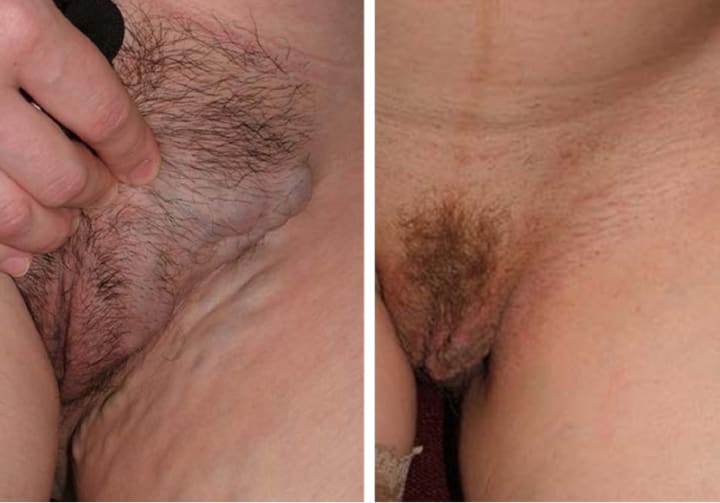
Diagnosis of Vulvar Varicosities
Diagnosing VV typically involves a physical examination. In some cases, further evaluation such as an ultrasound may be necessary to assess the extent of the vein involvement and rule out other conditions.
Treatment Options
Lifestyle Changes
Making lifestyle changes is often the first step in managing VV:
- Avoid prolonged periods of standing or sitting: Take regular breaks to move around if your lifestyle or job involves long periods of immobility.
- Elevate your hips: When lying down, elevating your hips can help improve venous return from the legs to the heart.
- Exercise: Regular, moderate exercise can improve overall circulation and help reduce the symptoms of VV.
- Weight management: If you are overweight, losing weight can decrease the pressure on your pelvic veins.
Compression Therapy
Wearing compression garments specifically designed for pregnant women or for those suffering from VV can help reduce symptoms by providing support and helping to push the blood back up towards the heart.

Medical Treatments
- Sclerotherapy: This involves injecting a solution directly into the affected veins, causing them to shrink.
- Laser treatments: These can be used to close off smaller veins.
Surgical Options
In severe cases, surgery may be necessary to remove the affected veins. However, this is typically only considered when other treatment options have failed to provide relief.
Conclusion
Vulvar varicosities are a challenging condition, especially because they affect such a sensitive area and often occur during pregnancy, a time of significant change for women. Understanding the nature of VV and the various treatment options can alleviate much of the anxiety associated with this condition. If you suspect you have VV, it is important to consult with a healthcare provider who can offer the most appropriate advice and treatment options tailored to your specific situation.
About the Creator
Mohammad Barbati
Mohammad E. Barbati, MD, FEBVS, is a consultant vascular and endovascular surgeon at University Hospital RWTH Aachen. To date, he has authored several scientific publications and books regarding vascular and venous diseases.
Keep reading
More stories from Mohammad Barbati and writers in Education and other communities.
Decoding Abdominal Aortic Aneurysm
AORTIC ANEURYSM OVERVIEW An aortic aneurysm arises when the walls of the aorta—the primary vessel transporting blood from the heart—swell or expand. Although aneurysms can develop anywhere along the aorta, the abdomen is the most frequent location.
By Mohammad Barbati3 years ago in Education
The Creative Kitchen Journey: Turning a Love for Cooking Into Everyday Inspiration
Cooking has evolved far beyond a simple daily responsibility. For many people, it has become a powerful source of creativity, relaxation, and personal satisfaction. After long hours spent working or managing daily responsibilities, the kitchen often becomes a place where individuals can unwind and reconnect with their passions. Preparing food allows people to experiment with flavors, textures, and presentation while enjoying the rewarding process of creating something from scratch.
By Greg Deshields3 days ago in Education
You underestimated your fluency level. Now what?
As you may know, I'm now learning Korean by using two methods: a passive one, i.e. playing the videogame Lingo Legends, and an active one, namely writing sentences using specific grammar topics from Unit 1 of How To Study Korean.
By Simona Rosso4 days ago in Education



Comments
There are no comments for this story
Be the first to respond and start the conversation.